
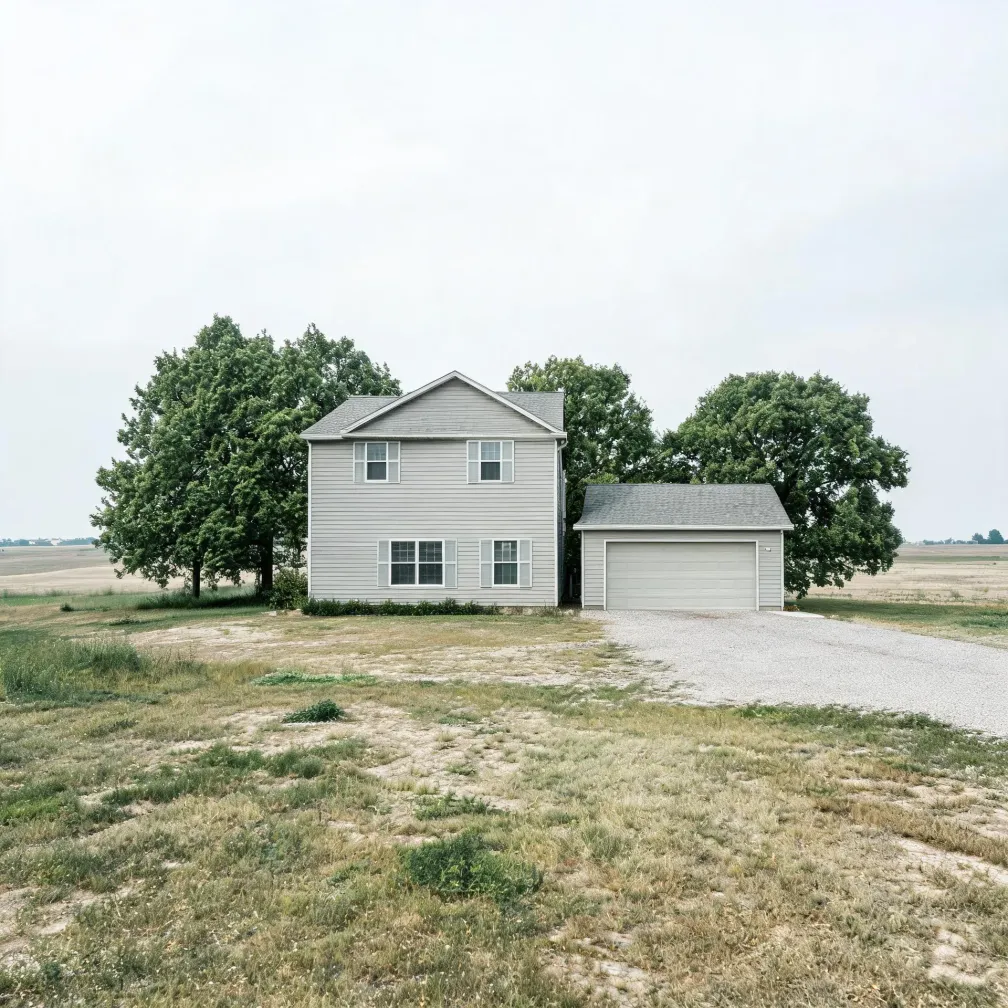
What Kansas homes are up against.
NOAA National Centers for Environmental Information, Storm Events Database, bulk CSV export, events 2015-01-01 through 2024-12-31. · U.S. Census Bureau, 2020-2024 American Community Survey 5-Year Estimates

A homeowner deciding whether a furnace problem can wait is really asking how much rest that furnace gets. Not much. Homes in Kansas run heat about seven months a year, from October through April. The burner and igniter are cycling on and off through cold mornings and cold nights alike, and a cracked heat exchanger or a weak igniter does not get long stretches to sit quiet before it is asked to fire again. A short list of standby months would mean more slack for a marginal part to go unnoticed. Kansas furnaces do not get that slack, so a fault tends to show itself while the system is still working, not after it has stopped for the year.

Before a new furnace or condenser goes in, a contractor has to look at what it will connect to. Ducts already run through the house, and the electrical panel already carries a certain load, and neither was necessarily sized for the unit being installed now. Half the homes in Kansas were built in 1976 or earlier (2020-2024 ACS 5-year). That means duct runs get checked for size and leakage, and the panel gets checked for capacity, instead of assuming they will simply accept whatever gets set down. A straightforward swap can turn into modifying a plenum or upgrading a circuit once someone actually opens things up and looks.
How does your Kansas county compare on severe weather?
2015–2024 · Source: NOAA National Centers for Environmental Information, Storm Events Database.
Outdoor equipment sits outside year round, exposed to whatever the sky does. Hail can dent a cabinet and bend the fins behind it. Wind can rock a unit loose from its pad or throw debris against it. Heavy rain can pool around a low mounting spot and reach parts that should stay dry. Have a contractor check where the outdoor unit sits, how well it is anchored, and the condition of the cabinet and coil.
In Kansas, HVAC licensing for homes is left to the counties and cities.
Source: Kansas Office of Revisor of Statutes