
HVAC Repair in Manhattan, KS
Homes here need heat from October through April and cooling from June through September. If your system quits, tell us what it's doing and a licensed contractor who covers Riley County will get in touch.
Tell us about the job
It takes about a minute.

Eleven months of the year, something is running
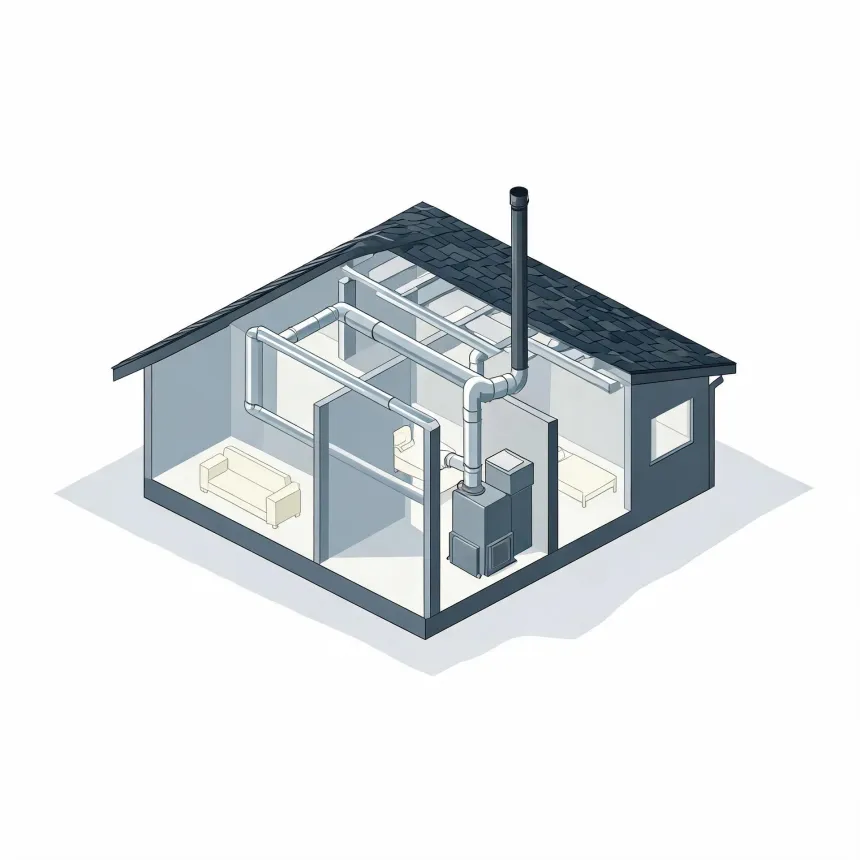
Your furnace runs October through April here, seven months, and on nights that average 21°F it cycles on and off for hours to hold the house steady. Each start puts load on the igniter and the burner. When the igniter wears out, the furnace won't light at all and the house goes cold.
Then summer flips the load onto the air conditioner. Afternoons averaging 88°F from June through September push the compressor and the outdoor coil hard for four straight months. Add the storms, 14 winter storms and 88 damaging wind events over the past ten years, and outages come with them. Furnaces and air conditioners don't restart on their own after the power drops. If yours isn't running when it comes back on, something needs a look.
- 7 months
- October through April, your system heats
- 4 months
- June through September, it cools
- 21°F
- the average winter night it heats against
- 88°F
- the average summer afternoon it cools against
NOAA nClimDiv, 1991–2020 normals
A new furnace and air conditioner would cut about $160 a year off heating and cooling for a typical Riley County home.
Estimates for a typical Riley County home, compared with an older unit built to the previous federal minimum, from EIA household energy data, Kansas fuel prices and NOAA climate normals. Your home will differ.
Repair makes sense when one part has failed.
Replacement makes sense when the furnace's heat exchanger is cracked, the air conditioner's compressor has failed, or repairs keep coming.
In Kansas, HVAC licensing for homes is left to the counties and cities.
Source: Kansas Office of Revisor of Statutes
- Why is my heat not working?
- Start with the thermostat and the power. If the screen is blank, check the breaker before anything else. If the furnace has a standing pilot, look for the flame itself, since that kind does not depend on power to stay lit. Gas furnaces with an igniter will not start at all if the igniter has failed or the flame sensor is dirty, and only a contractor can test those parts. With winter nights here averaging 21°F, a furnace that will not run is not something to leave for later.
- Why is my system running but not cooling the house?
- Check the air filter first. A clogged filter chokes off airflow, and the system can run for hours without actually cooling the rooms. Next look at the outdoor unit and clear away any leaves, grass clippings or debris packed against it, since it needs open airflow to move heat outside. If the filter is clean and the outdoor unit is clear, the problem is likely low refrigerant or a failing part inside the system, and that calls for a contractor with gauges to diagnose it. On an 88°F afternoon a system fighting bad airflow will run long and still lose ground.
- What can I check before calling for HVAC repair?
- Check the thermostat settings and its batteries first, since a dead battery or a setting bumped to the wrong mode looks exactly like a broken system. Check the breaker panel and reset any tripped breaker once. Replace the air filter if it looks gray or packed with dust, since that alone causes weak heat, weak cooling, or a system that shuts off on its own. If none of that fixes it, describe what you found to the contractor. It narrows down the visit, and the fix still has to be priced for your house.