Mini Split Installation in Dodge City, KS
A new system here will heat from October through April and cool from June through September every year. Tell us about the house, and a licensed contractor who covers Ford County will get in touch.
Tell us about the job
It takes about a minute.
Dodge City asks a mini-split to work most of the year
A mini-split here spends 11 months either heating or cooling. Winter nights average 21°F from December through February, and the heat pump side has to keep pulling warmth out of air that cold. Summer afternoons average 90°F, and the same unit has to shed that heat back outside from June through September.
A mini-split installed new today has to meet the federal minimum for split-system heat pumps, 14.3 SEER2 for cooling and 7.5 HSPF2 for heating. In a place that leans on the unit for cold nights and hot afternoons both, that rating carries more weight than it would somewhere the machine only ran part of the year. Ford County has also seen 37 winter storms and 251 damaging wind events over the last ten years, and statewide 19% of households lost power for at least 24 hours in 2024. Where a mini-split sits and how it is wired is worth thinking about with that in mind.
- 7 months
- October through April, your system heats
- 4 months
- June through September, it cools
- 21°F
- the average winter night it heats against
- 90°F
- the average summer afternoon it cools against
NOAA nClimDiv, 1991–2020 normals
In Kansas, HVAC licensing for homes is left to the counties and cities.
Kansas leaves this to the county or city, and whether Ford County has its own contractor license or test is not something these facts say one way or another. Where a place does license, that license means the contractor was tested and is on record. Where a place does not, there is no such record, and the rule simply depends on the address.
For a mini-split, the part of the job most likely to be checked either way is the installation itself. In most cities and counties, putting in a mini-split needs a permit from the local building office and an inspection once the work is done, the same as a furnace or an air conditioner would. That permit and inspection are a separate protection from any contractor license, and they apply regardless of what Ford County does or does not require of the contractor.
Source: Kansas Office of Revisor of Statutes
- Is a mini split worth it?
- For the right situation, yes. A mini split heats and cools without ductwork, so it works well for additions, garages, or older homes where running ducts isn't practical. Here winters average 21°F and summers reach 90°F, and a mini split built for cold climates can handle both ends of that range. Most homes in Dodge City heat with gas, so a mini split often ends up covering one room or zone rather than replacing the whole system, and a contractor can tell you which setup makes sense for your house.
- How many rooms can a mini split cover?
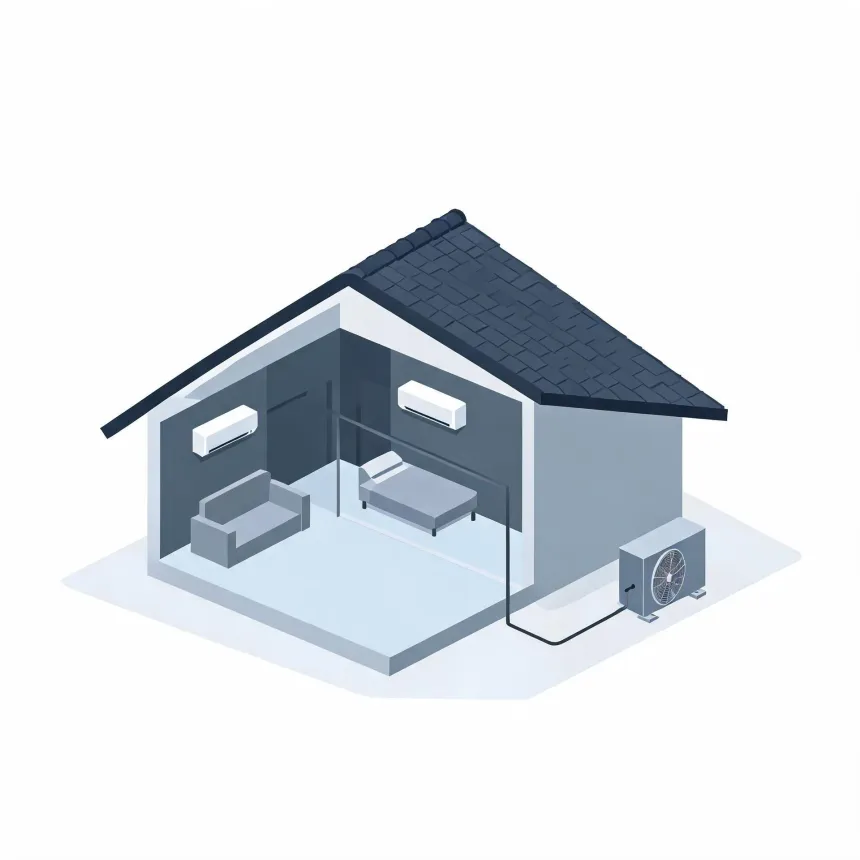
- It depends on whether you install a single-zone or multi-zone system. A single-zone mini split runs one indoor unit off one outdoor compressor and covers one room or open area. A multi-zone system connects several indoor units to a single outdoor unit, so it can cover multiple rooms with separate temperature control in each. The right number for your home comes down to square footage, layout, and how much heating or cooling each room needs, which is something a contractor measures room by room.
- Can a mini split heat a whole house?
- A mini split can heat a whole house if enough zones are installed to cover every room, but most homes here use it to supplement gas heat rather than replace it. Winter lows average 21°F, so any heat pump has to work harder on the coldest nights, and the indoor units and outdoor compressor need to be sized for that. Homes here need heat from October through April, seven months a year, so whichever system carries the heating load has to hold up the whole stretch. A contractor can size a system for whole-house coverage or for specific rooms depending on what your house needs.