Mini Split Installation in Coffeyville, KS
A new system here will heat from October through April and cool from May through September every year. Tell us about the house, and a licensed contractor who covers Montgomery County will get in touch.
Tell us about the job
It takes about a minute.
What a mini-split needs to handle here
Coffeyville asks a mini-split to work almost every month of the year. Heat runs October through April, seven months. Cooling picks up May through September. Winter nights average 26°F. Summer afternoons average 89°F. The same unit has to hold up on both ends.
Any mini-split installed new has to clear a federal floor either way. It needs to reach 14.3 SEER2 for cooling and 7.5 HSPF2 for heating. That is the baseline for the whole trade now, not a feature to shop for. Power is the other thing worth thinking about here. Nearly one in five Kansas households lost power for at least a day in 2024, and the last ten years brought 100 damaging wind events through the region. A mini-split comes back on by itself once power returns. It just needs a working outdoor unit and a clear path back to it when that happens.
- 7 months
- October through April, your system heats
- 5 months
- May through September, it cools
- 26°F
- the average winter night it heats against
- 89°F
- the average summer afternoon it cools against
NOAA nClimDiv, 1991–2020 normals
In Kansas, HVAC licensing for homes is left to the counties and cities.
Montgomery County sets its own rule on whether HVAC contractors need a local license, if it has one at all. Kansas has no state HVAC license behind the work, so nothing about a contractor's credentials is on file with the state. Whatever oversight exists here comes from the county or city, not the state.
For a mini-split install, the protection that actually applies is the permit and inspection most local building offices require for this kind of work. That means someone checks the installation once it's done, separate from any question of who is licensed to do it.
Source: Kansas Office of Revisor of Statutes
- Is a mini split worth it?
- For most homes, yes, especially if you're heating or cooling a room or addition that isn't on the main ductwork. A mini split runs on a heat pump, so it can both heat and cool from the same unit. Coffeyville needs heat seven months a year and cooling five, so a system that does both is working almost year round here. Whether it makes sense for your whole house or just part of it depends on your layout, and a contractor can walk you through that.
- How many rooms can a mini split cover?
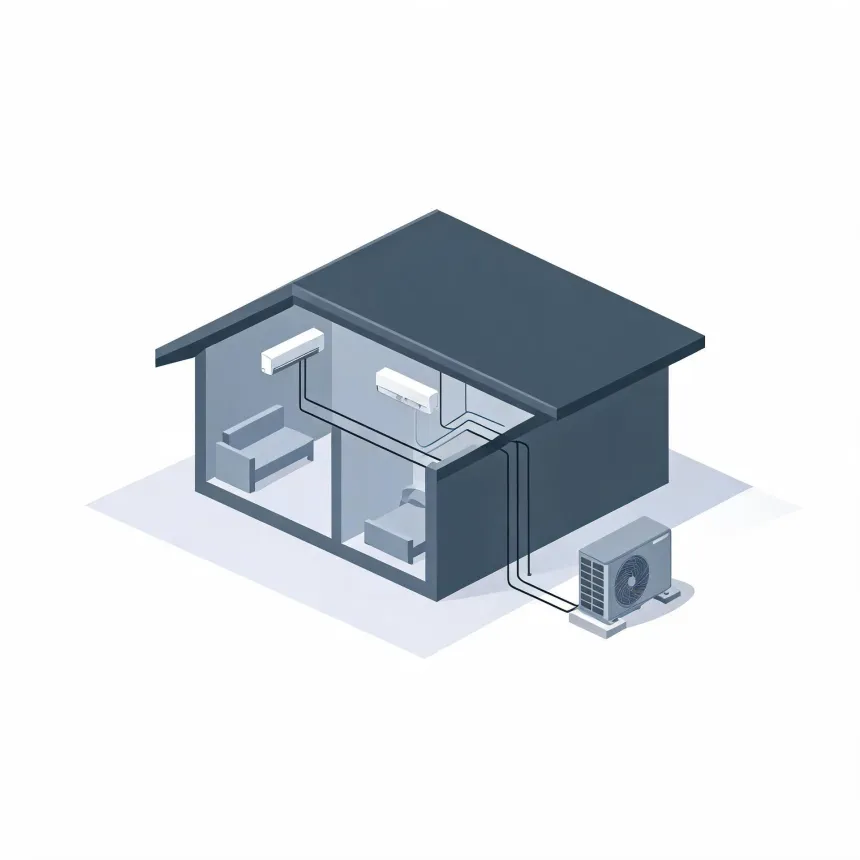
- A single outdoor unit can run several indoor heads, so one system can cover more than one room. Each indoor head handles one room or open area on its own thermostat, so you can heat or cool only the rooms in use. The right number for your house depends on how many rooms need separate control and how the space is laid out, which is something a contractor sizes room by room.
- Can a mini split heat a whole house?
- It can, if enough indoor heads are placed to reach every room, but that takes real planning. Mini splits heat by moving heat rather than burning fuel, so they still work in cold weather, which matters here with winter lows averaging 26°F. Whole-house coverage usually means a multi-zone system sized for the square footage and how the rooms connect, so a contractor would need to look at the house to lay that out properly.