Mini Split Installation in Salina, KS
A new system here will heat from October through April and cool from May through September every year. Tell us about the house, and a licensed contractor who covers Saline County will get in touch.
Tell us about the job
It takes about a minute.
What Salina winters and summers ask of a mini-split
Your mini-split runs almost year round here. Heat from October through April, cooling from May through September, that's the full 12 months with barely a break between seasons.
Winter nights average 22°F, cold enough that the heat pump side has to work for its keep. Summer afternoons average 90°F, so the cooling side gets a real workload too. A unit installed new has to be sized for both ends of that range, not just one. Any mini-split manufactured now has to meet 14.3 SEER2 for cooling and 7.5 HSPF2 for heating, the federal minimum for split-system heat pumps, ductless included.
- 7 months
- October through April, your system heats
- 5 months
- May through September, it cools
- 22°F
- the average winter night it heats against
- 90°F
- the average summer afternoon it cools against
NOAA nClimDiv, 1991–2020 normals
In Kansas, HVAC licensing for homes is left to the counties and cities.
Saline County sets its own rule on who can do HVAC work, since Kansas leaves that to the cities and counties instead of running a state license. That means there's no state record to check on a contractor working here. Whatever standard applies comes from the county or the city the house sits in, not from Topeka.
For a mini-split install, the protection in most places comes from the local permit process. The building office issues a permit for the installation and sends someone out to inspect the work once it's done, which is what catches a bad line set connection or a unit that wasn't mounted right. That inspection is the check that exists here, since the county is where the rule comes from, not the state.
Source: Kansas Office of Revisor of Statutes
- Is a mini split worth it?
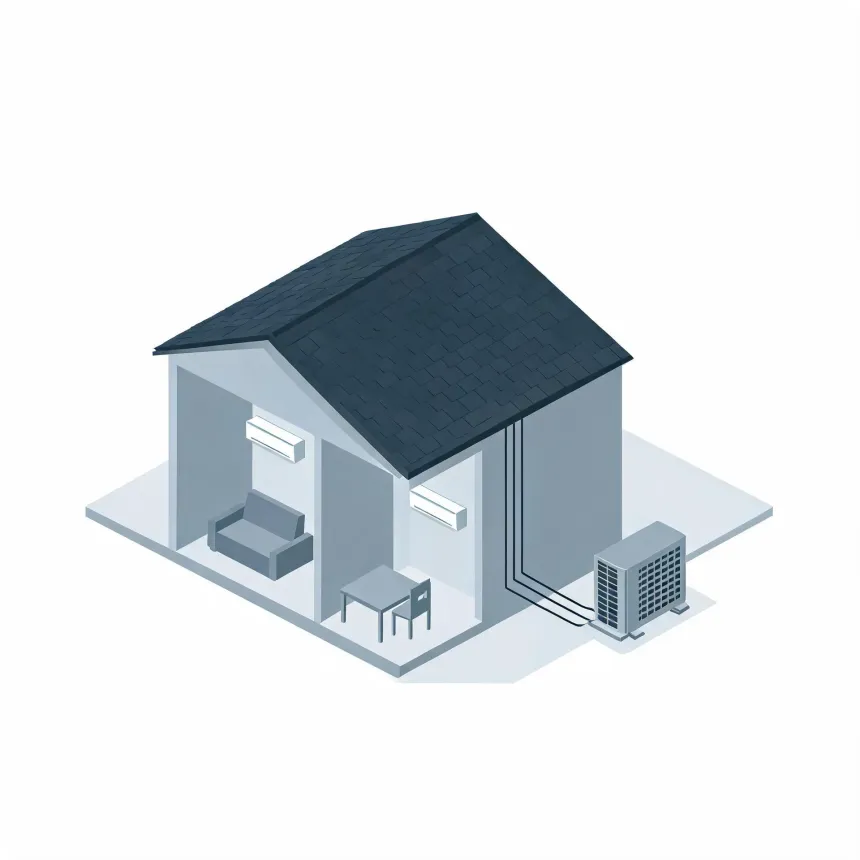
- For the right room or house, yes. A mini split heats and cools without ductwork, so it works well for additions, garages, or homes that use something other than ducted gas heat. Salina winters average 22°F and summers average 90°F, and a mini split rated for this climate handles both ends. Whether it makes sense for a whole house depends on how the house is built and what's there now, and a contractor can walk through that on site.
- How many rooms can a mini split cover?
- A single outdoor unit can run one indoor head or several. Each indoor head is sized for the room it serves, so covering more rooms means adding more heads to the same outdoor unit or installing more than one system. The right count depends on the square footage and layout of each room, which a contractor measures before recommending a system.
- Can a mini split heat a whole house?
- It can, if there's a head in every room that needs heat. A single indoor unit only heats the room it's in, so whole-house coverage means a multi-zone system sized for each space. Salina needs heat from October through April, seven months of the year, so the system has to hold up on the coldest nights, not just the mild ones. A contractor can size it room by room based on the house.