
Duct Cleaning in Salina, KS
Tell us about your home, and a licensed contractor who covers Saline County will get in touch.
Tell us about the job
It takes about a minute.

Salina ducts work seven months straight
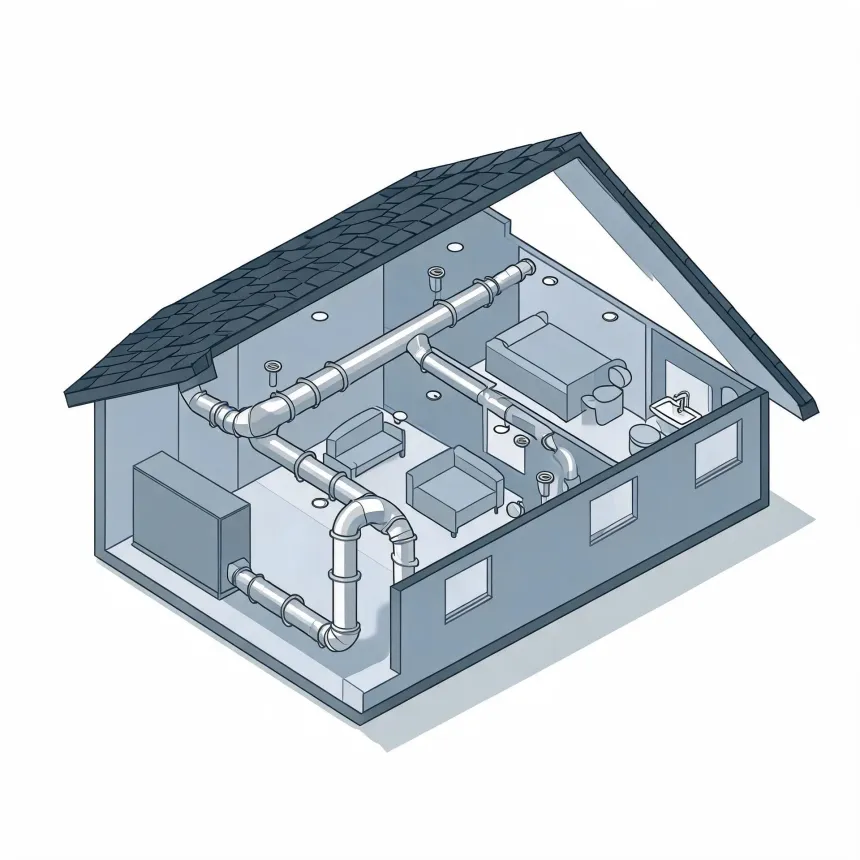
Your furnace runs October through April here, close to seven months a year. On the cold nights that average 22°F all winter, the blower pushes air through the ducts again and again, and whatever is sitting in them moves through the house with it. Dust and pet hair settle in the runs during the months the system sits idle, then get stirred loose once the heat kicks on for the season.
Saline County has logged 102 damaging wind events and 13 winter storms over the past ten years. Wind-driven dust works into a house through gaps around doors and windows, and it ends up in the same ducts that carry your heat. A duct system full of that buildup makes the furnace push harder to move the same air through every room.
- 7 months
- October through April, your furnace pushes air through your ducts
- 5 months
- May through September, your air conditioner does the same
NOAA nClimDiv, 1991–2020 normals
- How often should air ducts be cleaned?
- Most homes do fine with a cleaning every few years. If anyone in the house has allergies, or you've had renovation work that kicked up dust and debris into the ductwork, sooner makes sense. A contractor can look at your ducts and tell you whether yours need it now or can wait.
- Is air duct cleaning worth it?
- It's worth it if you see dust blowing out of the vents or buildup around the grilles. Homes here need heat from October through April, so air is moving through those ducts for seven months straight, carrying whatever is inside them into the rooms you live in. If nobody in the house has allergies and you don't see buildup at the vents, it may not change much for you right now.
- What does air duct cleaning involve?
- A contractor uses tools to loosen dust and debris built up inside the ductwork, then vacuums it out with high-powered equipment. This covers the supply and return ducts along with the grilles and registers, and sometimes the coil and blower if they're accessible. The goal is to remove what's collected inside the ducts, not just what you can see at the vent.