Mini Split Installation in McPherson, KS
A new system here will heat from October through April and cool from May through September every year. Tell us about the house, and a licensed contractor who covers McPherson County will get in touch.
Tell us about the job
It takes about a minute.
What a mini-split in McPherson has to handle
Your mini-split will run nearly year round here. Winters bring nights averaging 23°F from December through February, and the heat pump has to keep pulling warmth out of that cold air for the full October through April stretch. Come summer, it switches over and works through afternoons averaging 90°F, May through September. That's 12 months of duty, not a few weeks of relief on either end.
A unit installed new has to meet the federal minimum for split-system heat pumps, 14.3 SEER2 for cooling and 7.5 HSPF2 for heating. With McPherson County's mix of hard cold and hard heat, sizing it to actually hit those numbers in both seasons matters more than it would somewhere milder.
- 7 months
- October through April, your system heats
- 5 months
- May through September, it cools
- 23°F
- the average winter night it heats against
- 90°F
- the average summer afternoon it cools against
NOAA nClimDiv, 1991–2020 normals
In Kansas, HVAC licensing for homes is left to the counties and cities.
McPherson County sets its own rule, and this is one of the places that leaves it to the counties and cities rather than testing contractors at the state level. That means there is no state record of who is licensed to do this work. Whatever standard applies here comes from the county or city office, not from Topeka.
For a mini-split installation, the protection that reaches this job is the permit and inspection most local building offices require when a furnace, air conditioner, heat pump or water heater gets replaced. That is not a license. It means the building office reviews the installation and signs off on it once the work is done, which gives the job a check even where no state credential exists.
Source: Kansas Office of Revisor of Statutes
- Is a mini split worth it?
- For the right setup, yes. A mini split heats and cools without ductwork, so it works well in additions, garages, or older homes where running ducts is not practical. McPherson winters average 23°F and summers hit 90°F, and a mini split is built to handle that full range in one system. Whether it makes sense for your house depends on how it is laid out and what heating or cooling you have now, so a contractor will need to look at the space to say for sure.
- How many rooms can a mini split cover?
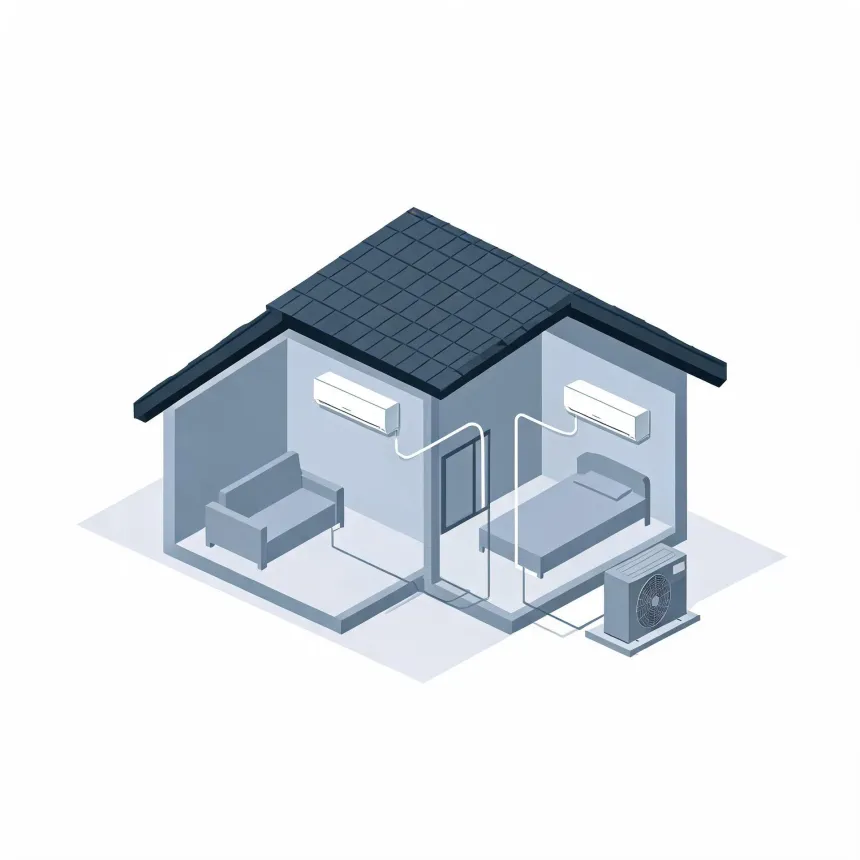
- A single outdoor unit can run one indoor head or several. Single-zone systems cover one room or open area. Multi-zone systems run several indoor heads off one outdoor unit, each with its own thermostat, so different rooms can be heated or cooled to different settings. How many zones your house needs comes down to the layout, so a contractor will size the system to the rooms you want covered.
- Can a mini split heat a whole house?
- It can, if it is sized and placed for that. A mini split is a heat pump. It pulls heat from outside air and moves it in, even in cold weather. Covering a whole house takes enough indoor heads placed where the heat needs to go, since a mini split does not push air through ducts to rooms without a unit. McPherson winter lows average 23°F, so the system also needs to be rated for that kind of cold. A contractor can lay out how many zones your house would need to heat it all.