
HVAC Installation in Overland Park, KS
A new system here will heat from October through April and cool from May through September every year. Tell us about the house, and a licensed contractor who covers Johnson County will get in touch.
Tell us about the job
It takes about a minute.

A system that runs almost the whole year
In Overland Park, a heating and cooling system doesn't get much of a break. Homes here need heat from October through April and cooling from May through September, twelve months covered between the two. Winter nights average 23°F, cold enough that a furnace is cycling on and off through most of the night to hold the house steady. Summer afternoons average 87°F, so the air conditioner is doing real work too, not just taking the edge off.
Most homes here heat with gas, and a new furnace has to be sized for nights that average 23°F, not just a mild one. A new air conditioner has to meet the current federal efficiency minimum and still keep up on afternoons that average 87°F. Kansas also sees its share of winter storms and wind, and close to one in five households in the state went at least 24 hours without power in 2024. That's worth thinking about when deciding how a new system handles a power interruption.
- 7 months
- October through April, your system heats
- 5 months
- May through September, it cools
- 23°F
- the average winter night it heats against
- 87°F
- the average summer afternoon it cools against
NOAA nClimDiv, 1991–2020 normals
In Kansas, HVAC licensing for homes is left to the counties and cities.
Kansas leaves this to the county or city, so whether a contractor needs a local license depends on the address, not on any state test or record. There is no state list to check and no state exam behind the work. What exists instead is whatever Johnson County or the city within it requires, and that can mean a local license, a registration, or nothing at all, depending on where the house sits.
For an installation like this, the protection that reaches into the home is the permit. In most cities and counties, putting in a new furnace, air conditioner or heat pump needs a permit from the local building office, and the finished work gets an inspection once it is done. That permit and inspection are what stand behind the job here, not a state license.
Source: Kansas Office of Revisor of Statutes
- When should I replace my HVAC system?
- Once it's past 12 years old and starting to need repairs, replacing it usually makes more sense than fixing it again. Watch for signs like uneven heating or cooling, rising energy bills, or a system that runs longer than it used to. Winters here average 23°F, so a furnace that struggles in December is one you can't afford to have fail outright. If a repair is going to cost a large share of what a new system costs, that's usually the point to stop patching it.
- Should I replace my furnace and air conditioner at the same time?
- If both are old, yes, it's worth doing together. A furnace and air conditioner installed at the same time are matched to work with each other, and a contractor can handle both in one job instead of coming back later for the second. Homes here need heat from October through April and cooling from May through September, so both systems work hard all year and tend to wear out around the same time. If one is much newer than the other, replacing just the older one is reasonable. A contractor can look at both and tell you whether pairing them makes sense for your house.
- What happens during an HVAC installation?
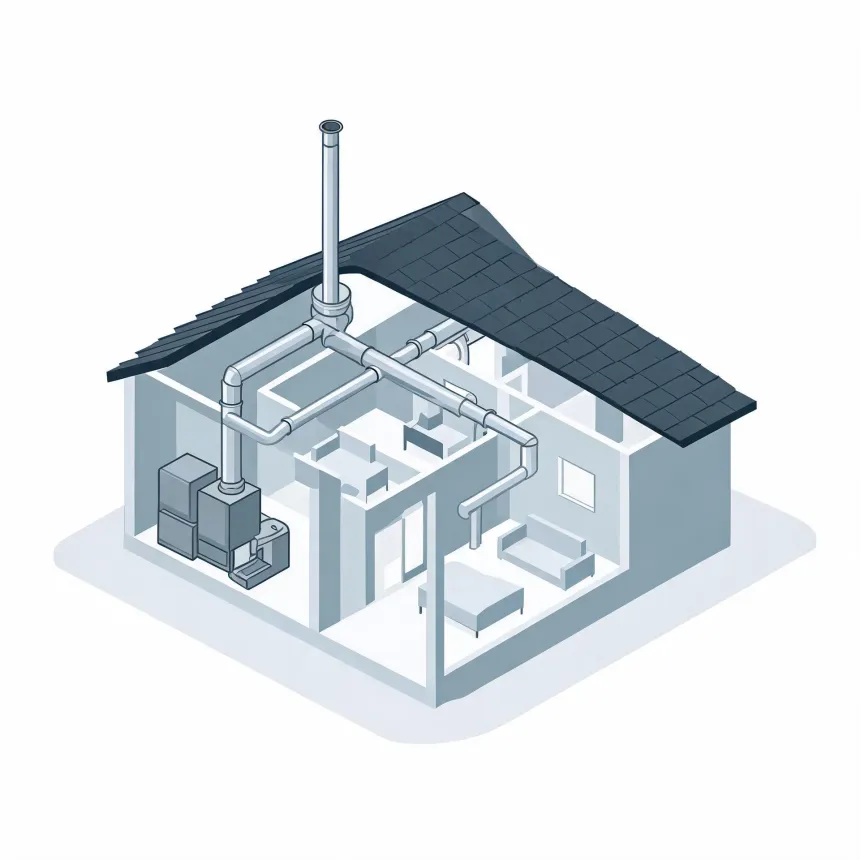
- A contractor removes the old furnace, air conditioner or heat pump and sets the new equipment in its place, then connects it to the ductwork, gas or electrical lines, and the refrigerant lines if it's an air conditioner or heat pump. They'll check the ductwork for leaks or sizing problems, since new equipment run through bad ducts won't perform the way it should. Most cities and counties here require a permit for this work along with an inspection once it's finished, so the job isn't done until that inspection is passed. The whole process is more involved than swapping one box for another, which is why a contractor will want to see the house before saying what the job involves for you.