
Duct Cleaning in Great Bend, KS
Tell us about your home, and a licensed contractor who covers Barton County will get in touch.
Tell us about the job
It takes about a minute.

Seven months of heating pushes air through ducts that rarely rest
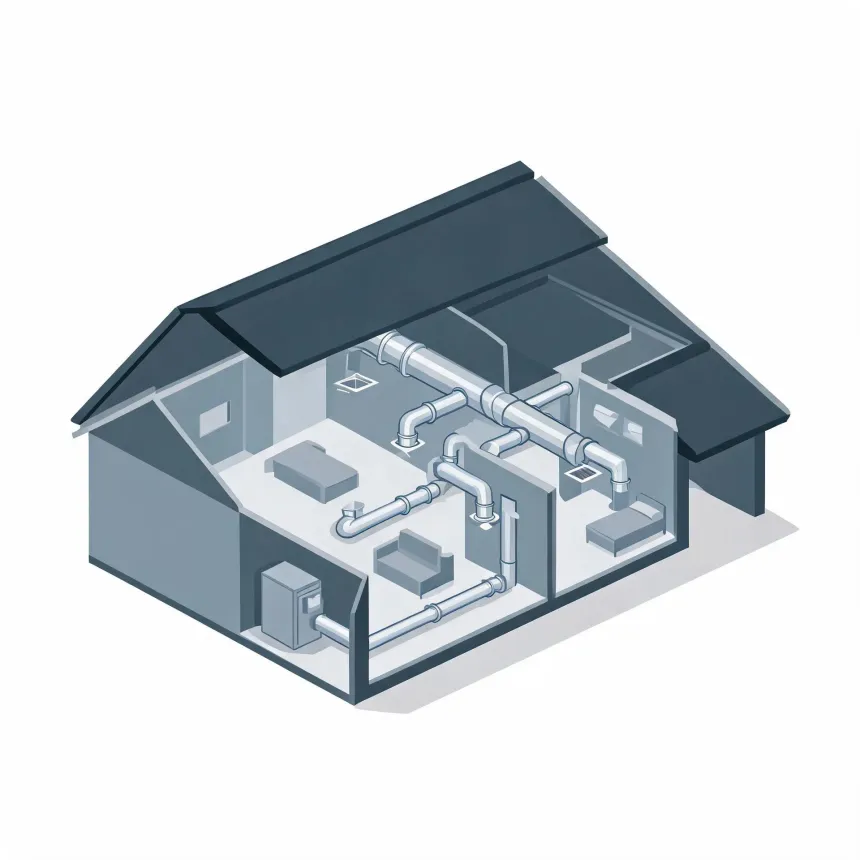
Your furnace runs from October through April in Great Bend, seven months of the year. On winter nights that average 21°F from December through February, it runs long and often, pulling household air through the ductwork over and over. Dust, pet hair, and dry winter skin get carried along with that air, and some of it settles inside the duct runs instead of coming back out through the vents.
Wind is part of the picture too. Barton County has logged 126 damaging wind events over the past ten years, and wind that strong works dust and debris into a house through every gap it can find. That debris joins what is already moving through the ductwork, and over years it collects along the seams, turns, and low spots where the air moves slowest.
- 7 months
- October through April, your furnace pushes air through your ducts
- 4 months
- June through September, your air conditioner does the same
NOAA nClimDiv, 1991–2020 normals
- How often should air ducts be cleaned?
- There is no fixed schedule that fits every home. It should happen sooner if someone in the house has new allergy symptoms, if there has been a rodent problem, or after any renovation that leaves dust in the ducts. A contractor can look inside with a camera and tell you whether yours need it now or can wait.
- Is air duct cleaning worth it?
- It depends on what is actually in the ducts. If there is visible dust coming out of the vents, a musty smell when the furnace runs, or signs of pests, cleaning solves a real problem. If the air seems fine and no one in the house has breathing trouble, it will not change much. A contractor can check inside the ducts and tell you what is really there before you decide.
- What does air duct cleaning involve?
- A contractor connects a vacuum to the duct system to create negative pressure, then agitates the inside of each duct with brushes or air tools so the loosened dust gets pulled into the vacuum instead of into your rooms. This covers the supply and return ducts, the grilles, and usually the coil and blower area too. Most jobs finish with a new filter once the system is clean.