
No phone calls to make
Why your heat won't reach upstairs in Kansas
Upstairs rooms stay cold while the thermostat downstairs says the furnace is running fine. That usually comes down to duct runs, a blower that can't push air that far, or a return that can't keep up, and which one it is matters for the fix. Instead of calling around to different companies and explaining the cold bedrooms over and over, you get matched with one local contractor who works on furnaces like yours all winter and can look at the actual cause.
Skip the callsHeat rises, but that's not why the upstairs stays cold. In most two-story houses the furnace and ductwork were sized to split air evenly, and once the trunk line narrows or a return duct can't pull enough air back downstairs, the upper floor loses the balance first. A blower that's lost output or a duct run with a leak or a crimp will show up exactly this way: fine air close to the furnace, weak air at the far end of the longest run, which upstairs almost always is. It can also be a closed or blocked register, a damper stuck in the wrong position if your system has zone dampers, or a return that was never large enough for the upstairs rooms it serves. None of this means the furnace itself is failing. It means air isn't making it where the ducts are supposed to carry it, and that's a repair to the duct system, the blower, or the dampers, not the furnace itself.




Your furnace has one blower running at one speed, and that same fan has to push air through every duct in the house, close or far. Air takes the path of least resistance, so rooms near the furnace get full flow while the upstairs run, usually the longest one, loses pressure along the way. Add in a return that's only downstairs, and the upstairs has no easy way to send its air back to be reheated. It just sits there, cooling. A contractor can check static pressure at the furnace and at the farthest upstairs vent to see how much the system is losing over distance. If the trunk line has balancing dampers, closing down the downstairs branches a little can force more air up the run to the second floor. None of that helps if the blower itself is weak, from a failing motor or a wheel caked with dust, because a fan that's lost speed will still reach the nearby rooms fine and just fall short on the long run upstairs.
What's Actually Happening in the Ductwork
- Your furnace runs on a fixed blower speed set at install, and that speed has to move air through every run in the house, not just the ones nearest the unit.
- Supply ducts branch off the main trunk, and the longest runs, usually the ones heading upstairs, lose pressure before the air ever reaches the vent.
- A single return low in the house pulls cold air back to the furnace, and if there's no return upstairs, that floor's air has nowhere to cycle back to.
- Balancing dampers inside the trunk line let a contractor close off flow to the downstairs branches so more air is forced up the duct run to the second floor.
- A blower that's lost speed from a failing motor or a dirty wheel will reach the closest rooms fine but fall short on the longest run in the house.
- Static pressure builds when a duct run is too long or too narrow for the air it's asked to carry, and the upstairs vents are usually the first to show it.


Is your upstairs still cold at night
You've probably felt the difference walking up the stairs. The air gets cooler with every step, and the bedrooms stay a few degrees off no matter where you set the thermostat downstairs. Vents upstairs might blow air that feels weak or barely warm, while the ones downstairs blow strong. Some rooms might have a vent that stays cold to the touch even when the furnace has been running for an hour. Doors that used to shut easily might stick as the house shifts with the temperature swings. Left alone, an upstairs that never warms up means that part of the house works harder for less, and in a Kansas winter that can mean rooms too cold to use comfortably, pipes in exterior walls up there running colder than they should, and a furnace cycling longer than it needs to just to satisfy a thermostat that isn't reading where the real problem is.
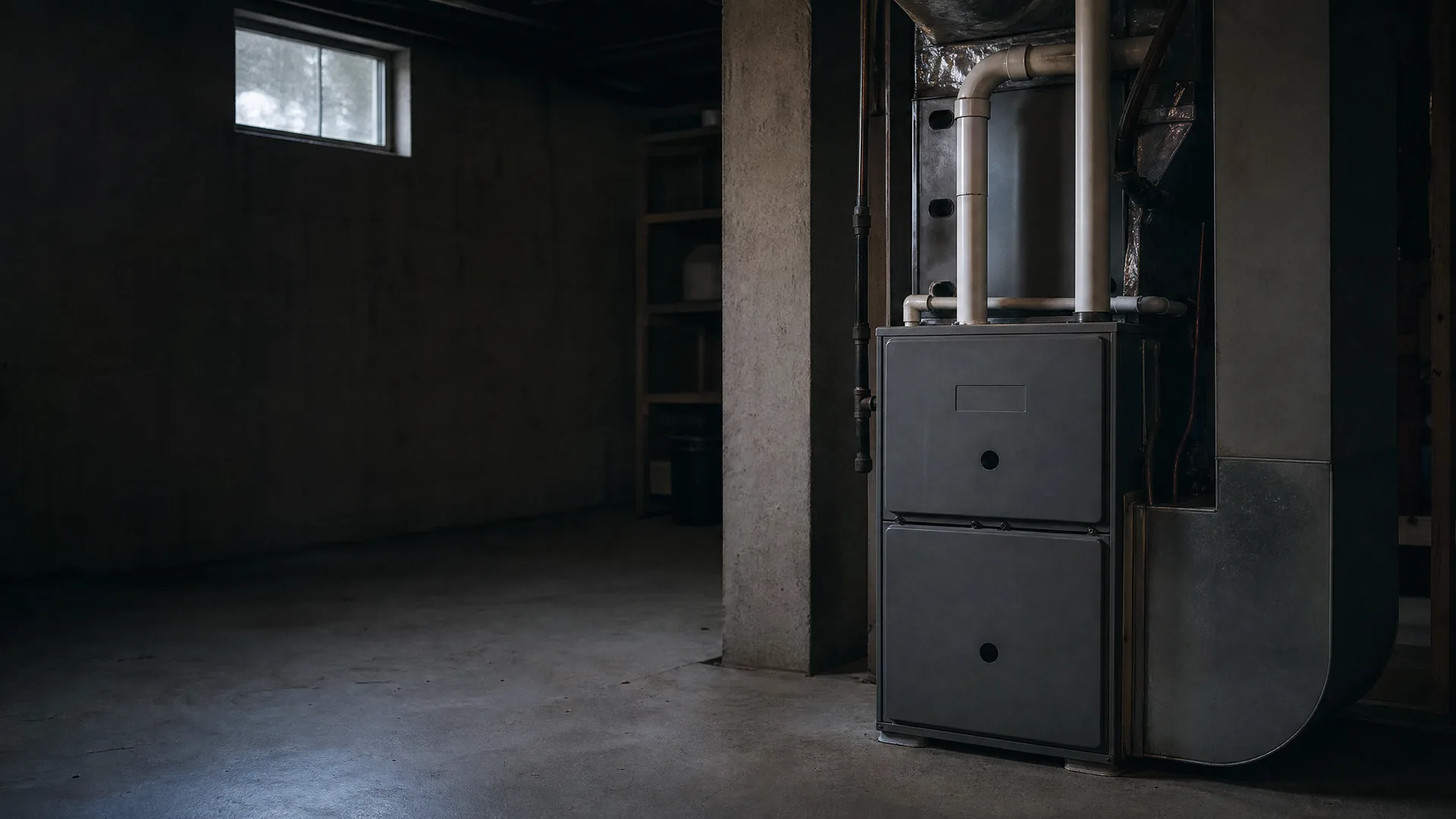
You're up at ten to check on the kids before bed, and the stairs tell you everything. Downstairs was warm enough to sit in a t-shirt. Two steps from the top, the air turns. You find the thermostat upstairs and bump it up again, same as you did last night, and head back down to the basement to see if the furnace is even working. It's dark down there except for the glow of the pilot light, a little dust hanging in the air where the cabinet door swings open. The furnace runs. It just isn't getting the job done past the first floor. You've looked up a few HVAC companies before on your phone and gotten tired of typing the same five sentences to each one.
One form, no calling around
A furnace that runs fine downstairs and still leaves the upstairs cold isn't something you diagnose by feel. It takes someone checking static pressure, duct sizing, and the return path to know if the fix is a damper adjustment or a bigger rework. Finding that person yourself means searching, calling a few companies, explaining the same cold-stairs story three times, then sitting with quotes that don't quite match because each contractor looked at something different. This request goes to one licensed contractor working in Kansas, someone who deals with this split-level heat complaint every winter and knows which of your rooms are likely to be the problem before they walk in. No flood of calls from competing companies, just the one who's already familiar with how Kansas houses run cold upstairs. You're still the one who decides what happens next. But you stop being the one who has to find out who's worth calling.

What a cold upstairs costs you all winter
You end up running the furnace longer than it should need to, because the thermostat downstairs is satisfied long before the upstairs catches up. Every degree you add to cover that gap adds to the gas bill, and a space heater in a bedroom adds more on top of that. Meanwhile the room itself tells on the system: closed doors trap what little warm air makes it up there, closets and corners along outside walls stay colder than the rest, and anyone sleeping upstairs feels it most around 2 or 3 in the morning when the furnace cycles off.
Sorting out whether it's the ductwork, the blower, or a return that can't keep up isn't something to guess at over the phone with three different companies. You'd be explaining the same layout, the same stairs, the same cold bedroom, over and over, then comparing quotes that may not even be diagnosing the same problem. A local contractor who services furnaces in homes built the same way yours was knows which of those three it usually turns out to be, and can tell you by checking, not guessing.

Winter nights average 23°F statewide
Nights here average 23°F across December, January and February, so your furnace isn't idling much once the sun goes down. It's running long stretches to hold the thermostat's setting, and that's exactly when a duct run that can't keep up shows itself upstairs first.
NOAA nClimDiv 1991-2020 county normals weighted by homes
Why the upstairs stays cold
- A cold upstairs with a downstairs that heats fine usually traces to duct size, blower output, or a weak return, not warm air simply rising past the bedrooms.
- A licensed furnace repair contractor can measure static pressure and airflow at the vents to find which of those three is actually failing.
- Guessing with a damper or a thermostat setting can mask the problem for a while without fixing what's undersized or restricted.
- Kansas nights average 23°F through December, January and February, so the furnace runs long enough most evenings for a weak duct run to show itself upstairs.
- A contractor who works on furnaces in homes like yours all winter has likely traced this exact complaint before and knows where to look first.
- Getting the right fix the first time means one visit instead of swapping parts or adjusting vents and hoping the upstairs catches up.
A furnace that keeps the downstairs warm while the upstairs lags isn't failing outright. It's failing to move enough air that far, or losing the return path that would let it keep up. Three things cause this: a duct run sized too small for the distance it covers, a blower that can't push past what the ducts allow, or a return that can't pull air back downstairs fast enough to keep the system balanced. Which one it is changes the fix, and that's not something to guess at from the thermostat or by closing a few vents downstairs. A licensed contractor checks static pressure and airflow at the registers themselves, and that reading points to the actual cause instead of a workaround that covers it up for a while.
Kansas winters give this problem plenty of chances to show itself. With nights averaging 23°F through December, January and February, the furnace isn't cycling briefly and shutting off. It's running long stretches most evenings, and a duct run that's barely adequate on a mild night falls further behind once the cold settles in and stays.
Finding someone who already knows this pattern saves you from explaining it twice or comparing bids from contractors who've never seen your specific layout. A local contractor who services furnaces all winter in homes like yours has likely traced this same complaint before and knows where to start looking.


Furnace Repair
Skip the search
The pro who reaches out is licensed in Kansas.
