
Does closing vents save heat in a Kansas home

Send the form, and lining up the furnace tune-up stops being yours to chase.

Tune-up, service, or cleaningFurnace or heatingKansas
Step 1 of 2

What ZIP code is the job in?

Closing vents in unused rooms does not save heat, and in most Kansas homes it works against you. Your furnace and ductwork are sized to move a set amount of air through the whole house. Shut several vents and that air has nowhere to go, so pressure builds in the ducts. The furnace works harder to push air against that resistance, which can strain the blower motor and, over time, crack ducts or loosen joints where they leak into the attic or crawlspace. Some systems have a pressure switch that will shut the furnace down rather than let that happen. With gas heat common across Kansas, that extra strain shows up as higher gas use, not lower, since the furnace runs longer to heat the rooms still open. The better move is leaving vents open and having the system checked so airflow is balanced the way it was designed.

A gray high-efficiency furnace with two PVC vent pipes stands in an unfinished basement beside sheet-metal ductwork, a framed and plastic-covered wall, and a bare concrete wall with vertical pipes.

Vents left open

Air moves the way the ductwork was built to move it. Every room gets its share, the furnace runs its normal cycle, and pressure inside the trunk line stays where it should. The cabinet, the flue, and the joints along the supply line see the load they were designed for, nothing more.


A gray furnace cabinet in a basement, connected to galvanized sheet-metal ductwork and white PVC pipes, against a concrete wall with exposed metal piping and insulation overhead.

Vents closed off

Air backs up with nowhere to go. Pressure climbs in the ducts above and pushes air out through seams and joints instead of the rooms you still use. The blower works against that pressure every time it runs, and the furnace sitting on the other end feels it too.

Closed Vents vs. Open Vents

Vents closed

  • The air your furnace pushed toward that room has to go somewhere, and it backs up into the trunk line instead of leaving through a register.
  • Static pressure inside the ductwork climbs, and that pressure pushes air out through gaps and seams you can't see.
  • The blower works against that extra resistance every time it runs, whether it's a cold January night or a mild October afternoon.
  • A room with its vent shut stays colder than the rest of the house, so the thermostat keeps calling for heat to satisfy the rooms that are open.
  • Supply ducts that leak into a crawlspace or attic lose that extra air before it ever reaches a living space.
  • Over a winter of this, the furnace logs more run time than the house actually needs.

Vents open

  • Air moves through the house the way the ductwork was sized to carry it, with no extra pressure forcing its way out through seams.
  • The blower meets the resistance it was built for, nothing more, so it isn't working harder than it has to.
  • Every room gets the share of air the system was designed to give it, so the thermostat reads a house that's actually heating evenly.
  • The furnace cycles on and off closer to what the house really needs, rather than running longer to make up for a closed-off room.
  • A technician checking static pressure or airflow during a maintenance visit sees numbers that match how the system was set up to run.
  • Rooms you're not using still cost something to heat, but the system isn't fighting itself to do it.
A beige residential gas furnace with white PVC vent pipes, copper and yellow gas lines, and adjacent sheet-metal ductwork stands on a concrete floor beside a plain white wall.

Where that pressure goes

Closed vents push air into the gaps already in your ductwork, the seams in the trunk line, the joints where a branch run meets it. Most ducts leak some air no matter what. A furnace blower pushing against closed registers forces more air through those same gaps, and that air usually ends up in the attic or the crawlspace instead of the room you wanted heated.

A gray high-efficiency furnace with white PVC vent pipes and metal ductwork stands on a concrete floor beside a plain off-white wall in a basement.

What the furnace feels

A gas furnace draws return air across the heat exchanger to keep it within the range it was built for. Less air moving across it because vents are shut means that metal runs hotter than it should. Over years that shortens the life of the exchanger. A technician checking it during a maintenance visit can tell from the flame pattern and the exchanger whether airflow has been a problem.

Winter nights average 23°F statewide

With nights averaging 23°F across a Kansas winter, your furnace is running long cycles for months, not just on the cold snaps. Closing vents to try to ease the load only adds strain to a system that's already working hard through December and January.

NOAA nClimDiv 1991-2020 county normals weighted by homes

A room that stays cold anyway

Close the vent in a spare room expecting it to warm up the rest of the house, and what you'll likely find instead is that room still gets cold, just with no air moving through it at all. Meanwhile the bedrooms down the hall aren't any warmer. The furnace is still pushing the same amount of air, just with fewer places for it to go. You've given up a working room and gained nothing in the ones you're trying to heat.

A furnace working harder for less

Your furnace runs the same cycles whether those vents are open or shut, but with less relief for the air it's pushing out. That means more hours on the blower motor over a Kansas winter, and more wear on a cabinet and ductwork already working to get you through December and January. None of this shows up right away. It shows up as a repair call a few winters earlier than it should have, on parts that were never built to run against that kind of pressure.

A gray metal furnace with two white PVC vent pipes stands on a concrete floor beside galvanized sheet-metal ductwork in a basement or utility space with wood framing.
Before you get your furnace maintenance
A gray furnace cabinet in a basement with sheet-metal ductwork, white PVC vent pipes, and black gas piping against a concrete wall and wood-framed partition on a bare concrete floor.
After you get your furnace maintenance

Send one request and you're done looking

Only one pro gets your request, so you hear from one company.

No fee to send it, and nothing to sign.

A beige high-efficiency furnace stands on a concrete basement floor beside sheet-metal ductwork, with white PVC vent pipes and a gas line running along an insulated wood-framed wall.

What a working system looks like

Air moves out through every register and back through the return, same as the day it was installed. The blower runs its normal cycle without pushing against closed dampers. A furnace running this way puts less strain on the cabinet, the flue, and every joint along the supply line.

An older metal furnace with a louvered front panel stands against a concrete basement wall, connected to sheet-metal ductwork and a flue pipe, with copper and steel pipes running alongside.

What strain looks like over time

Dust collects heavier around the louvers when a furnace works harder than it needs to. Closed vents force the blower to push against pressure it wasn't built to handle, and that shows up as more wear on the unit long before it shows up as a bigger bill.

What's actually happening in the rooms you closed off

Walk your house in January and check the room you closed the vent in. It's cold, colder than the rest, and the air in there feels stale because nothing is moving through it. Meanwhile you might notice the furnace running longer cycles than it used to, or a faint burning smell near the cabinet that wasn't there before. Some homes start to pick up a musty smell near the closed-off room as moisture sits with no airflow to carry it out. None of that is your imagination. It's the system working against the pressure you created, and left long enough, it's wear on a furnace you'd rather not pay to replace early.

A gray high-efficiency furnace with white PVC vent pipes stands on a concrete pad in a basement, beside sheet-metal ductwork, copper piping and a poured concrete wall with wood framing at left.
A furnace running the way it was installed, with every vent open and air moving through the ductwork as designed.
A beige gas furnace in a basement with a metal flue pipe, galvanized sheet-metal ductwork to its left, and gas and water pipes along the concrete wall to its right.
This is the furnace a yearly checkup keeps running, with the strain of closed vents never added to its workload.
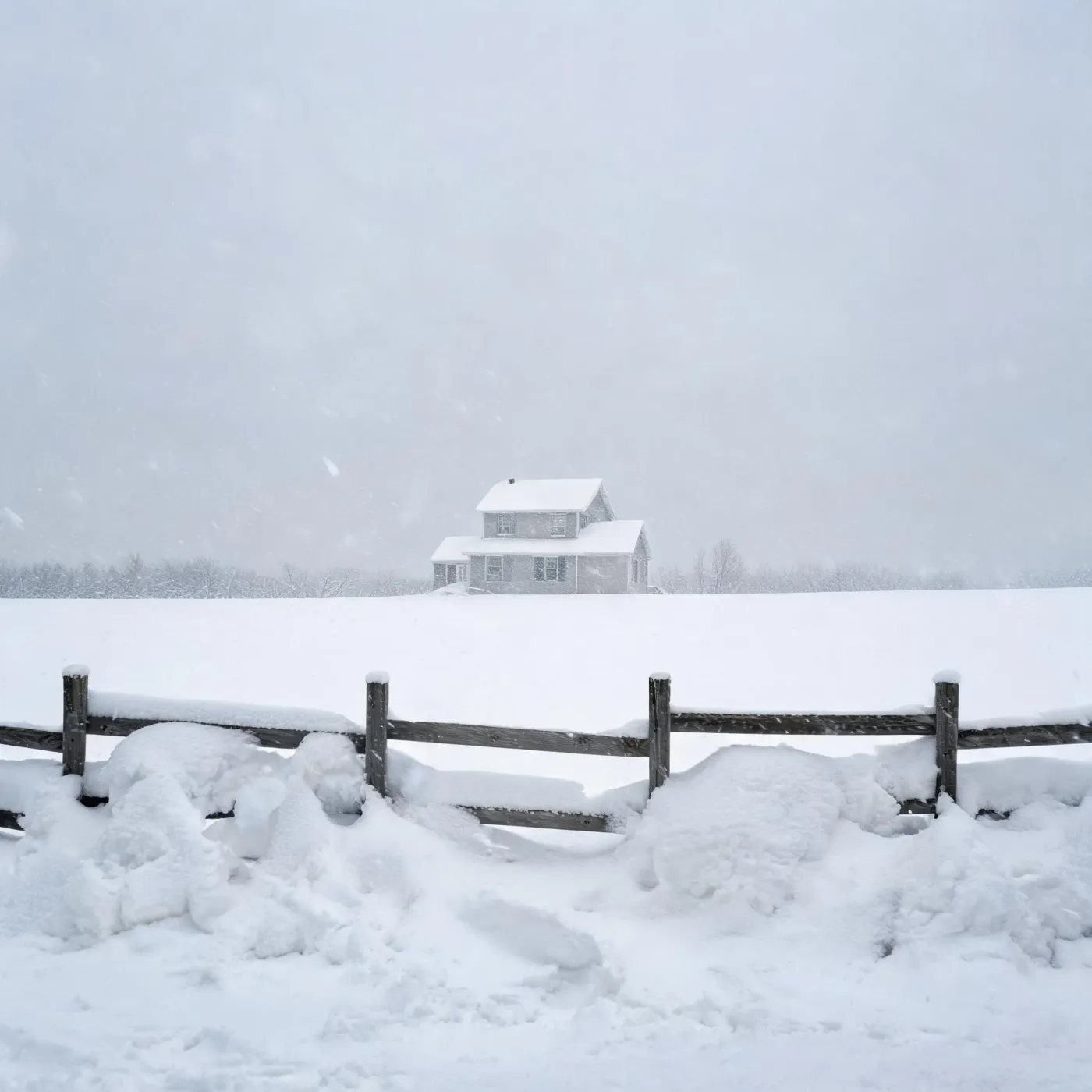
A two-story light-colored house with snow-covered roofs stands beyond a snow-filled field, with a weathered wooden post-and-rail fence half buried in drifts in the foreground under an overcast, hazy sky.

A Kansas winter night averages 23°F statewide, according to NOAA climate data. That's the air moving past your windows and siding for months, not just during a cold snap, and it's what your furnace is working against every time it kicks on. The colder that outdoor air, the longer each heating cycle has to run to bring the house back up to temperature. Close off vents on top of that and you're adding resistance to a blower that's already putting in long hours through December and January. The furnace doesn't get a break from the cold outside. It only gets a harder path to push air through.

NOAA nClimDiv 1991-2020 county normals weighted by homes

Why does closing a vent raise pressure in the ductwork

You closed a vent expecting it to push more warm air into the rooms you actually use. But you've read that it works against you, and you want to know what's happening inside the ductwork itself when that register shuts. It helps to know what the blower is actually doing on the other side of that closed damper.

The blower keeps pushing the same amount of air whether the vent is open or not

Your furnace's blower is built to move a fixed volume of air every time it runs, sized for the ductwork as a whole, not for however many vents happen to be open. Close one register and that air still gets pushed toward it. With nowhere to go, it piles up in the trunk line behind the closed damper. That's what raises static pressure. The blower doesn't ease off to match, it keeps running at the same speed against a tighter space, so the air inside the ducts is under more pressure than the system was built to handle. The ductwork itself becomes the path of least resistance, and in most homes that means a leak somewhere wins out over the room you were trying to heat.

  1. Blower pushes air down the trunk line toward every branch run.

  2. Closed registers block that air from leaving where it should.

  3. Pressure inside the ductwork climbs above its normal level.

  4. Trapped air forces its way out through seams and joints.

A woman in a dark gray sweater reclines on a light sofa with eyes closed and a slight smile, under a textured gray blanket with an open book resting on her lap, with a lit table lamp and plant in the background.
A smiling bearded man in a navy crewneck sweater sits at a dinner table with a glass of red wine, plates and glasses in the foreground, in a dimly lit room with a lamp and framed picture behind him.

The vents were never the problem

  • Closing vents in a room you don't use raises pressure in the ductwork instead of saving fuel.
  • Your furnace was sized to push air through every register in the house, not just the ones left open.
  • Trapped air finds its way out through the seams and joints already in your ductwork.
  • The room with the closed vent stays cold anyway, since nothing is moving through it.
  • A furnace working against closed registers runs longer to heat the rooms still open.
  • Leaving every vent open keeps air moving the way the ductwork was built to handle.

Your ductwork and furnace were matched as a system when they went in, built to move a certain volume of air through every register in the house. Closing a few doesn't lower that volume. It just gives the air fewer places to go, so it pushes harder against what's left open and against the seams and joints along the trunk line that were never meant to be the exit. That strain doesn't show up as savings on your bill. It shows up as a furnace running longer to push the same heat through fewer open rooms, and as warm air slipping out through gaps in the ductwork before it ever reaches a register. The room you closed off doesn't benefit either. With no air moving through it, it sits cold while the rest of the house works harder to make up the difference. None of this is a flaw in your system. It's what any forced-air furnace does when the path it was built to use gets blocked. The fix isn't closing vents room by room and hoping the math works out in your favor. It's leaving the system to run the way it was designed to, air moving freely out through every register and back through the return, and having someone who knows gas furnaces check the parts that actually do wear down over a Kansas winter. That's where the savings are, not in which vents are open.

A smiling man in a dark navy sweater sits on a light sofa in a living room, with a glass bowl of popcorn on a wooden coffee table and bookshelves behind him.
A smiling man in a dark green sweater sits on a tan leather sofa in a dimly lit living room, with a bowl of popcorn in the foreground and a kitchen area blurred behind him.
A smiling middle-aged man in a dark shirt sits on a gray sofa in a living room, with a bowl of popcorn on a side table and shelves, a window and kitchen area behind him.
A smiling bearded man in a dark gray t-shirt sits on a gray couch in a living room, with a large glass bowl of popcorn on a wooden table in the foreground.

Finding a pro stops being your job

Leaving every vent open is what actually keeps your furnace running the way it was designed to, and a yearly checkup is what keeps it running that way through a Kansas winter. A local contractor who services furnaces all season knows what closed vents and long cold-weather cycles tend to wear out first, and checks those before they fail. Send the request and that search is done, one licensed contractor near you, not a string of calls to field.

Find a licensed pro

Your request stays with one local pro.

Sending the form costs nothing.