

Sealed and intact
This is a trunk line with its branch runs still tight at every joint. Air moves from the furnace to each room without a way out in between, so what the blower pushes is what the vent delivers, room by room.
A musty room, a vent that never seems to blow as hard as the rest, a summer bill that doesn't match how long the AC actually ran. These are the kinds of things that send a Kansas City, Kansas homeowner looking for answers about leaky ducts. The trouble is finding someone who'll actually come look at them. You could spend an evening searching, calling a few companies, explaining the same symptoms over and over, then waiting on quotes to compare. Or you could answer a few questions here and get matched with one licensed contractor local to Wyandotte County, someone who checks ductwork in homes like yours every summer and every winter and knows what usually turns up. No list of companies to sort through, no second and third call to repeat yourself on. Just one contractor, already pointed at your situation, ready to take a look.
You've noticed a room that never cools or heats the way the rest of the house does, or a utility bill that climbs even when the system isn't running any longer than usual. You're trying to figure out if the ductwork itself is the problem before you call anyone about it.
A duct that's come loose at a joint or split along a seam lets air escape into the attic or crawlspace before it ever reaches the room it was meant for. That shows up as a bedroom that stays warm in July no matter how long the AC runs, or a floor vent blowing weak air compared to the one next to it. It also shows up on the bill, since the system has to run longer to make up for what it's losing along the way. With summers here running long and muggy and winters cold enough that most homes lean hard on gas heat, a leak costs you in both directions, all year, not just one season.




Half the homes here were built by 1962
Half the homes in Wyandotte County were built in 1962 or earlier. Ductwork that old has had decades of joints and seams to work loose.
Heat runs October through April
Furnaces here run about seven months a year, October through April. That's seven months of air pushing through every seam that isn't sealed tight.
Cooling runs May through September
Air conditioning runs about five months a year, May through September. Add that to the furnace months and the ducts are moving air most of the year.
ACS 2020-2024 · NOAA nClimDiv 1991-2020

A duct run leaking at a seam or joint usually shows up as the same room running warm in winter and warm in summer, and a bill that doesn't line up with how long the system ran. The air is getting out somewhere between the furnace and the vent, into the attic or crawlspace instead of the room. A contractor can find the leak with a pressure test or by checking each run by hand, seal it, and the room starts acting like the rest of the house again.

Sometimes there's no leak at all. The duct feeding that room was undersized or routed badly when the system went in, so it never got enough air even new. No amount of sealing fixes that, because there's nothing to seal. This takes a different fix, usually resizing or rerouting that run, and it's worth ruling out before paying to seal ducts that were never the problem in the first place.
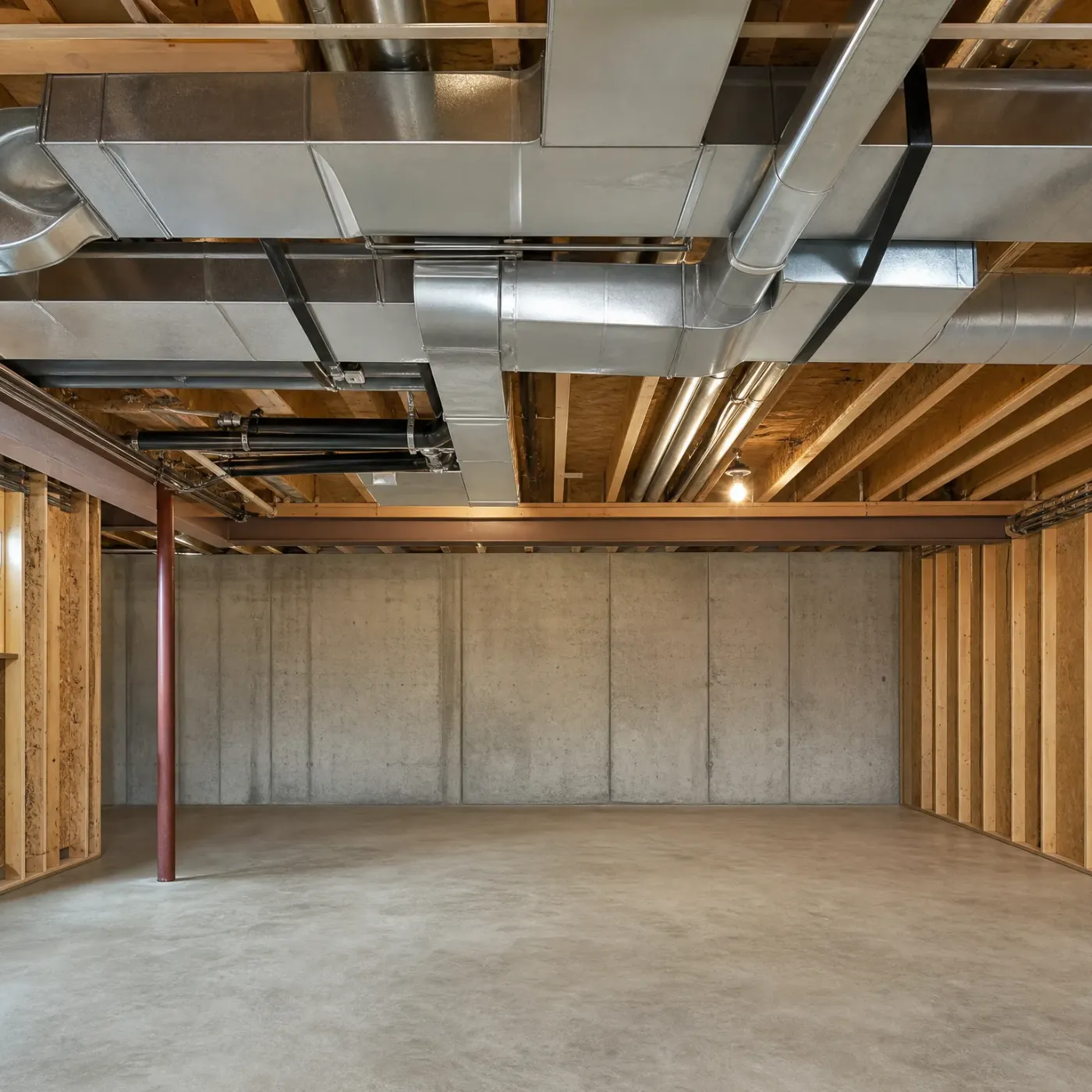
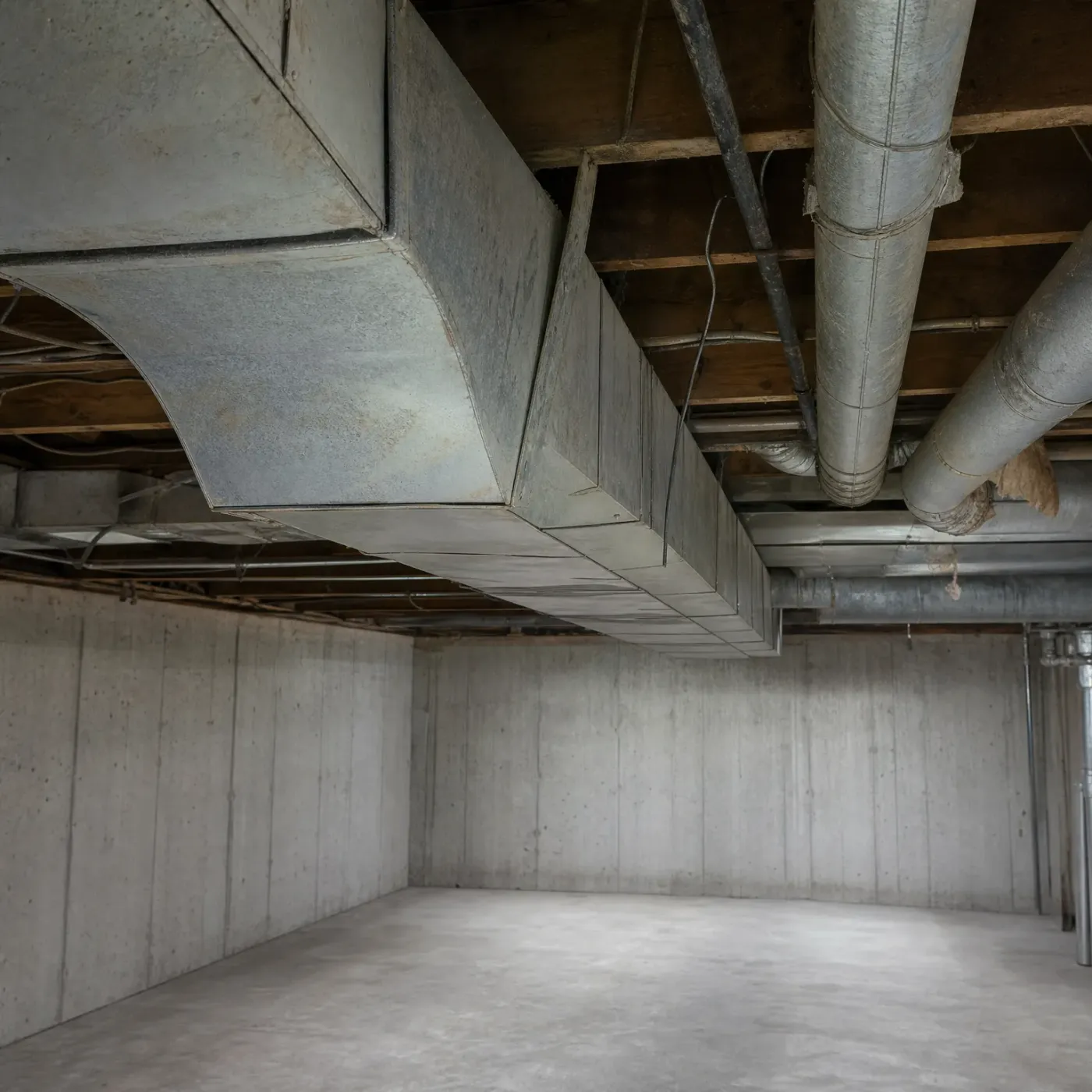
Walk the house with the system running. One room never gets as cold or as warm as the rest, the door to it stays shut half the year because nobody's comfortable in there. Dust shows up fast on furniture even right after cleaning. The furnace or AC seems to run long stretches without the house catching up. Check the attic or crawlspace and you might find a flex run sagging loose at a joint, or insulation packed down flat under a seam that's been leaking warm or cold air into a space nobody lives in. Left alone, the furnace and AC work harder every month to make up for air that never reaches a vent, and that shows up as wear on the system long before it shows up as a breakdown.
The blower pushes heated or cooled air into the duct system.
Air travels through the trunk line toward each branch run.
At a loose joint or torn seam, air escapes into the attic or crawlspace.
Less air reaches the vent than the furnace or AC actually produced.


You can check vents and crawlspaces yourself, and plenty of homeowners do, but finding out which seam is actually leaking usually means someone crawling through the attic or basement with a duct blaster to find it. That's a different job than looking. Once you've gone through the checks above and you still have a room that won't hold temperature or a bill that doesn't add up, the next step is getting someone out who works on duct systems in Wyandotte County homes all the time and knows where joints tend to fail in houses built the way yours was. That saves you from calling around to a handful of companies, explaining the same symptoms to each one, and sorting through different quotes for work you can't fully judge yourself. One request here goes to one licensed local contractor instead. You've already done the hard part, narrowing down what's wrong. Handing the rest off means it gets looked at properly instead of staying a guess.
A contractor who tests ductwork isn't just eyeballing the attic. A duct blaster hooks to the system and pressurizes it, so the amount of air escaping before it reaches a vent gets measured rather than guessed at. From there, pressure pan testing goes vent by vent to find which branch run is actually losing the most air, since one run can be leaking far worse than the rest. Where a joint is suspect, a smoke pencil shows the air moving out of it in real time. Most leaks don't announce themselves with a hiss or a draft you can feel, so this is often the only way to confirm one. The return side gets checked too. A leak on the return pulls attic or crawlspace air into the system before it's ever conditioned, which is a different problem than supply air leaking out, but it shows up the same way on a bill. Once a leak is found, the material matters. Mastic sealant or metal tape holds up on duct seams for years. Cloth duct tape dries out and peels loose within a few years, leak or not, so a repair sealed with it tends to fail again before long. The fix doesn't have to chase every small leak either. A single joint near the furnace, where the trunk line splits, often carries more air than any branch run downstream, so sealing it can recover more airflow than patching several smaller leaks out at the vents.
At 14.34 cents per kilowatt-hour, conditioned air you're paying to move is worth keeping inside the ducts, not venting into the attic or crawlspace. A leak doesn't change the rate, it just means more of that air runs through the meter for no reason.
EIA-861 2025
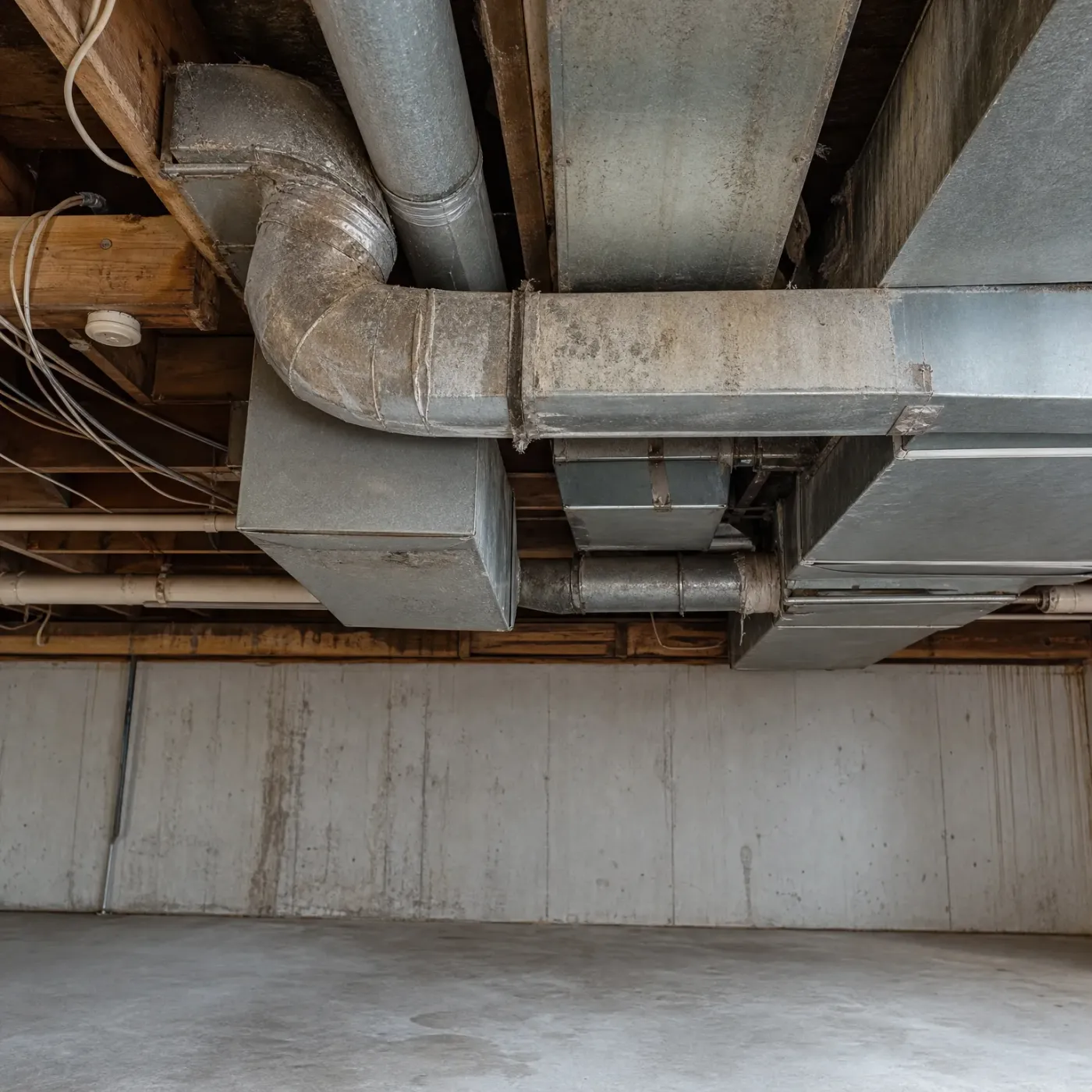
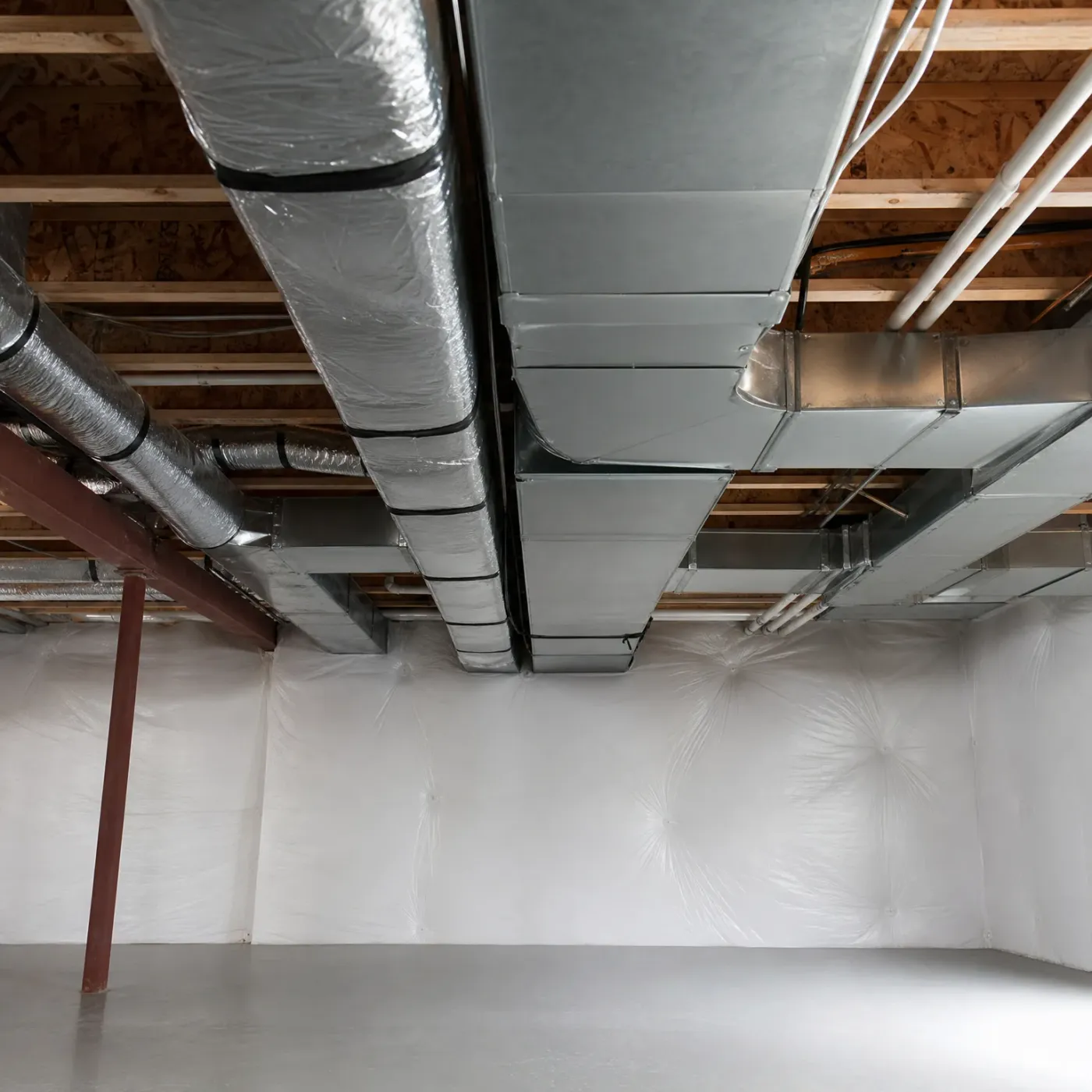
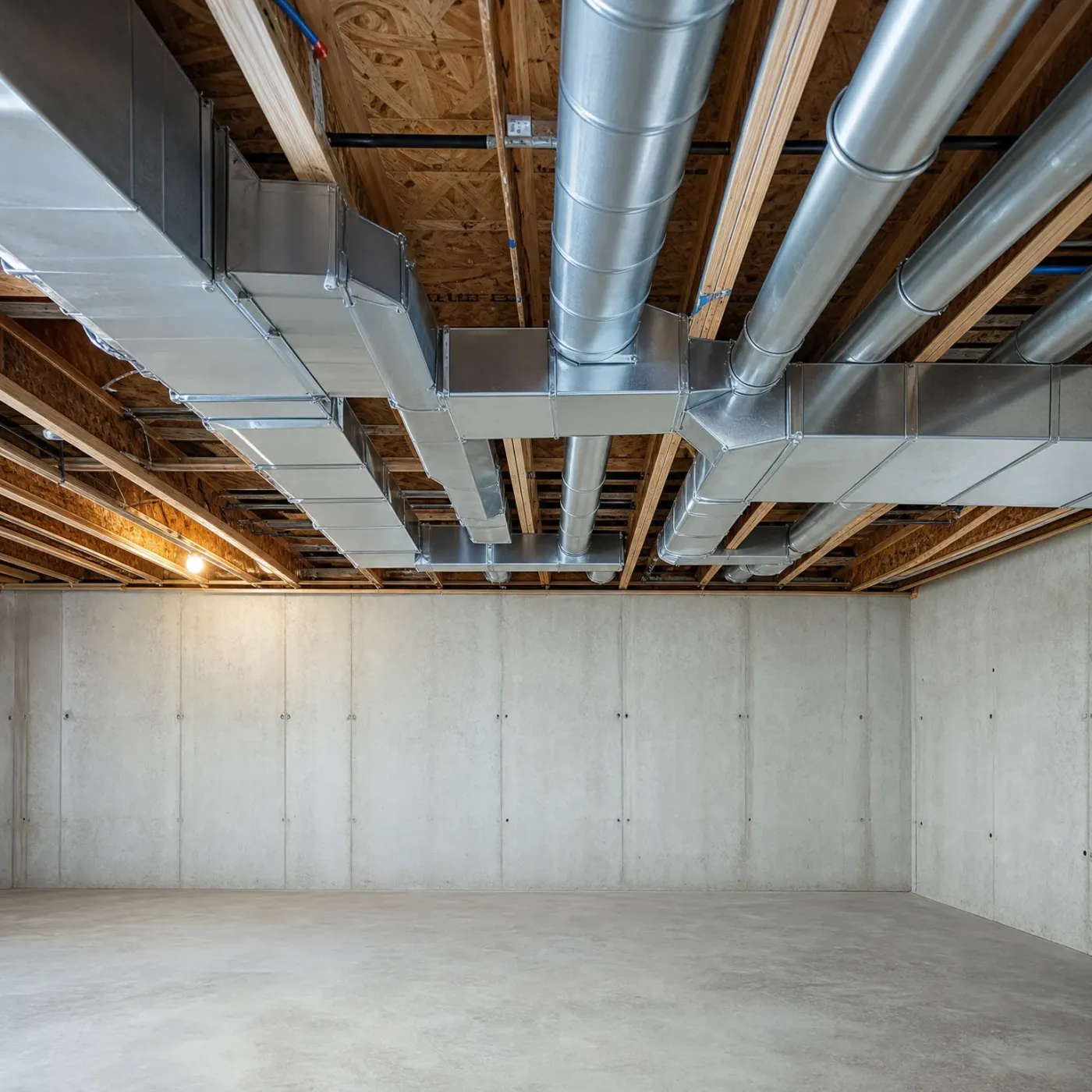
This is a trunk line with its branch runs still tight at every joint. Air moves from the furnace to each room without a way out in between, so what the blower pushes is what the vent delivers, room by room.
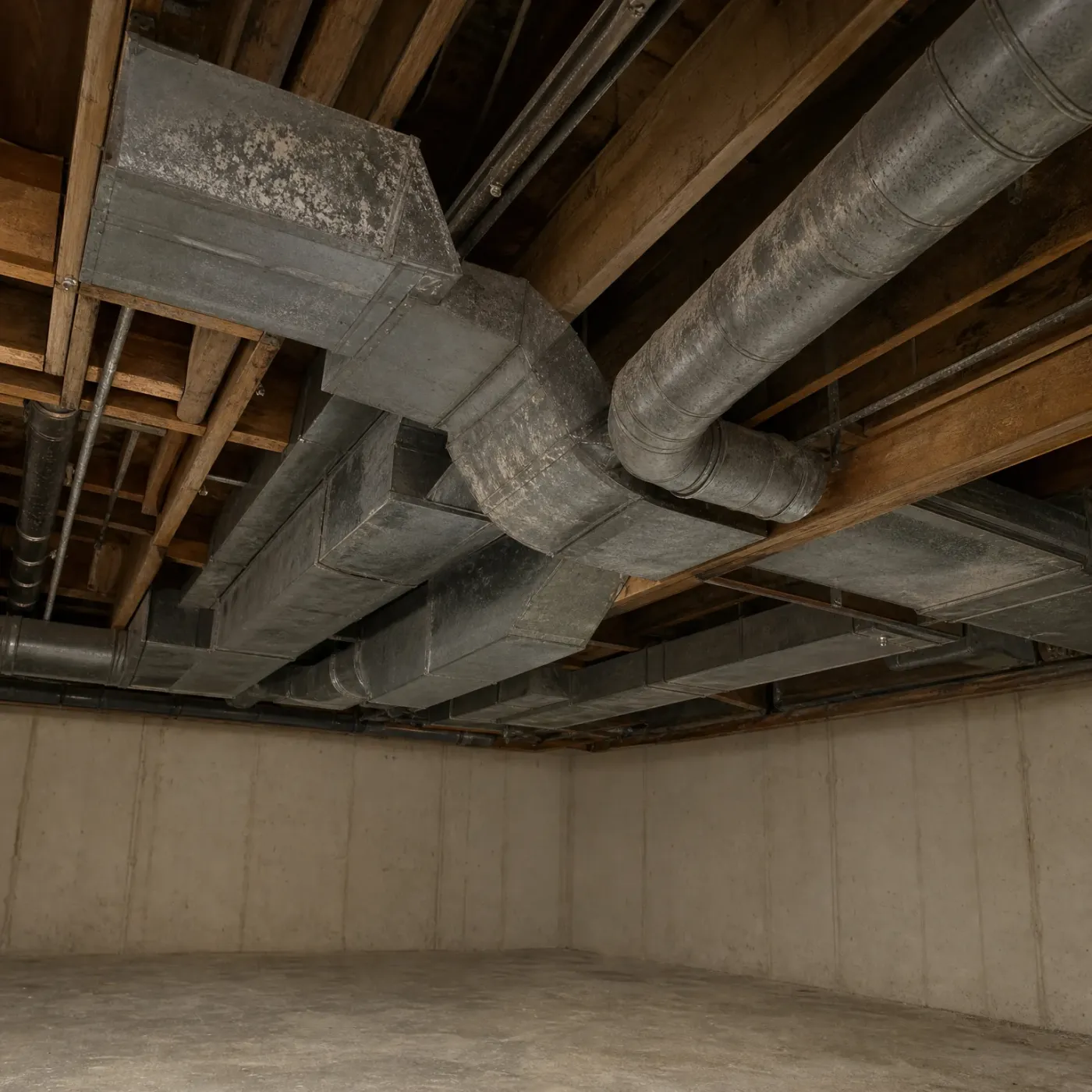
The oxidation on this metal comes with age, and age is usually when the seams start to separate. Every gap along this run lets heated or cooled air spill into the basement before it ever reaches a vent.
A room that won't hold temperature, a bill that climbs for no reason, a vent with weak airflow: these point to the same thing, air leaving the duct system before it reaches where it's supposed to go. Testing with a duct blaster or pressure pan finds the actual seam or joint, rather than guessing from the outside. Once you request service, the match that comes back is a licensed contractor working in Wyandotte County, someone who deals with this kind of ductwork all year and knows where these systems tend to give out, whether that's a seam that worked loose over decades or a flex run torn in the attic. You hear from one contractor, not a handful competing for the job, so there's no sorting through calls or explaining the problem over and over to different companies. What you do with the finding, whether that's sealing a few joints or something more involved, gets decided once someone's actually looked. The leak doesn't fix itself and the bill keeps reflecting it until someone finds where the air is getting out.
One form, no calling around