
Clear ductwork
Air moves through runs like these without resistance, reaching the furnace and every room at full strength. Dust and dander pass through to the filter instead of settling in the metal. A system in this shape doesn't need cleaning yet.
 Get matched
 with someone who does this kind of work in Sedgwick County.
You noticed something. Maybe it's the dust that settles back on the shelves a day after you wipe them. Maybe it's a musty smell when the furnace kicks on, or a room that never seems to get as cool as the rest of the house once summer sets in around Wichita. You're trying to figure out if that means your ducts need attention or if it's something else.
Dust buildup, uneven airflow between rooms, a smell when the system first starts up, more sneezing or stuffiness indoors than seems normal. These are the things people usually notice first, and they're worth paying attention to before you decide what to do about them.
Figuring out whether it's actually the ducts, and not the filter, the furnace, or something else in the system, isn't always obvious from the symptoms alone. That's the part that usually means a look from someone who does this work, not a guess from a search result.
If you decide it's worth having checked, the part that usually eats the most time is finding someone who actually services ducts in Sedgwick County, calling a few, explaining the same thing more than once, and trying to compare quotes that aren't quite comparable. That's the work this page skips. Answer a few questions about what you're seeing and where you live, and a contractor who handles duct cleaning in the Wichita area will get in touch with you directly.
No cold calls to make, no explaining your dusty vents to three different answering services. Just a straight line from what you noticed to someone qualified to look at it.
Dust that resettles within a day, a musty smell when the system runs, weak airflow in one or two rooms, and more sneezing indoors than out are the signs people in Wichita usually notice first. Ducts collect dust, pet hair and dander as air moves through them all year, and once that buildup is heavy enough, blowing air stirs it back into the house instead of carrying it along. Summers here run long and muggy, so the air conditioner moves a high volume of air through those ducts for months at a stretch, which gives buildup more chances to circulate. Cold spots near vents, a filter that looks gray again just weeks after you changed it, or visible dust around the supply registers point the same direction. None of this means the ducts themselves are damaged. It means what is inside them is going into the air you breathe, and that is worth having looked at.


Half the homes here were built by 1978
Half the homes in Sedgwick County were built in 1978 or earlier. Ductwork that old has had decades to collect dust and pet dander between cleanings.
Heat runs October through April
Furnaces here run October through April, about seven months straight. Whatever sits in the ducts gets pushed through the house that whole stretch.
Cooling runs May through September
Air conditioning runs May through September. Dust and dander that settled over winter get stirred up again as soon as cooling season starts.
ACS 2020-2024 · NOAA nClimDiv 1991-2020
Air moves through runs like these without resistance, reaching the furnace and every room at full strength. Dust and dander pass through to the filter instead of settling in the metal. A system in this shape doesn't need cleaning yet.
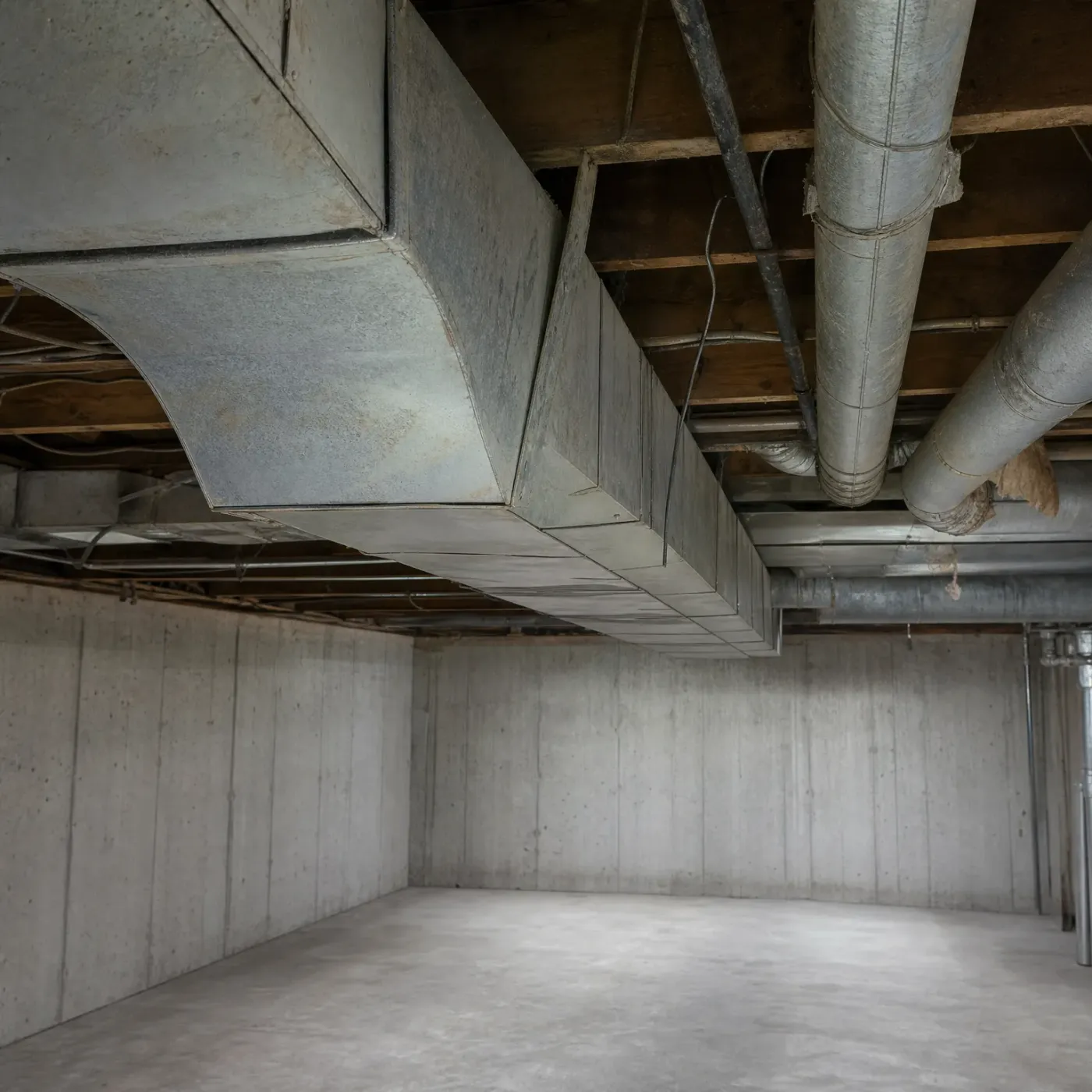
These sheet-metal runs sit low along the joists, where airflow slows at the bends and dust has somewhere to settle. Over years it builds along the inside walls of the duct, especially near the supply vents, and starts showing up as the dust and weak airflow you notice in the rooms below.




Walk through your house with this in mind. Check the vent covers for a dark ring of dust around the edges. Hold your hand near a supply vent in the room farthest from the furnace and compare it to one close by. Run the furnace or the AC for a few minutes and notice if a stale, musty smell comes through before the air warms or cools. Look at how fast dust returns to the TV stand or the kitchen counter after you've wiped it down. If anyone in the house has been sneezing more indoors than out, or a room upstairs never quite catches up with the rest of the house, that points back to the ducts. Left alone, the dust and dander just keep cycling through the air you and your family breathe.
Describe your ductwork job once, to one pro.
Get matched with a Sedgwick County pro who cleans ducts.
You only hire the pro if you want to.
Every October, the same thing happens. You turn the furnace on for the first time since spring, and that burning smell fills the house for a few minutes. It's familiar enough by now that you don't panic, but you still wonder why it happens year after year, and whether it means something is building up inside the ductwork that a yearly furnace start-up alone won't clear.
The dust sits on the furnace's heat exchanger and burners all summer while the system runs cooling only, then burns off in the first few minutes once the furnace fires up again in October. That part is normal and it clears fast. What it tells you is that dust has been moving through the system all along, and some of it settles in the ductwork rather than passing through to the filter. If the smell lingers longer than a few minutes, or comes back after the first day running, dust has likely built up further into the duct runs themselves, not just on the furnace.
A truck-mounted vacuum connects to your ductwork through a cut access port.
Every supply and return register is opened and brushed loose of buildup.
Rotating brushes or air whips knock dust free inside the trunk lines.
Negative pressure pulls the loosened dust and dander out through the vacuum hose.



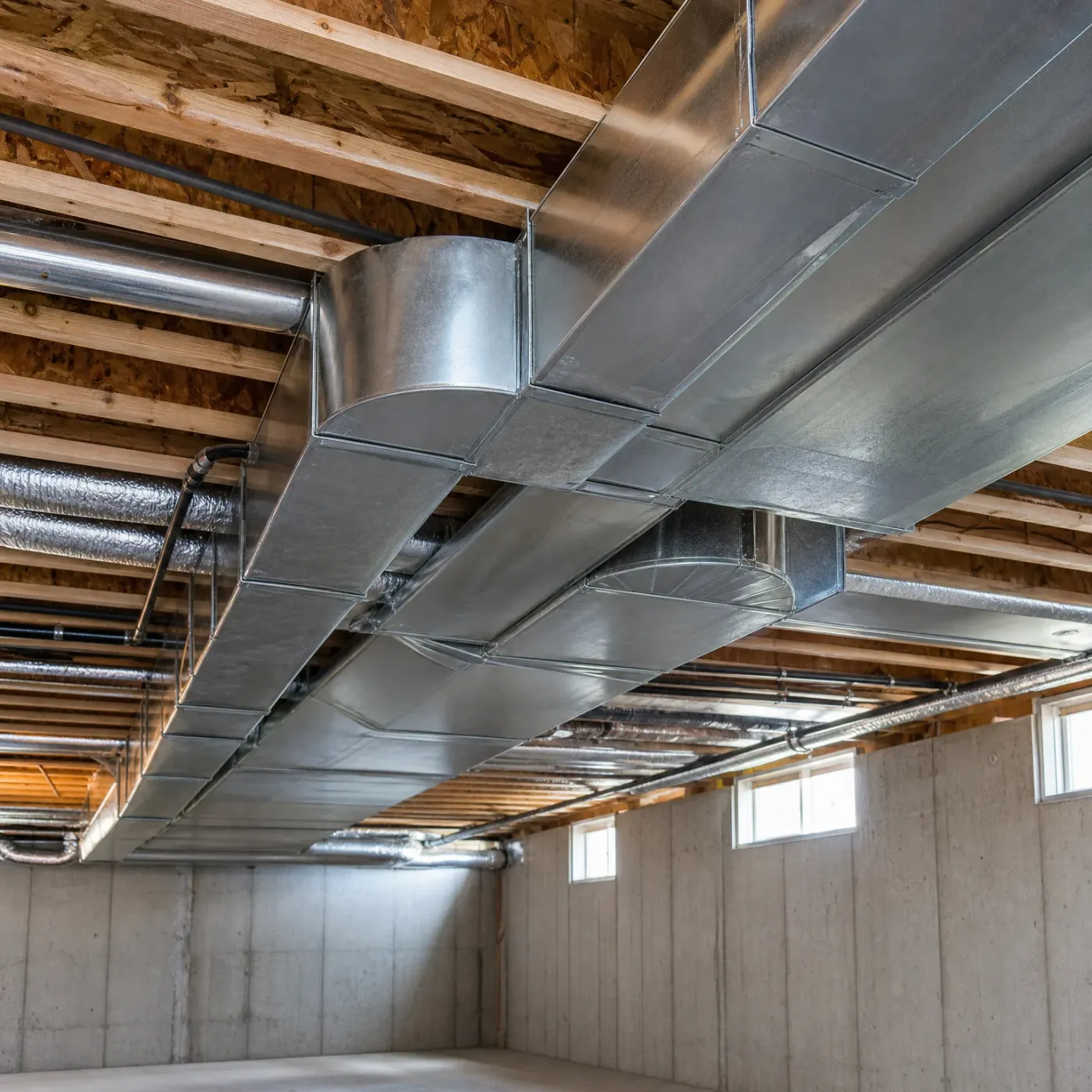
Galvanized metal like this still shows clean, with no dust caked along the seams or furred up on the trunk lines. Air passes through the rectangular trunks and round branches to every room without pushing dust loose along the way.
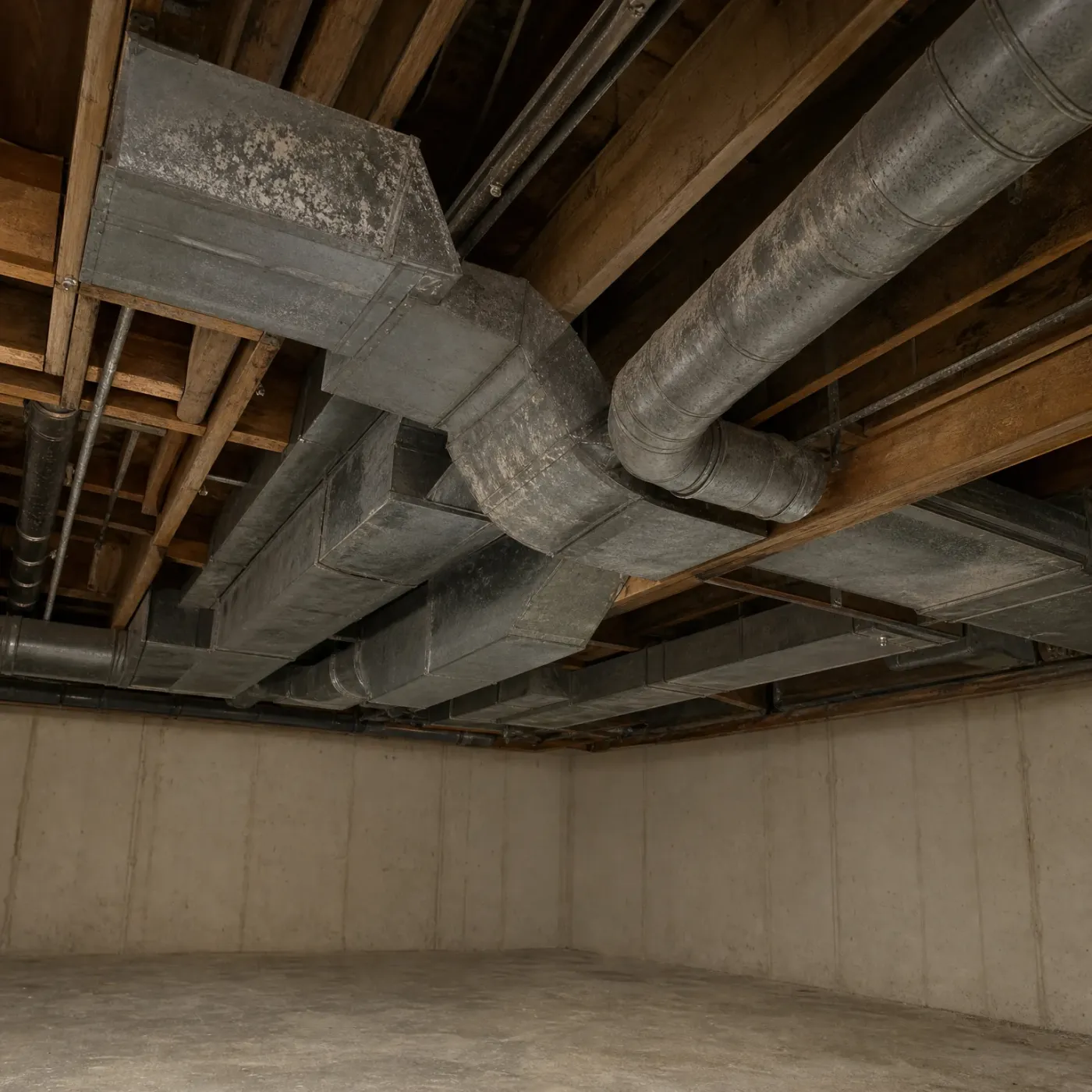
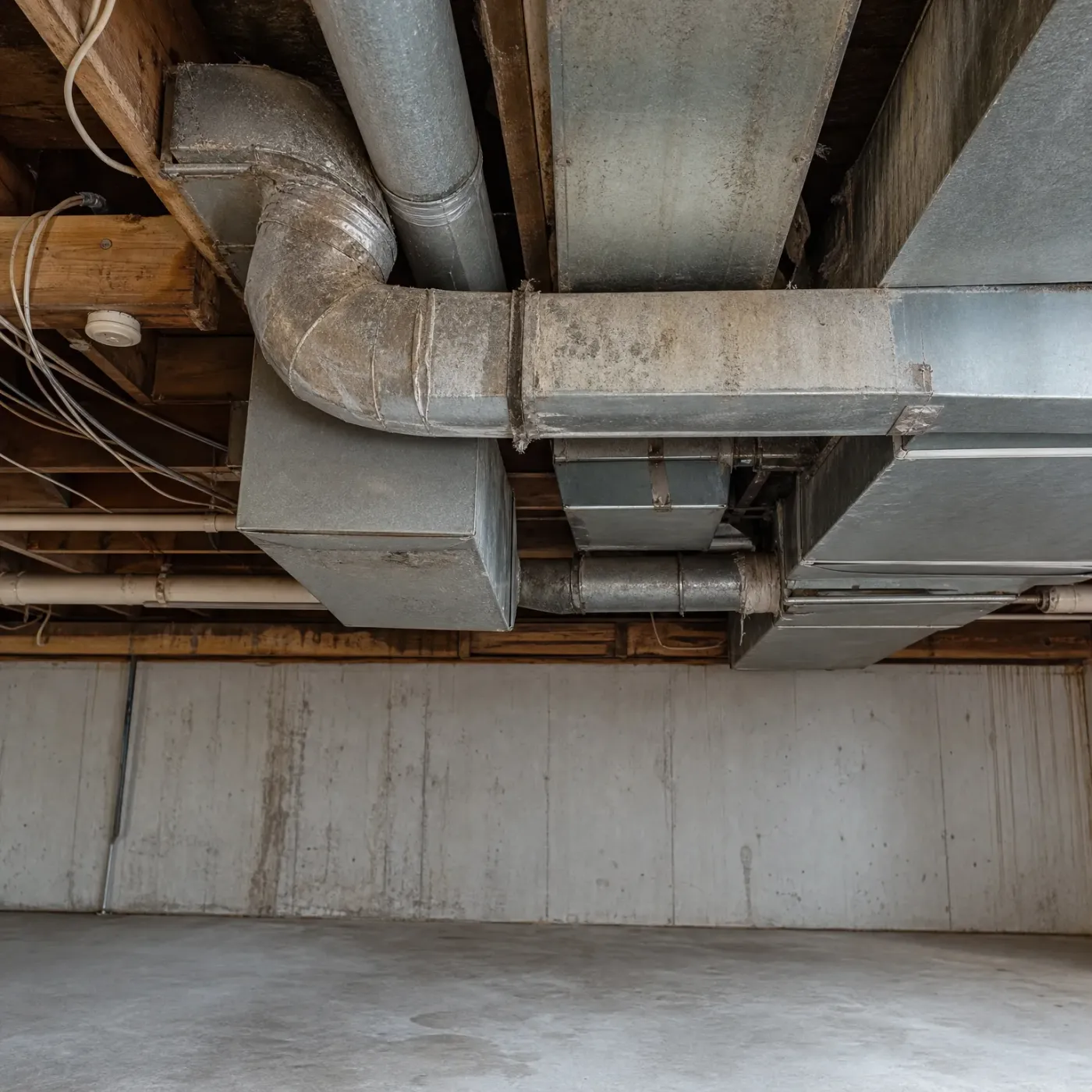
Oxidation and a gray coating like this on the metal mean dust has been building for years, not months. Joist runs this old shed more of it into the air every time the furnace or AC cycles on.
At 14.59 cents per kilowatt-hour, your blower isn't the expensive part of running your system, keeping it fighting through clogged ducts all winter is. A blower working harder to push air through dust-choked trunk lines runs longer to heat the same rooms, and that time adds up on the meter.
EIA-861 2025
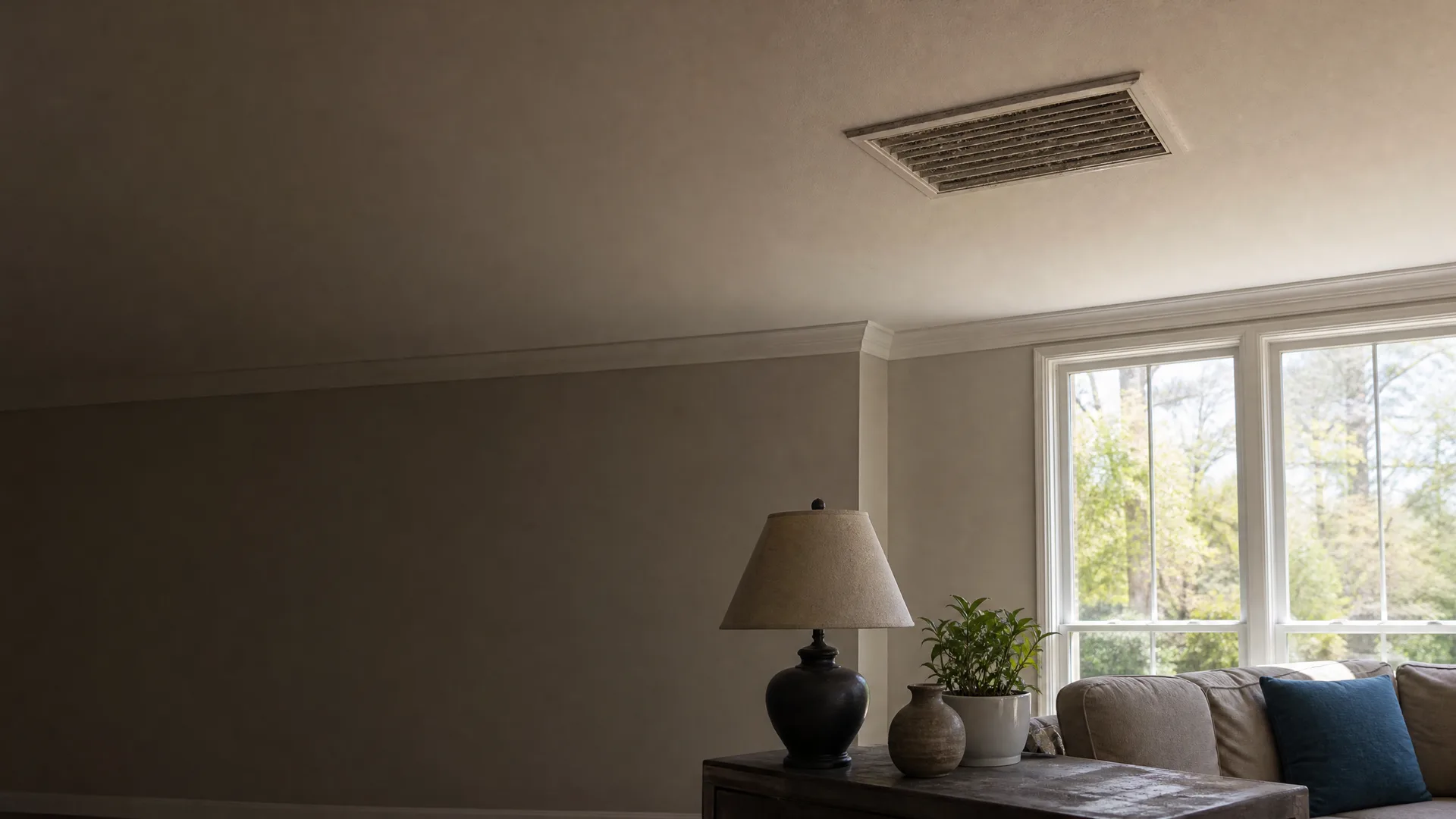
Saturday afternoon, light coming through the window at an angle, and you're on the couch with the windows cracked for the first warm day of the year. You look up and catch it: a gray ring of dust circling the ceiling vent grille, thick enough to see from across the room. A fine layer has drifted down onto the bookshelf below it too, the kind you dusted last weekend. The furnace isn't even running, hasn't needed to in days, and the dust is still there, settled on the wood like it's been collecting all winter and is only now catching the light.

A dusty vent ring, a musty smell at startup, one room that never cools right, more sneezing indoors than out. Any one of these is worth a look. Two or three together mean your ducts are overdue.
You don't have to figure out which contractor in Wichita handles duct cleaning, or call around asking who can fit you in before the heat sets in for good. Answer a few questions about what you found and you'll be matched with a contractor who works in Sedgwick County and knows what houses here are dealing with. They'll reach out to you directly, so you explain your situation once and move on with your evening.


Get the right pro for your ductwork