How often to clean air ducts in Kansas

Once you send the form, finding a pro is off your list.

Hand it over

Most homes in Kansas need their air ducts cleaned every three to five years. Dust settles faster here in the summer, when the humidity climbs and the AC runs long hours pulling air through the system day after day. Gas furnaces add to that load all winter, cycling the same air through the ducts and pushing dust back into the house every time the blower kicks on. If anyone in the house has allergies, or you notice dust around the vents between cleanings, it's worth checking sooner rather than waiting out the full three years. A system that's never been cleaned, or hasn't been touched in five years or more, is worth having looked at even without any obvious signs, since buildup inside the ducts can sit for years before it shows up as dust in the house or a weaker flow of air from the vents.

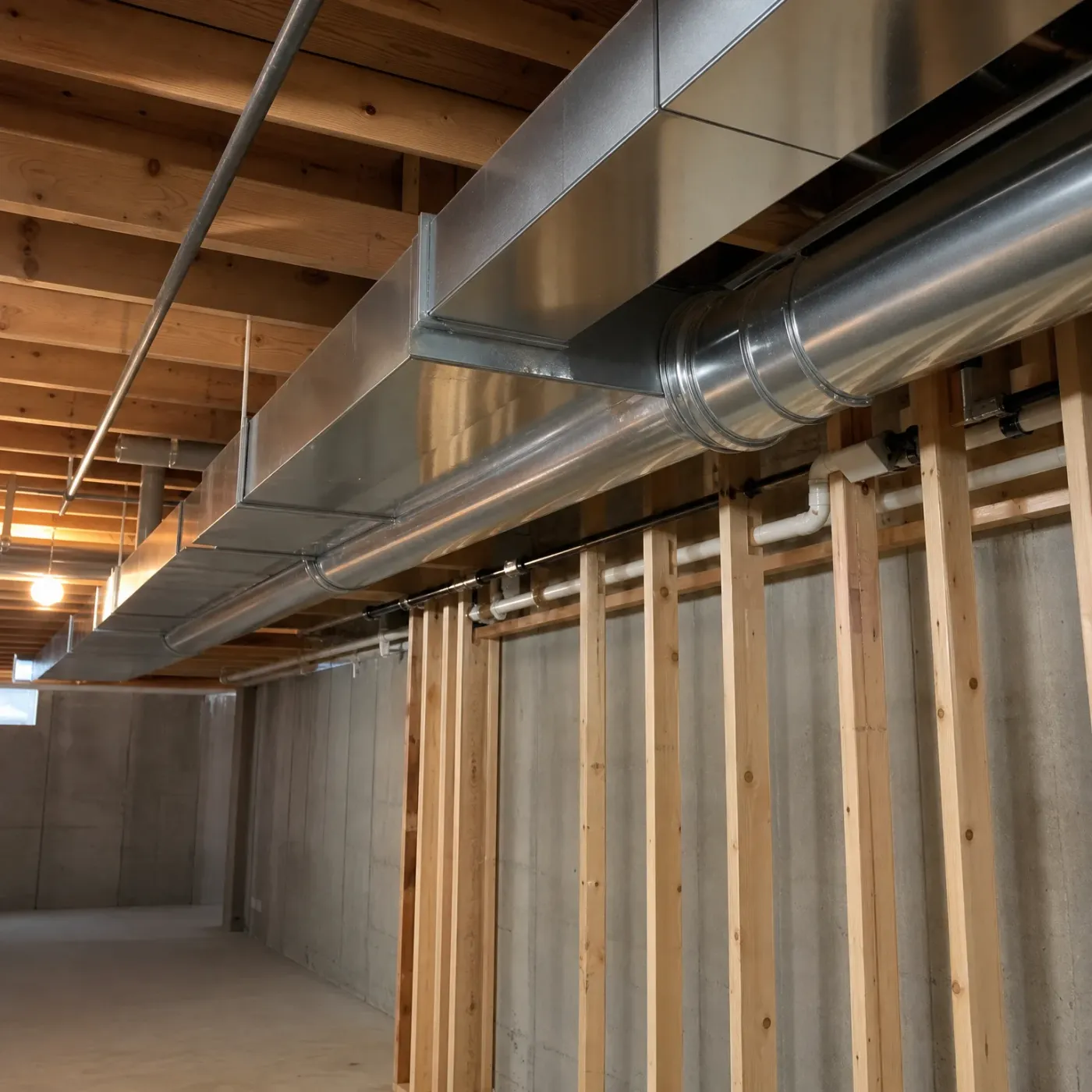
Empty basement with bare concrete walls and floor, a small window at left, and exposed wood joists with galvanized sheet metal ductwork and pipes overhead.

Clean ducts, steady airflow

Metal ducts and flex pipe run overhead, carrying air to every room without resistance. Nothing coats the inside walls to slow it down. The furnace and AC push air through and the system moves the volume it was built to move.

Dusty sheet-metal HVAC ducts with a rectangular vent register run beneath wooden floor joists above an empty concrete-walled basement.

Ducts caked with dust

Grime builds up along the inside of the duct until it narrows the path air has to travel. A system working this hard pulls dust back into the house every time it runs. Left alone, it only keeps collecting.

How do you know when it's time to clean your air ducts?

Most people don't pull a duct cover off and check. You notice something smaller first, a layer of dust back on the furniture a day after you wipe it down, or a musty smell when the AC kicks on in July. You want to know if that's normal for a Kansas summer or a sign the ducts need attention now instead of waiting out the three to five year mark.

Dust, smell, or a vent that's blowing weaker than the rest

A contractor pulls the supply and return vent covers first, since that's where buildup shows without opening anything up. Dust packed along the inside edge of the register, or a gray film on the first foot of duct past the vent, means it's time. A musty smell when the AC first turns on points to moisture sitting in the ductwork, something that shows up more in Kansas summers once the humidity climbs. If one room gets noticeably less air than the rest of the house, that can mean dust has built up enough to choke the duct feeding it, not just a closed damper somewhere in the line.

A basement with a gray furnace on a concrete pad connected to large sheet-metal ducts running along an exposed wood joist ceiling, with PVC pipes and plastic sheeting on the walls.

System running clean

This is what a duct system looks like when air moves the way it should. The furnace ties into the plenum and the ducts overhead stay clear, so air reaches every register at full strength. Nothing inside is slowing it down or feeding dust back into the house.

Galvanized sheet metal HVAC ductwork with a vent grille running along a wooden joist ceiling above a bare concrete wall.

System overdue

Ducts like these have been moving dusty air for years without a cleaning. The buildup inside sits out of sight above the joists, but it cuts into airflow and gives summer dust and winter dry air a place to collect before it blows back into your rooms.

An unfinished basement with bare concrete walls and floor, showing exposed wooden floor joists, pipes, wiring, and metal HVAC ducts with a vent grille overhead.
Before you get your ductwork cleaning
Unfinished basement with galvanized sheet-metal rectangular and round ductwork running along a wood-joist ceiling, two steel support columns, a small window, and a furnace unit against the far right wall.
After you get your ductwork cleaning
Unfinished basement with exposed wood joists, galvanized rectangular and round ductwork, piping, stud framing against concrete walls, and a bare hanging light bulb.

Finding a pro stops being your job

The pro who reaches out is licensed in Kansas.

After you send the request, you're done searching.

Find a licensed pro

It costs nothing to send, and you don't have to hire anyone.

Unfinished basement with bare concrete walls and floor, showing exposed wood floor joists overhead with sheet-metal rectangular ductwork, insulated flexible ducts, and pipes.
Sheet-metal trunks and flex runs overhead stay open path for air, nothing built up on the inside walls to catch dust or slow the flow.
Basement ceiling with galvanized sheet metal rectangular ducts and round pipes running between wooden joists above a bare concrete wall and floor.
Dust and debris line the inside of the metal trunks and flex pipe, narrowing the path air has to move through to reach each room.
A smiling man in a blue denim shirt over a white tee sits at a light stone kitchen counter with a grey mug and a bowl of oranges and bananas, with pendant lights and shelving behind him.
A smiling bearded man in a grey long-sleeved shirt sits at a kitchen counter with a dark mug, with a dining table, pendant light and glass doors onto greenery behind him.
A bearded man in a dark green knit sweater smiles and looks off to the side while standing at a kitchen counter with a white mug of coffee, with open shelving, a potted tree, and a dining table near large windows behind him.
A man with dark curly hair in a dark green sweater stands smiling and looking to the side in a kitchen with white cabinets, a potted plant, a stone countertop with a ceramic mug, and a dining area with framed art in the background.

Clean on Schedule or Wait and See

Clean on schedule

  • Every three to five years, a crew pulls the dust and buildup out before it narrows the ducts enough to matter.
  • You catch a sagging flex run or a loose connection while it is a small fix, not after it has been feeding dust into the system for years.
  • The furnace and AC keep moving the air they were built to move, so neither one works harder than it has to.
  • A smell or a dusty room gets traced back to the ducts quickly, because you already know roughly when they were last done.
  • You are not guessing whether the ducts are the problem when something changes with the air in the house.

Wait and see

  • Dust keeps settling on the inside walls of the ducts, a little more each summer the AC runs and each winter the furnace runs.
  • A small gap in a duct run or a loose seam goes unnoticed because nothing is opened up to look at it.
  • By the time a musty smell or dust on the furniture gets your attention, buildup has usually been collecting for a while.
  • Airflow narrows gradually, so the furnace and AC end up working against a system that is not moving air as freely as it once did.
  • You find out something is wrong from a symptom in the house rather than from a scheduled look at the ducts themselves.
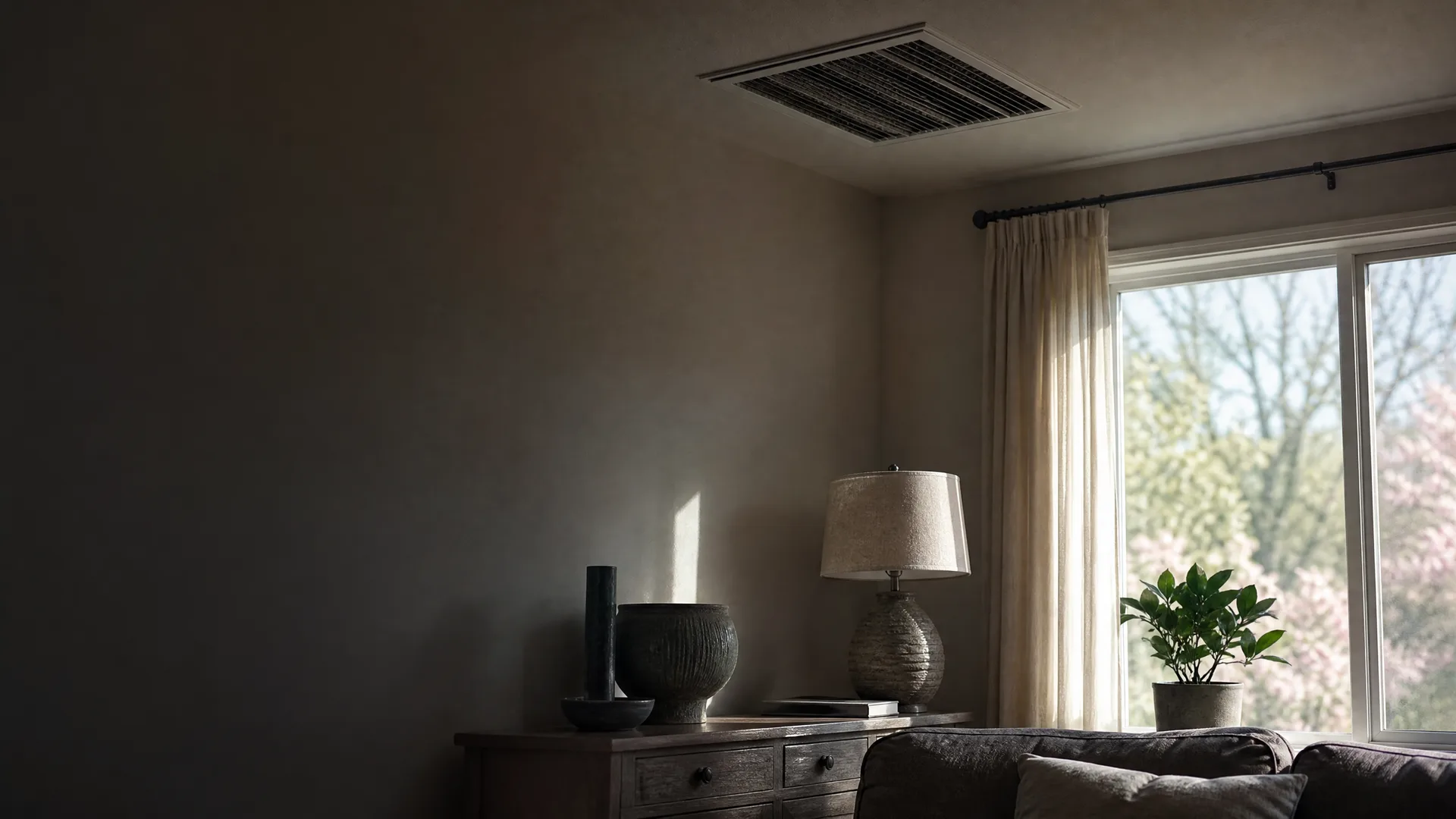
A dim living room corner with a ceiling air vent, a curtained window showing blossoming trees, a table lamp and dark ceramic vessels on a wooden dresser, a potted plant, and a sofa in the foreground.

It's a Saturday afternoon in April and the windows are still closed from a cool morning. Light comes in across the living room and catches it: a gray film along the slats of the ceiling vent grille, thicker than you'd expect for how often the vacuum runs through here. You ran a cloth over the end table yesterday and it's dull again already, a fine coat settled over the wood and the lamp base near the couch. The AC hasn't even kicked on for the summer yet. Outside, the air is still mild, but inside, the system has been pushing furnace air through all winter, and it's starting to show on everything the vent blows across.


Power costs 14.44 cents per kilowatt-hour statewide

At 14.44 cents a kilowatt-hour, every hour your blower motor fights clogged ducts to push air through shows up on the bill. A furnace and AC working harder to move the same air use more power doing it, month after month, for as long as the buildup sits there.

EIA-861 2025 statewide residential average

Where That Leaves You

  • Every three to five years is the schedule that keeps Kansas ductwork clear through summer humidity and winter furnace use.
  • A sagging flex run or loose connection gets caught and fixed while it's small, before it feeds dust into the system.
  • Dust back on furniture a day after cleaning or a musty smell when the AC starts up are the early signs worth acting on.
  • Clear ducts mean the furnace and AC move air without the blower motor working harder to push it through buildup.
  • A licensed local contractor who works on this equipment every season knows what usually fails first in a Kansas duct system.
  • Sending the request is the only step left once you know the schedule; finding the right crew stops being your job from there.

Three to five years is the number to work from, and everything else in this comes back to it. Kansas summers push the AC hard enough to pull dust through the system fast, and a gas furnace running all winter adds to the same buildup. Stay close to that schedule and you catch the small things along the way, a sagging flex run, a loose connection, before either one turns into something that feeds dust back into clean air. You already watch for the early signs, so you probably noticed before the schedule told you to: dust settling back on furniture faster than it should, or that musty smell when the AC first kicks on for the season. Either one means the ducts are telling you something worth acting on.

What you get on the other side is simple. Air moves through clear ducts without the blower motor straining against buildup, which means the furnace and AC are doing the job they were sized for, nothing more. A local contractor who works on duct systems like yours every season has seen what usually fails first in Kansas homes and knows where to look.

You have the schedule and you know what to watch for between visits. The only thing left is getting the right crew out to do the work, and that part is no longer something you have to figure out on your own.

A bearded man in a navy T-shirt sits on a light-colored couch indoors, smiling while looking down at a laptop screen in the foreground, with a framed picture and a potted plant blurred behind him.
A bearded man in a plaid flannel shirt stands indoors beside a wood-framed, frost-covered window, looking outside, with a steaming brown mug on the sill and a wooden cabinet behind him.

Ductwork Cleaning

Let someone else find the pro

Only one pro gets your request, so you hear from one company.

A black smartphone standing upright against a plain light gray background, its screen filled with solid green.
Duct and vent cleaningDucts or ventsKansas
Step 1 of 2

What ZIP code is the job in?