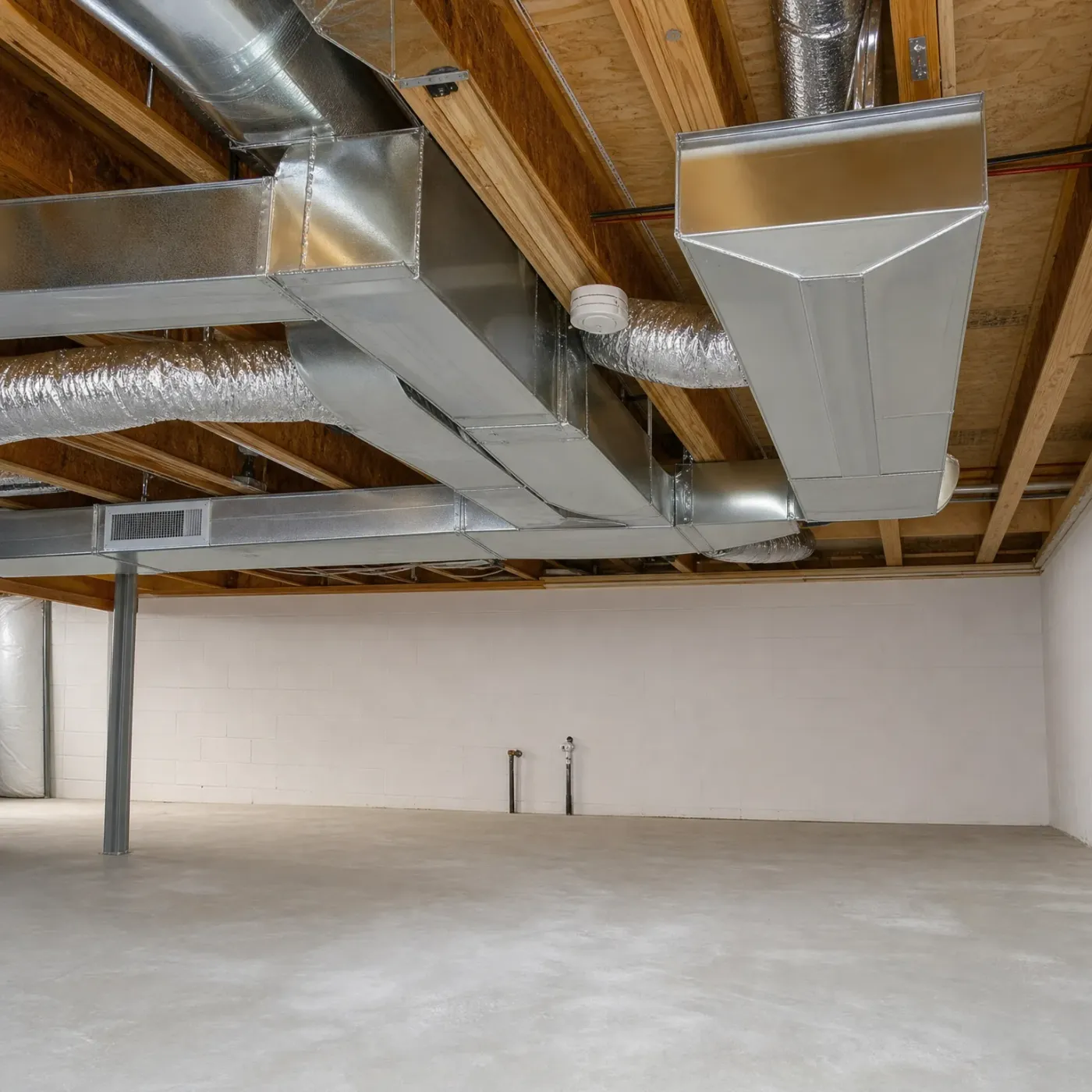
Ducts running clean
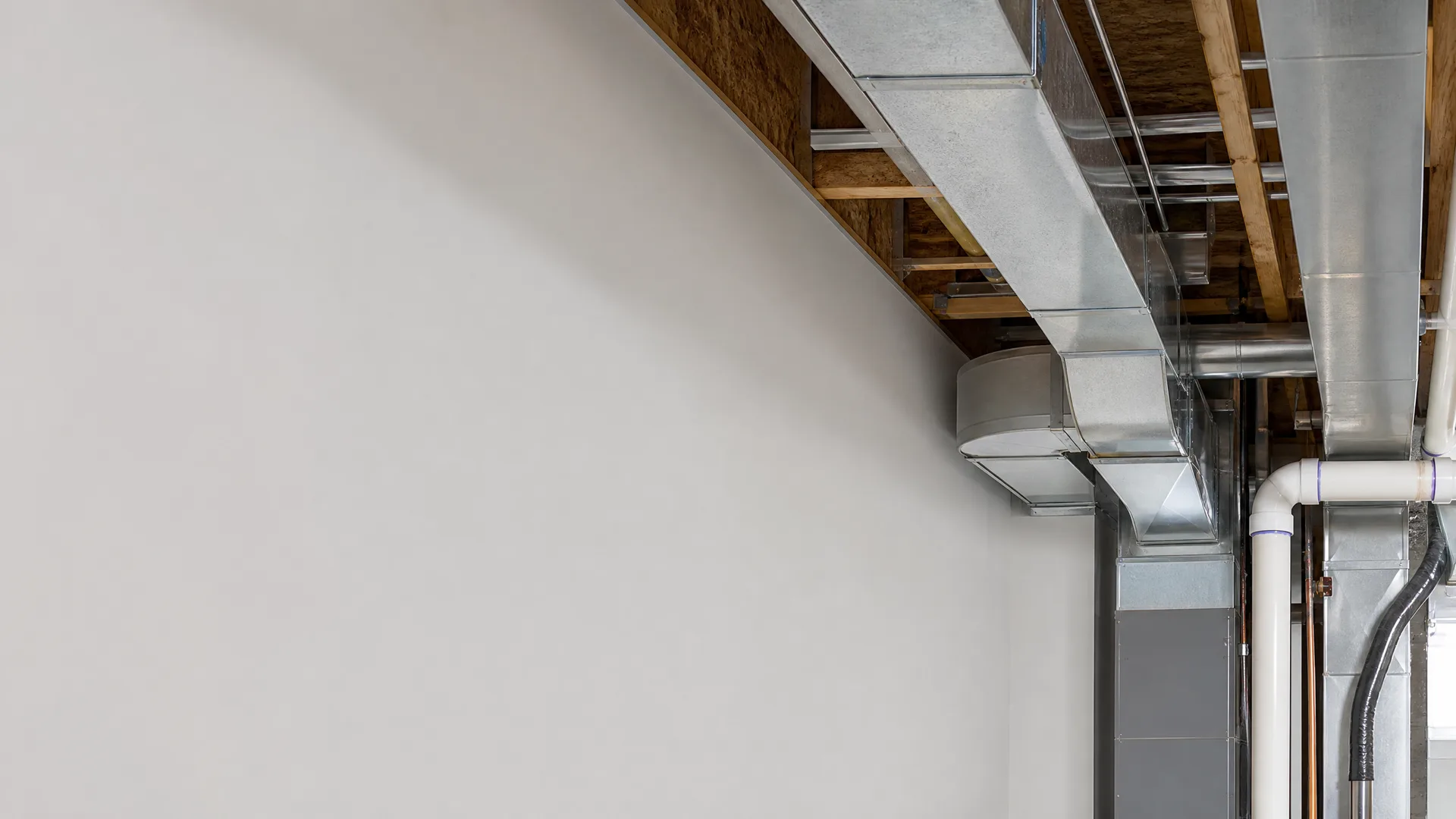
This is what moves air through your house without adding to it. The metal is bare, the joists are clean, and nothing inside the trunk line is getting stirred up and blown into your rooms every time the furnace kicks on.
Get matched with a duct system pro in Shawnee County
Dust that settles back within days usually traces to the duct system moving air through your house, not just surface cleaning habits. This page gets into what builds up inside the ducts over a Topeka winter and summer, and what that means for the air moving through your vents. Skip calling around Shawnee County for quotes. A contractor who handles duct cleaning can reach out to you directly once you answer a few questions about your system.
Find a pro near meDust that keeps coming back is usually sitting inside your ducts, not just on your furniture. Every time the furnace or the AC kicks on, that air moves through the same ductwork, and any dust sitting in there gets pushed right back into your rooms. In Shawnee County, that system runs hard both directions: cold winters mean the furnace is on for months, and long muggy summers keep the AC running just as much. Gas furnaces also pull in a steady draw of air to feed combustion, and that air carries dust and small debris into the ducts over time. The filter catches some of it, but it only cleans the air passing through right then. What's already settled in the duct runs, the joints, the returns, stays there until the system gets cleaned out. That is why dusting and vacuuming the house keeps you busy but never solves it. The dust is being generated from inside the system itself, every time it runs.


Half the homes here were built by 1972
Half the homes in Shawnee County were built in 1972 or earlier. Older ductwork has had decades to collect dust that newer systems haven't.
Heat runs October through April
Heat runs October through April here, about seven months of the year. That's seven months of air moving through the same ducts, stirring up whatever has settled inside.
Cooling runs May through September
Cooling runs May through September. Add that to the heating months and the blower is pushing air through your ducts almost year-round.
ACS 2020-2024 · NOAA nClimDiv 1991-2020
This is what moves air through your house without adding to it. The metal is bare, the joists are clean, and nothing inside the trunk line is getting stirred up and blown into your rooms every time the furnace kicks on.
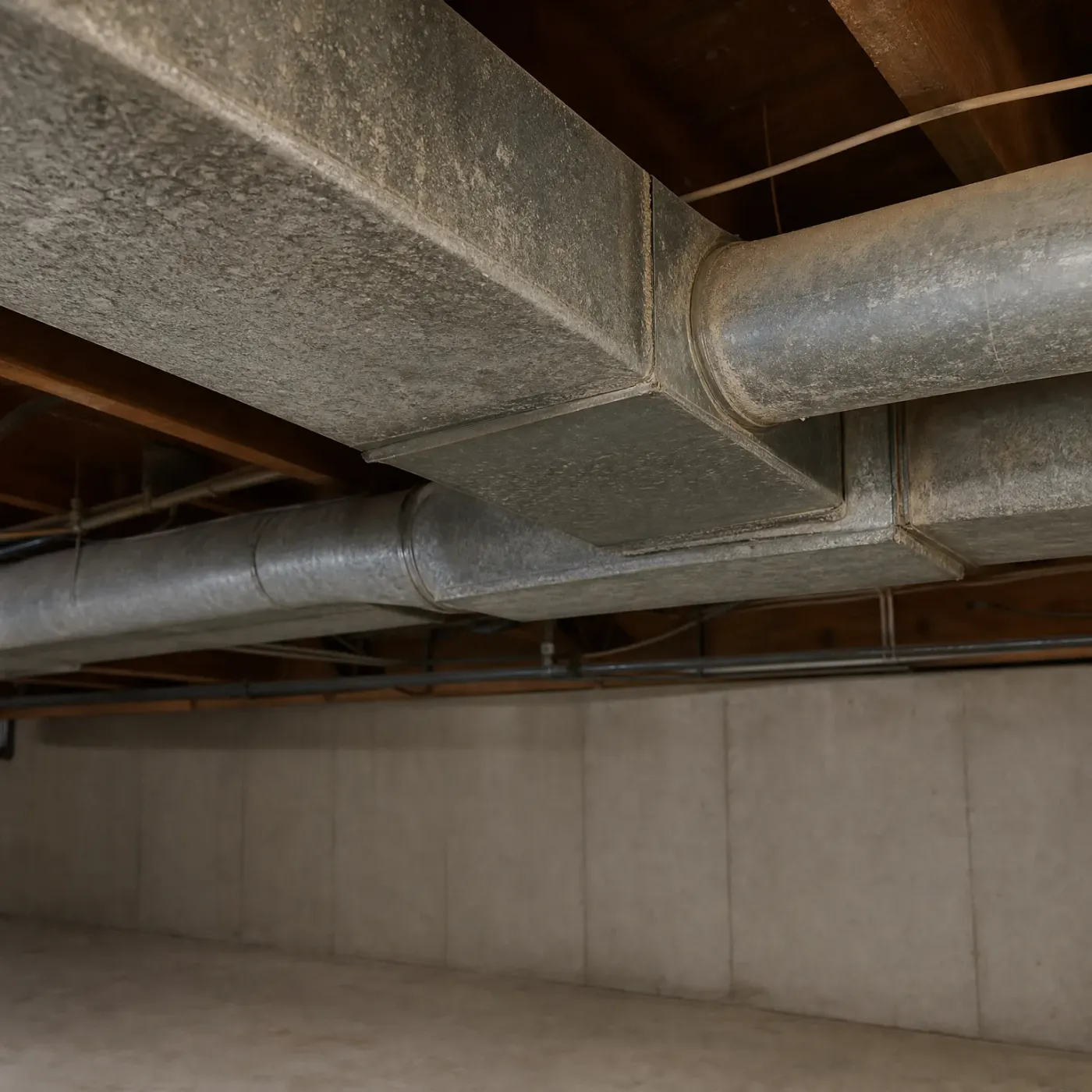
Here the trunk line and the joists around it are gray with buildup. Every cycle through a Topeka summer or winter pushes air across that coating, and some of it rides along into the rooms you're trying to keep clean.
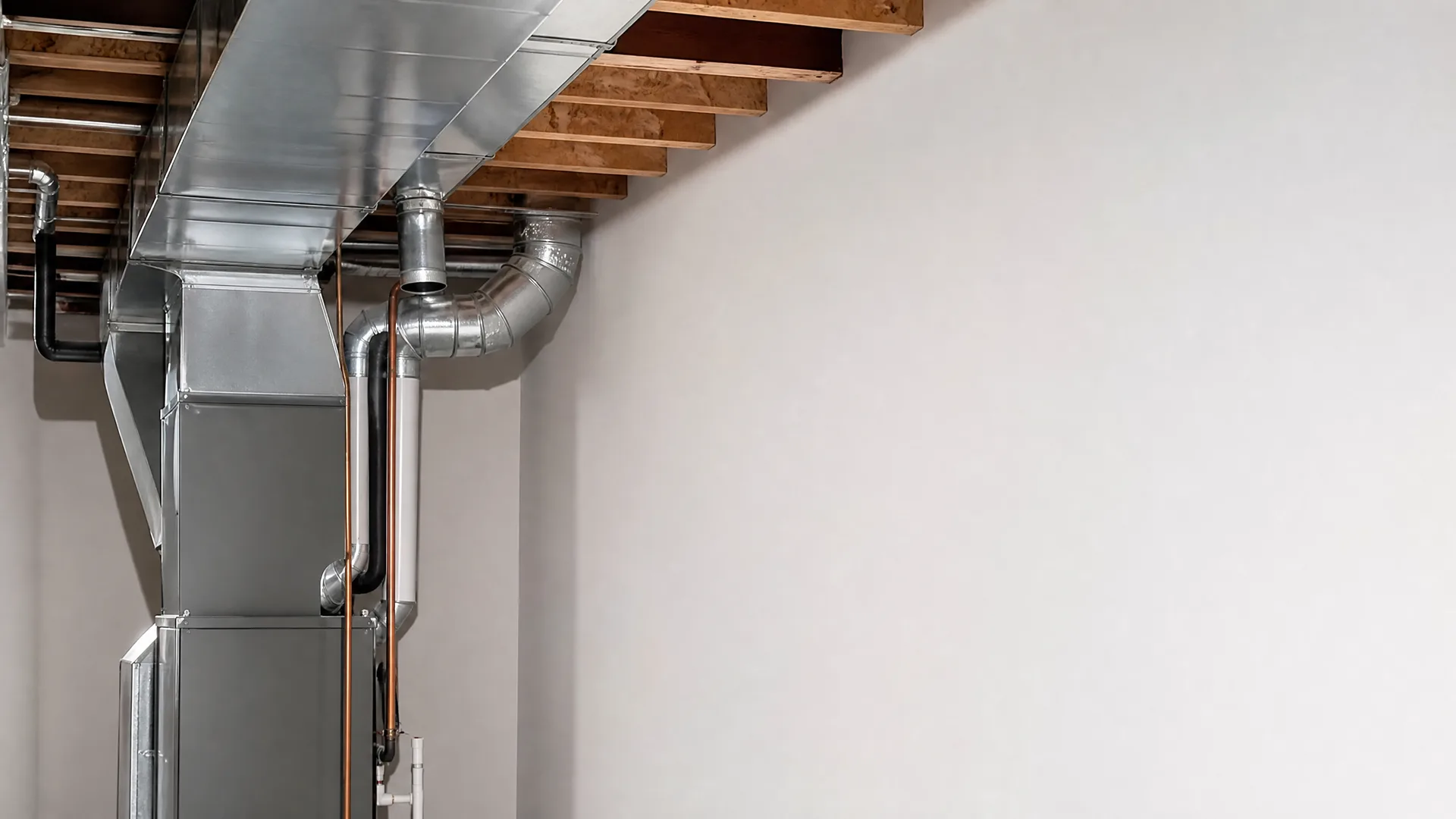
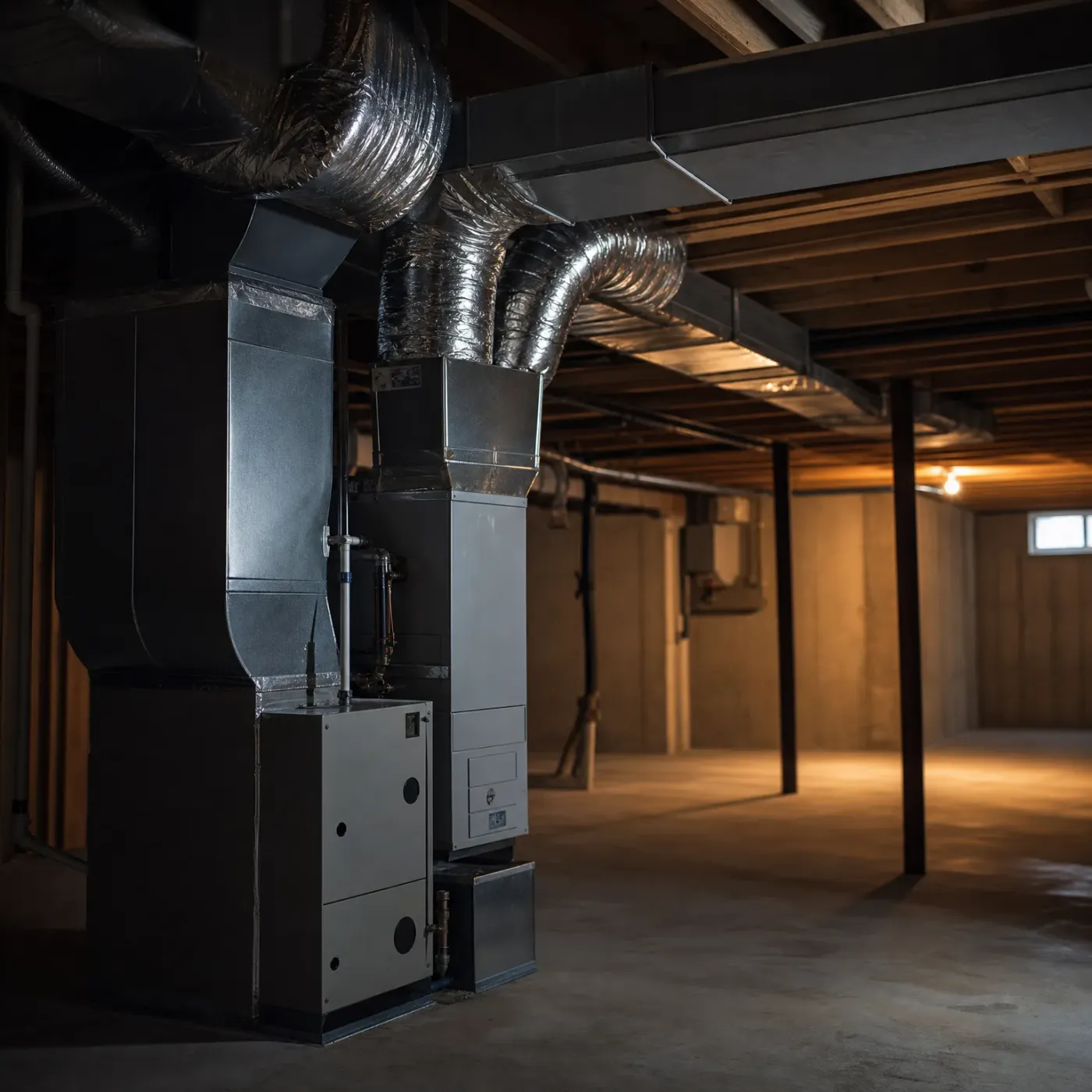
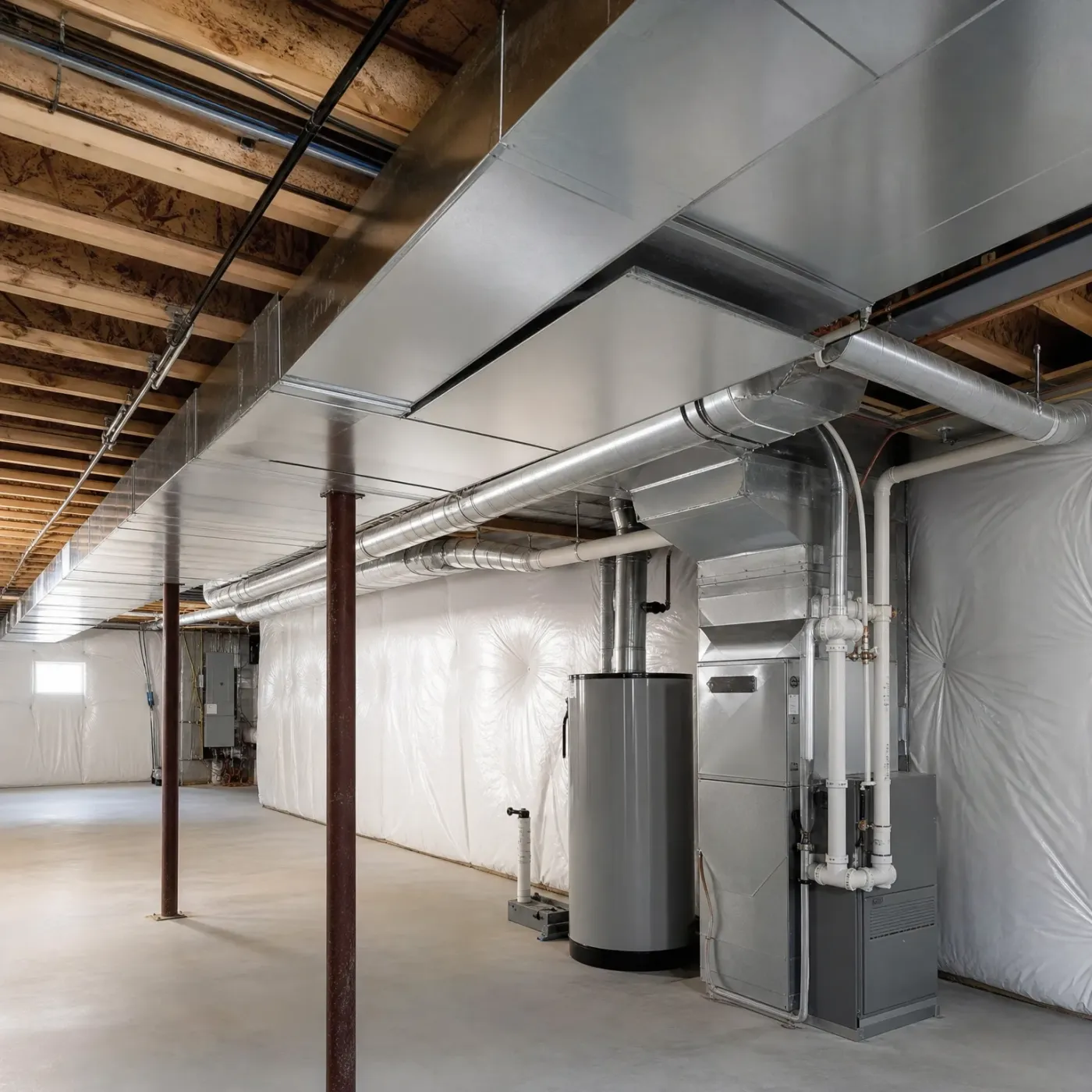
A forced air furnace doesn't just heat one room and let it spread on its own. It pulls air in through the return, pushes it past the blower, and sends it out through every supply vent in the house. If dust is sitting in the trunk line or the branch runs, that same air picks it up and carries it to every room on the system, not just the ones near the furnace.
The filter is built to catch what's moving through it at that moment, not what's already settled inside the ductwork upstream or downstream. Dust that's packed into a duct seam or sitting on the floor of a trunk line doesn't pass through the filter again until something stirs it loose. Changing the filter on schedule matters, but it won't pull dust out of ducts that already have it.
Why does dust come back even right after I vacuum?
Vacuuming clears what's already settled, but the furnace keeps pulling air through the same return, past the blower, and back out every supply vent. If there's dust sitting in the trunk line or branch ducts, that cycle picks some of it up and sends it into the room you just cleaned. The blower doesn't know the difference between clean air and air carrying dust, it just moves what's in front of it. A filter catches some of this, but it only works on what passes through it, not what's already caked on the duct walls. That's why the floor looks clean for a day and then doesn't.


Skip searching for someone who cleans ducts in Shawnee County.
Your request goes to a Shawnee County pro who takes ductwork jobs.
You're not committing to anything by asking.

You dust the shelves on Saturday and by Wednesday there's a film on them again. You notice it on the TV screen first, or on the dark furniture in the living room, because that's where it shows. The vents themselves tell you something too. Pull a supply register off the wall and look at the inside edge of the duct. If it's gray and thick, that's not from the room air settling, that's what's been riding through your ductwork and landing right at the opening every time the blower runs.
It also lands on people before it lands on furniture. If anyone in the house has allergies or asthma, a system pushing dust through every room for seven months of heating and another few months of AC is going to make itself known. You don't have to take the duct system apart to find out what's built up in there or what it would take to clear it out. A local contractor can look at your actual ductwork and tell you what's really going on inside it, and what that means for your house specifically.

Power here runs about 14.90 cents per kilowatt-hour, close to the national average. That matters because a blower pulling air through ducts packed with dust works harder to move the same volume, and that extra runtime shows up on your bill before it ever shows up as a comfort problem.
EIA-861 2025
You can get a brush down the first few feet of a supply line and vacuum out what it loosens. That stretch will stay cleaner for a while. The trunk line running through the basement is a different job. It's wider, it's harder to reach, and the branches off it go places a shop vac hose won't bend to follow. Most of what's built up over the years is sitting past the point you can get to. You can clean what shows at the register and still have the rest of the system doing what it's always done, pushing air through the same packed ductwork every time the furnace or the AC runs.
A contractor who does this for a living brings equipment built to reach the full run of ductwork, not just the first few feet off each register. That includes the trunk line, the branches, and the return side, which is usually the part a homeowner has no way to get into at all. Getting there yourself means finding someone who does this work in Shawnee County, calling more than one to compare what they'd charge, and explaining the same thing about your house to each one. Going through a contractor match means you describe it once and the right person follows up, instead of you running down that list on your own.


The dust that lands back on your shelves a few days after cleaning isn't coming from the air in the room. It's coming from the ductwork that moves air through your whole house every time the furnace or the AC runs. In Shawnee County, a lot of that ductwork has been in place since before 1972, which is as far back as half the homes here go, and it's had all that time to collect what gets stirred up and pushed back out. Heat runs here from October through April, about seven months, and a forced air furnace doesn't heat one room at a time. It pulls air in through a single return, pushes it past the blower, and sends it out through every supply vent in the house. Whatever is sitting in that trunk line goes everywhere the furnace reaches, which is everywhere you live. Wiping down shelves, vacuuming what you can see, and changing the filter on schedule all help, but none of it reaches the ductwork itself. That's the part doing the work of spreading dust through the house, and it's also the part that makes the furnace or AC blower work harder than it should, which shows up on the power bill before it shows up on the furniture. The dust isn't a sign you're not cleaning enough. It's a sign of what's moving through the system that reaches every room you're cleaning.




A duct system pro near you
Describe your ductwork job once, to one pro.
