

Signs your ducts need cleaning in Lawrence, KS

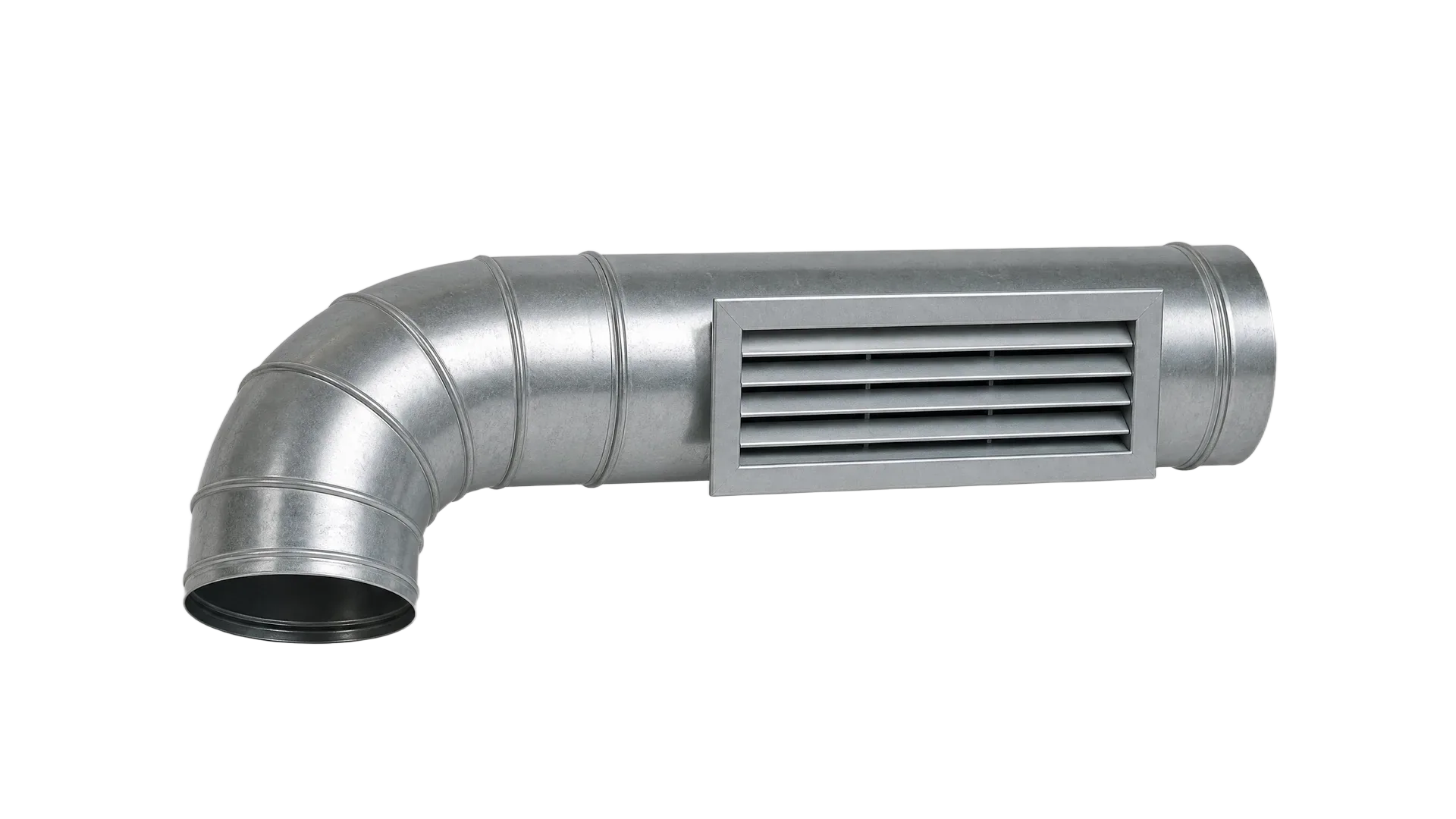
A galvanized steel round duct section with a 90-degree elbow and a rectangular louvered grille on its straight run, shown against a plain gray background.
I'm done searching

What are the signs your ducts need cleaning?

Dust keeps coming back on the furniture a day after you wipe it down, or someone in the house has started sneezing more than usual indoors. Maybe you pulled a vent cover off and didn't like what you saw. You're trying to figure out if that's normal or if it means the ducts actually need attention, and what you should be looking for before you decide it's worth doing anything about.

Dust that resettles fast, musty air, and visible buildup at the vents

Dust returning within a day or two of cleaning is the clearest sign. It means the system is recirculating what's built up inside the duct walls instead of just what's in the room. A musty smell when the furnace or AC first kicks on is another one, especially if nobody's had a leak or spotted mold anywhere else. Pull a vent cover off and look inside with a flashlight. If you see a visible layer of dust or debris more than a light coating, that's buildup worth dealing with. Weak airflow from some rooms while others feel fine can also point to a blockage somewhere in the line, though that's sometimes a damper or duct issue rather than dirt. With gas furnaces running hard through Douglas County winters, anything restricting airflow makes the system work harder for months at a time.

Galvanized sheet metal HVAC ductwork and round pipes running along an exposed wood-joist basement ceiling beside a plain white wall.

What a dirty vent cover tells you

Pull a return vent cover off and look inside the duct a few inches past the opening. A thin gray film is normal. A thick, felty buildup that you can scrape off with a finger is not. That buildup sits right where air pulls through every time the furnace or AC runs, and it sheds into the house a little at a time. If one vent looks that way, the ducts feeding it usually do too.

Galvanized sheet metal HVAC ducts and round pipes installed among wooden joists on a ceiling, beside a large blank white wall.

Why the furnace closet matters

Check the duct work in the furnace closet or utility room, not just the vents in your living space. That section moves more air than any single room register, and it collects dust faster because of it. A gray buildup on the inside walls there, or dust that drifts out when the blower kicks on, points to the same debris sitting throughout the rest of the duct run, including the parts of the system you can't see or reach yourself.

Why does your house feel dustier lately

You notice it in small ways before you ever think about the ducts. A musty smell when the furnace kicks on, gone a few minutes later. Dust on the windowsills and TV stand that comes back fast, even though you just cleaned. Somebody in the house waking up stuffy, or reaching for allergy medicine more than they used to, mostly when the heat or air has been running a while. Maybe one room never feels as cool or as warm as the rest, no matter what the thermostat says. None of this proves the ducts are the cause by itself, but together it's worth a look, especially if nobody's had them checked since you moved in.

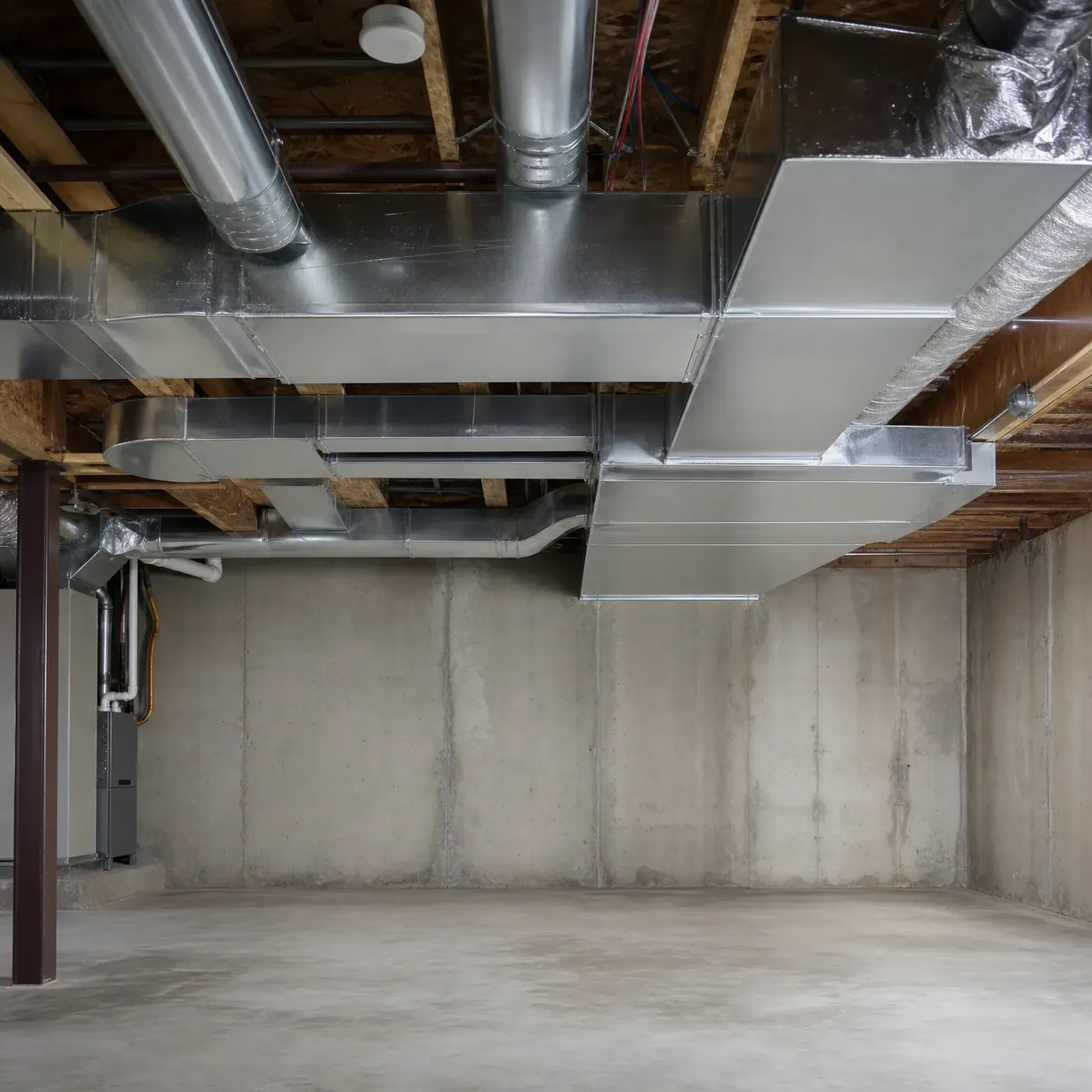
Unfinished basement with bare concrete walls and floor, exposed wood joists, and large sheet-metal HVAC ducts and pipes running along the ceiling.

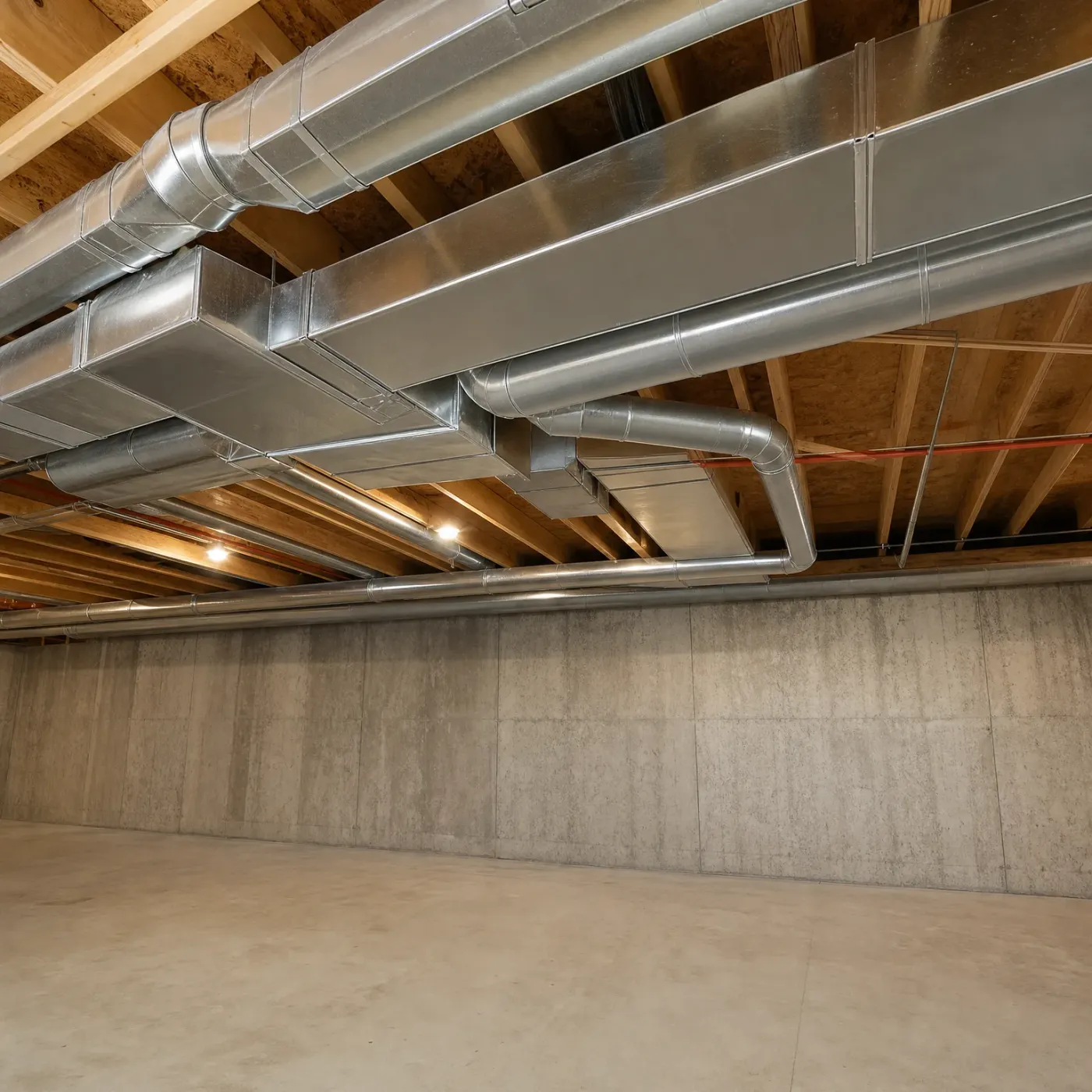
Ducts running clean

This is what a duct system looks like when it's doing its job. Air moves through the metal without dragging a load of dust along with it. The furnace runs, the house stays even, and nothing inside that ductwork is working against it.

Basement interior with galvanized rectangular and round sheet-metal ductwork and copper piping running below a wood-joist ceiling, above a concrete wall and bare concrete floor.

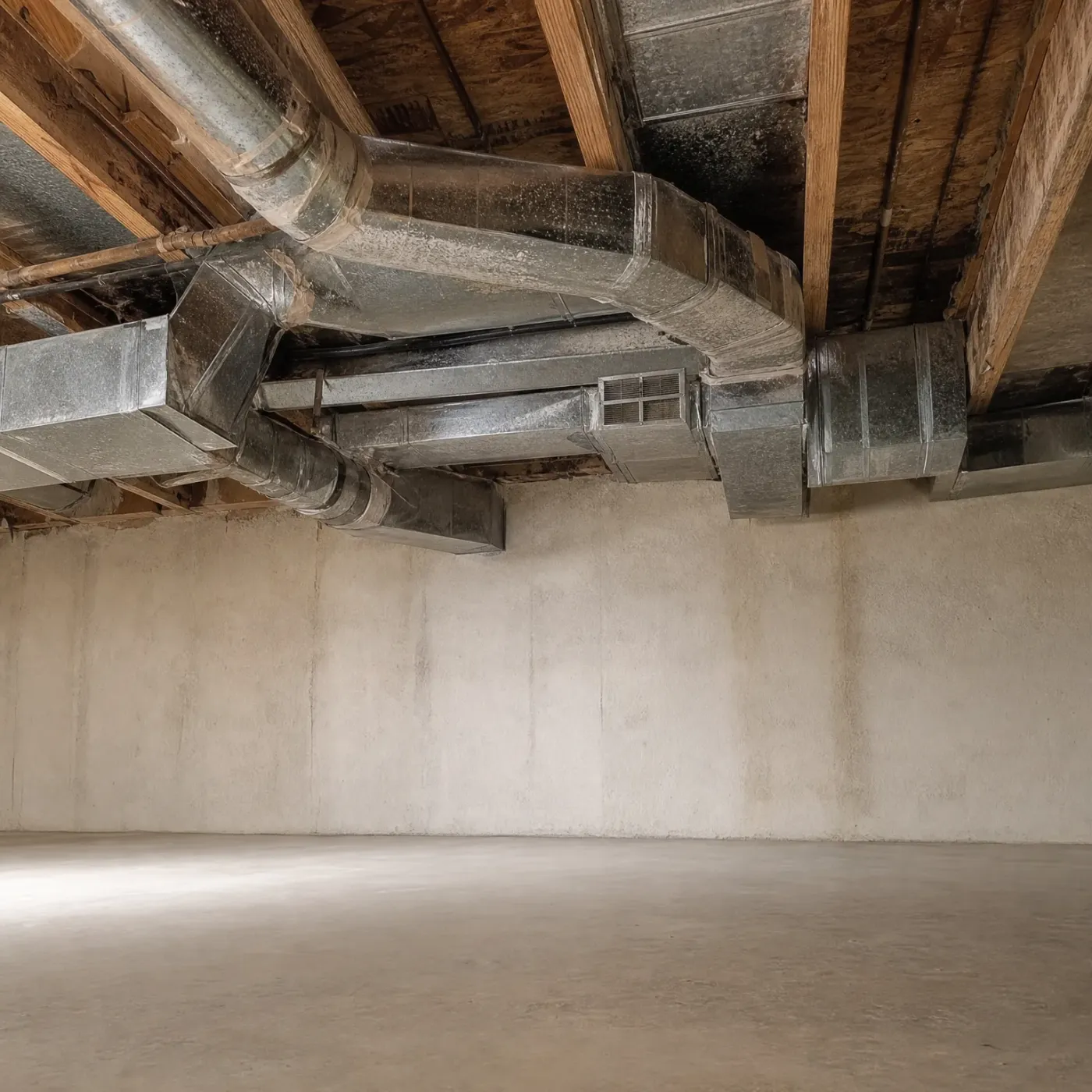
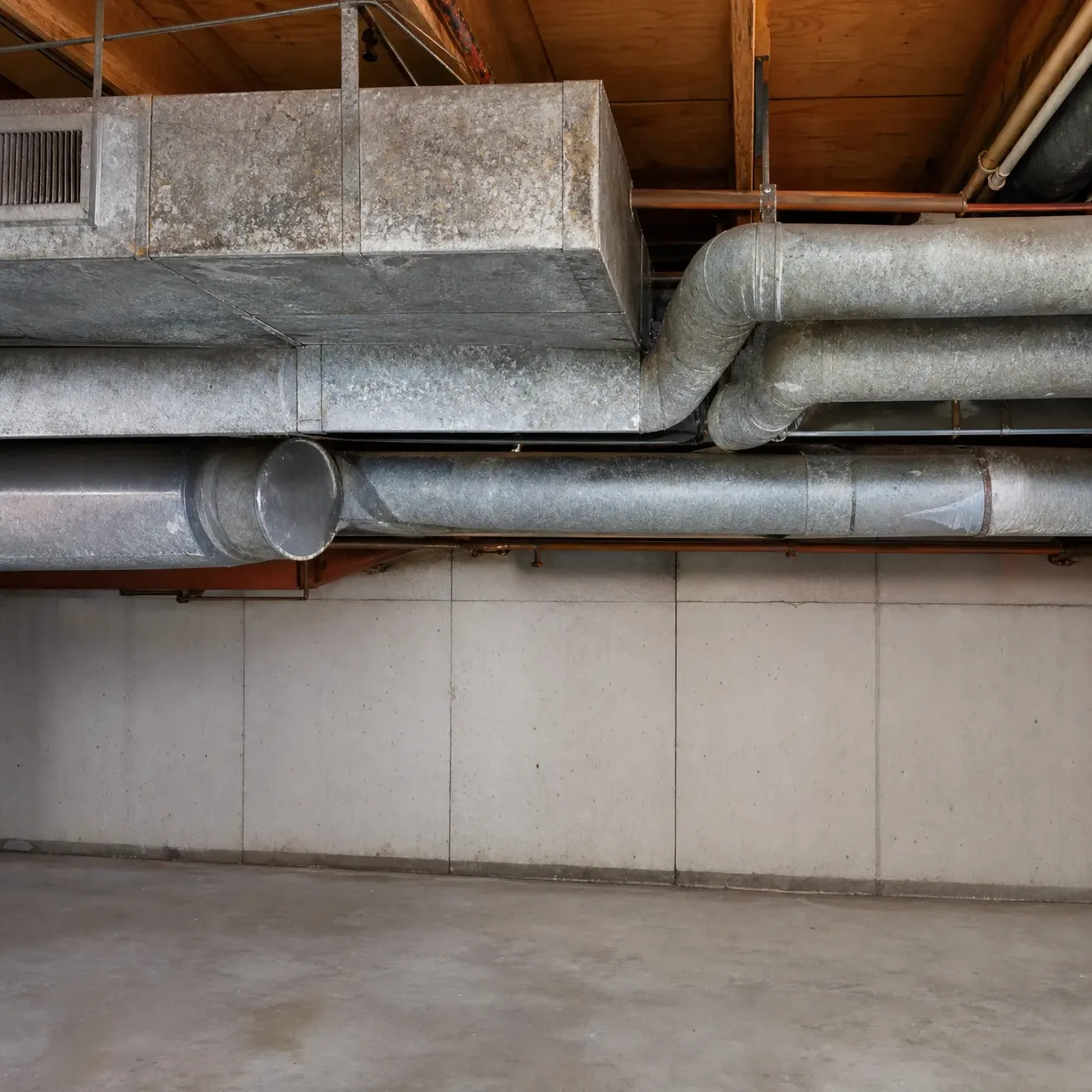
Ducts overdue for cleaning

Same kind of basement, same galvanized ductwork, but years of dust have settled inside and started moving with the air instead of staying put. That's what ends up back on your furniture and in your furnace filter within days of changing it.

Why does duct buildup matter more here than in a newer house

  • Half the homes here were built by 1988

    Half the homes in Douglas County were built in 1988 or earlier. Older duct runs have had more years to collect what gets pulled through them.

  • Heat runs October through April

    Heat runs here from October through April, about seven months. That's seven months of air moving through whatever is sitting in your ducts.

  • Cooling runs May through September

    Cooling runs May through September. Between the two, your blower is pushing air through that ductwork most of the year.

ACS 2020-2024 · NOAA nClimDiv 1991-2020

A smiling man in a green sweater stands at a kitchen counter with a dark mug, with an open-plan dining area and large windows behind him.
A smiling man in a dark green sweatshirt sits at a kitchen island with a gray mug, with cabinets, plants, and a dining area near large windows behind him.
A smiling bearded man in a green sweater sits at a white marble kitchen island with a mug, potted plant and bowl of fruit, in a bright white interior with open shelving and an arched doorway.
A smiling man in a gray long-sleeved shirt stands in a kitchen looking to the side, with open shelves of dishes, a white mug on the counter, a potted plant, and a view through a doorway into a living room.

One request and it's handed off

Answer a few questions about the duct cleaning and skip the search.

No charge to send it. You decide if you hire them.

How air actually moves through your ducts

  • Return air pulls through the ducts first, so that's where buildup forms fastest and heaviest.
  • The blower pushes air through the furnace's heat exchanger, then out through the supply ducts to every room.
  • Dust and debris that collect on duct walls get picked up again each time the blower kicks on.
  • A flex duct with a kinked or crushed run collects buildup at the bend faster than a straight metal run.
  • The filter catches some of what's pulled through, but anything that settles in the ducts before reaching it stays there.
  • Return ducts near the furnace carry more air volume than branch lines, which is why they show buildup first.

A duct system has a job to do before it ever heats or cools anything, and that job is moving air in a loop. Return ducts pull air out of your rooms and carry it back to the furnace. That return side is where buildup starts, because every bit of dust in the house gets pulled through it on the way in. The blower then forces that air through the heat exchanger and sends it back out through the supply ducts to each room. Anything that didn't get caught by the filter rides along for that whole trip. Once it settles on the inside wall of a duct, it doesn't just sit there. The next time the blower kicks on, the moving air picks some of it back up and carries it out through the vents. That's the loop that keeps dust coming back no matter how often you wipe the furniture down. Flex duct runs make this worse at any bend that's kinked or crushed, since buildup collects at that spot faster than it does along a straight metal run. And because return ducts near the furnace carry more air volume than the branch lines feeding individual rooms, they tend to show heavy buildup well before the rest of the system does. The filter is doing real work in all of this, but it only catches what reaches it. Whatever settles out before that point stays in the ducts.

An empty basement room with bare concrete walls and floor, with galvanized sheet-metal HVAC ductwork and a vent grille running along the wooden joist ceiling.
Before you get your ductwork cleaning
Unfinished basement with bare concrete floor and walls, showing galvanized sheet-metal HVAC ducts, pipes and recessed lights beneath a wood-joist ceiling.
After you get your ductwork cleaning

You keep wiping the same surfaces every day and telling yourself the house is just dusty, or that it's always been this way since you moved in.

Once the ducts are cleaned, that layer stops replenishing itself. You wipe a surface and it stays clean for more than a few hours.

Power here costs 14.77 cents per kilowatt-hour

At just over 14 cents a kilowatt-hour, a blower working harder than it should to push air through dirty ducts shows up on your bill fast. Clean ducts let your furnace and AC move air without that extra drag.

EIA-861 2025

The signs come down to this: dust that keeps coming back, a musty smell when the furnace kicks on, a vent cover that looks worse than you expected when you finally pull it off. Any one of those is reason enough to have the ducts looked at. In a county where half the homes were built in 1988 or earlier, and where the furnace runs hard from October through April, that buildup has had time and reason to collect. You don't have to figure out on your own whether what you're seeing is normal or not, or spend an afternoon calling around Lawrence and Douglas County asking contractors to come take a look. You also don't have to explain the problem over and over to different companies just to compare what they'd charge. Send the form once and that search is off your plate. What's left is a straight answer about your own ductwork, and a decision you can make once you have it.

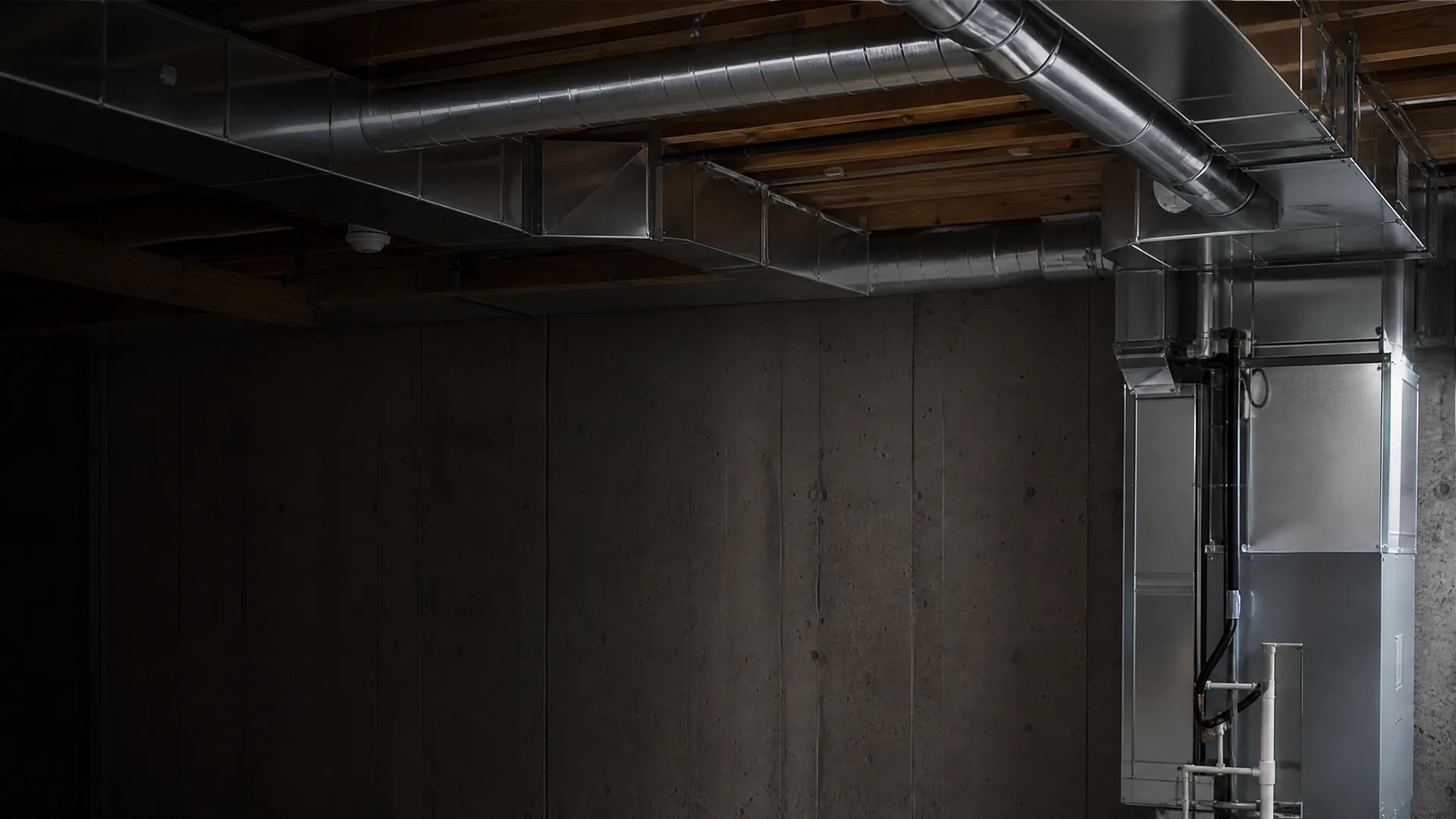
Unfinished basement with poured concrete walls, exposed wooden joists, and galvanized sheet-metal supply ducts and round pipes running along the ceiling to a furnace unit at right.

Done looking for a duct system pro

Answer a few questions instead of calling shop after shop.

Duct and vent cleaningDucts or ventsDouglas County, KS
Step 1 of 2

What ZIP code is the job in?