Kansas HVAC Pros
Side profile of a bearded man wearing a faded dark blue baseball cap and a matching dark T-shirt against a plain light gray background.

How often to clean a dryer vent in Topeka, KS

Duct and vent cleaningShawnee County, KS
Step 1 of 3

What kind of equipment?

How often should I clean my dryer vent in Topeka?

You run a load of laundry most days and never think about the vent until the dryer starts taking two cycles to dry a load that used to take one. A clogged vent is a fire risk, and it's worth knowing a number to work from instead of guessing each time you notice lint building up.

Once a year for most households

A dryer vent needs cleaning about once a year if you run a few loads a week. Lint builds up past the trap inside the duct itself, and that's what a trap can't catch. A longer vent run, or one with several bends to get the air outside, collects lint faster at those turns and is worth checking more often. A household doing wash daily, or running a large family's laundry, should look at twice a year instead. The sign it's overdue shows up at the dryer: clothes coming out still damp, a cycle that runs hotter and longer than it used to, or a burning smell when it's running. Any of those means the vent is restricting airflow and needs attention before it gets worse.

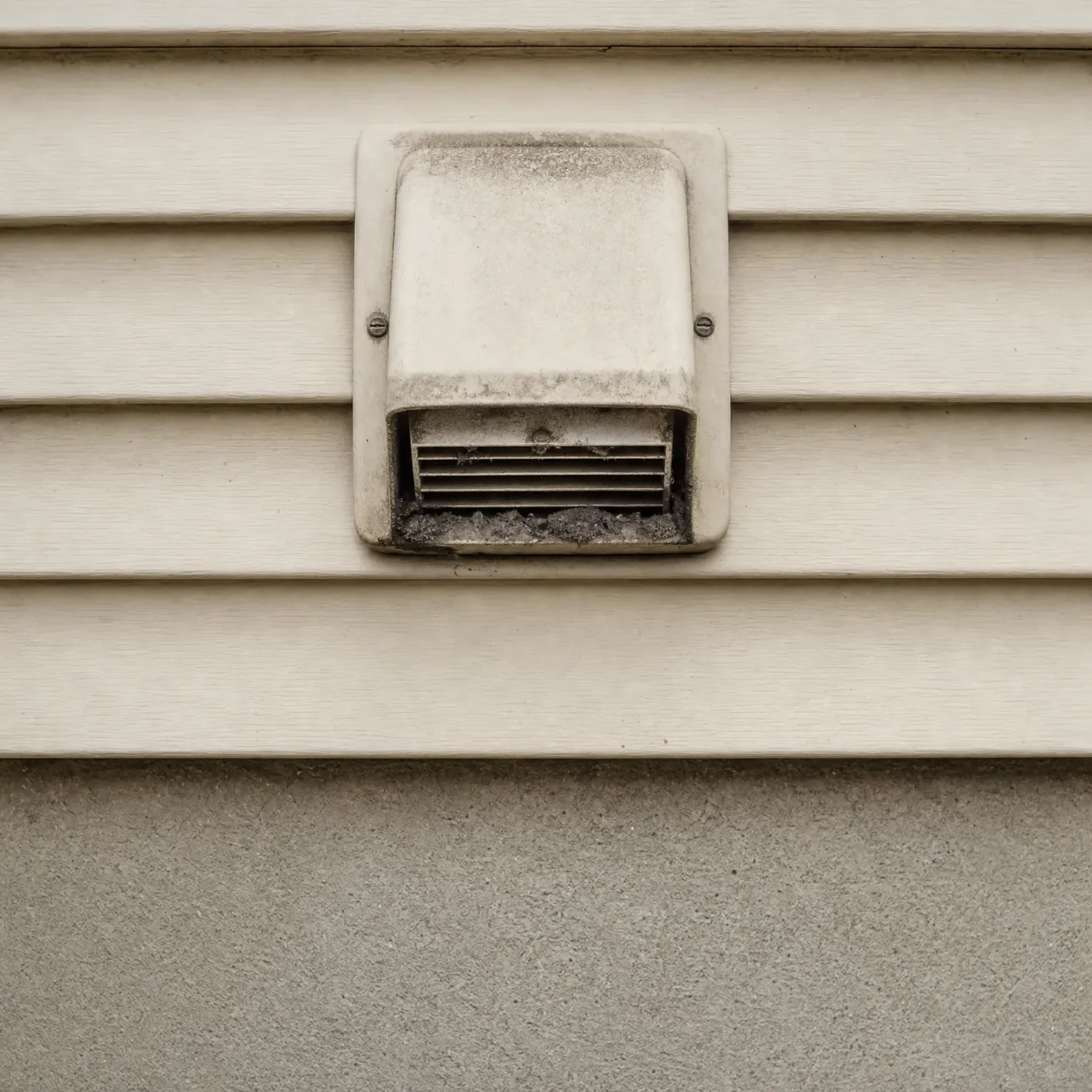
A white hooded dryer vent with a square mounting plate fastened to beige horizontal lap siding above a concrete foundation wall.

A vent that's doing its job

Air moves straight out through the louvers with every load, and the cap stays clean because lint isn't catching on anything. A dryer venting like this finishes a load in one cycle, and the exhaust clears the second the drum stops turning.

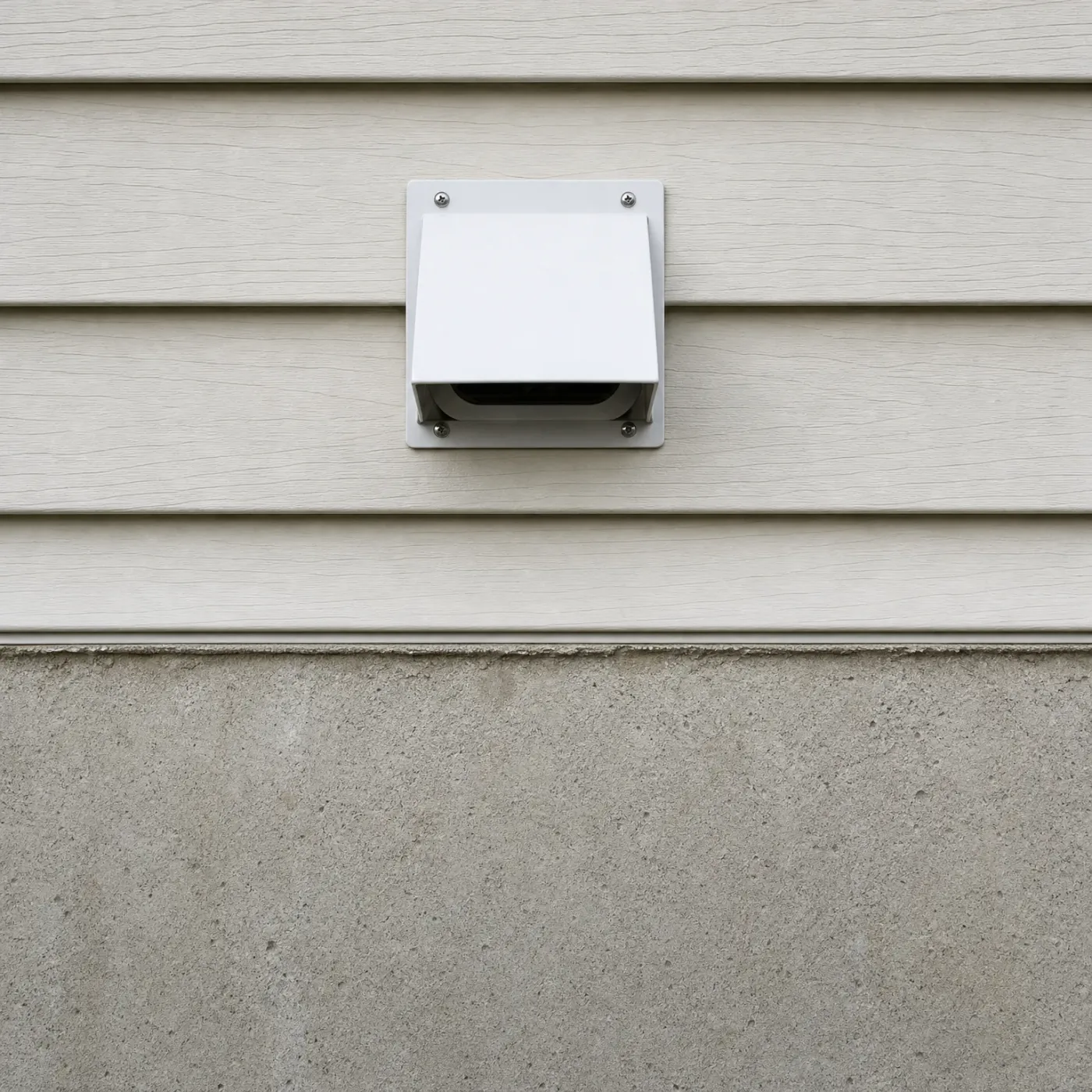
A dusty plastic louvered dryer vent hood screwed into beige horizontal vinyl siding above a gray stucco foundation wall, with lint buildup around the slats.

A vent that's choked up

Lint has built up around the louvers until the opening is nearly sealed. Air backs up into the duct instead of escaping outside, so the dryer runs hotter and longer, and the lint sitting right at the exterior wall is fuel for a fire.

What does your house mean for how often that vent gets used and checked?

  • 2.29 people per household on average

    With 2.29 people in the average Shawnee County household, most homes run a load close to daily, which means lint builds up on a steady schedule worth tracking.

  • Half the homes here were built by 1972

    Half the homes in Shawnee County went up in 1972 or earlier, and a duct run that old may sag or clog more than one put in new.

  • Power here costs 14.90 cents per kilowatt-hour

    At 14.90 cents per kilowatt-hour, power here runs about average, so a vent clogged enough to force a second cycle adds a real cost to drying one load.

ACS 2020-2024 · EIA-861 2025

A clogged vent shows up in your house before it shows up anywhere else. You'll notice the top of the dryer feels warmer than usual, or the laundry room holds onto heat and a faint hot-dust smell long after the cycle ends. Run your hand near the outside vent cap while the dryer is going. Weak airflow there, instead of a strong steady push of warm air, means lint is building up somewhere in the run between the drum and the wall. Every extra cycle it takes to dry a load is the dryer working harder and burning more gas or electricity to push air through a vent that's partly blocked. Left alone, lint keeps collecting around the duct joints and at the cap, and that's exactly where house fires that start in dryer vents begin. It isn't about a single bad load. It's about lint narrowing that path a little more each week until the dryer is straining to do what it used to do without effort.

An older man with gray hair and a beard, wearing a dark snow-dusted jacket and scarf, stands smiling in a warmly lit interior hallway with a lit table lamp, a vase of dried branches, and a framed picture in the background.
An older man in a dark snow-flecked overcoat and scarf stands smiling in a warmly lit home entryway, with a glass-paned door showing darkness outside and a lamp-lit room visible through a doorway behind him.
An older man with grey hair and a beard, wearing a dark coat dusted with snow, stands in a dimly lit entryway with a ceiling lamp, a side table with two shaded lamps, and a lit fireplace visible in a room beyond.
An older man with gray hair and a beard, wearing a dark coat dusted with snow, stands smiling in a doorway of a warmly lit home with a sofa, lamp and window visible behind him.

4 feet per minute

That's roughly how fast lint builds inside a vent run with daily use. A straight, short line to the outside stays clear longer than one with turns.

Request a pro

Rigid metal over foil

A smooth rigid duct sheds lint as it moves; foil and plastic ducting snag it at every seam, so the material behind your dryer affects how often buildup becomes a problem.

Request a pro

Why is this load taking forever to dry

You've started running the dryer twice to get one load dry, and you've chalked it up to an old machine. Check the vent first. A load that used to finish in under an hour now drags past it, the control panel feels hot to the touch, and the laundry room stays warm long after the buzzer goes off. Some loads come out smelling faintly scorched even though nothing burned. None of that is the dryer wearing out. It's lint sitting in the duct, holding heat and moisture in instead of letting them out. Left alone, that buildup is what starts dryer fires, and it's also running your gas or electric bill higher every time you dry a load.

A pile of gray and blue towels sits on top of a white dryer in a dim room with a wall cabinet above and a window to the right.

It's almost nine on a Tuesday and you pull the towels out expecting them dry. They're not, still heavy and warm instead of hot, and this is the second time through the cycle. The laundry room smells faintly like hot dust and the overhead light makes the pile look bigger than it is. You set them on top of the dryer while you check the lint trap again, already empty, already clean. Somewhere behind the wall the vent run goes out to the side of the house, and you haven't thought about it since the place was new to you. A Shawnee County tech who clears these every week would know in a minute where to look.

Find a dryer vent cleaning pro in Shawnee County

You've read enough by now to know your vent needs a look, maybe sooner than you planned. Finding someone who'll actually show up and check it properly is its own job. A dryer vent cleaning is quick work for the right person, but it still means letting someone into your laundry room, and you want that to be someone who does this kind of work around Topeka regularly, not someone learning on your house. A contractor who services vents all over Shawnee County has seen what daily laundry loads do to rigid metal runs and what they do to foil ones, and knows which cap styles tend to hold up against the cold here and which ones ice over. Submitting your request connects you with one local contractor suited to your situation, so you're not fielding calls from a handful of companies while your dryer sits there taking two cycles to do one load's worth of towels.

Cleaning it yourself

A vacuum with a hose attachment reaches the first few feet from the inside, and a lint brush kit pushed through from the outside hood can knock loose what's built up along a short, straight run. That handles a lot of what collects in a vent with no bends between the dryer and the wall. It doesn't reach a run with turns in it, and it won't tell you if the duct itself is crushed, disconnected behind the wall, or still foil instead of rigid metal. If the vent run is long or bent more than once, a vacuum hose stops well short of the clog.

Having it done by a pro

A contractor brings a rotary brush system built to run the full length of the duct, around turns a shop vacuum can't reach, and pulls lint out instead of just repacking it further down the line. They'll also check the hood flap, the duct material, and the connections behind the dryer while they're at it, which tells you whether the vent itself needs work beyond the cleaning. That matters more on a run with any bends in it. It costs more than doing it yourself and means scheduling someone to come out.

2.29 people per household on average

At 2.29 people, your house is doing laundry for two most days, not a houseful. That keeps the dryer running often enough that lint still adds up, just slower than next door with four or five people. Check the vent on a schedule instead of waiting for a sign.

ACS 2020-2024

How often your vent needs cleaning

  • Clean the dryer vent once a year if your household runs close to a load a day.
  • Check it twice a year if your vent run is long, has turns, or is foil instead of rigid metal.
  • A load that drags past an hour or a dryer top that runs hot means check it now, not on schedule.
  • Rigid metal duct holds up to lint longer than foil or plastic, so the material changes how often it needs attention.
  • Shawnee County runs about 2.29 people per household, which keeps lint building at a steady pace rather than a fast one.
  • A clear, straight run to the outside cap stays cleaner longer than one with bends.

Once a year covers most houses in Shawnee County. That's the baseline for a household running a load close to daily, which is most of them at 2.29 people per home. The number moves from there based on what the vent itself is made of and how it's routed. A long run, one with a couple of turns in it, or a line of foil duct instead of rigid metal needs a second look partway through the year, because all three of those slow down how fast air clears lint out on its own. A short, straight shot to the cap works in your favor and can stretch the gap between cleanings. None of that matters more than what the dryer is telling you right now. A once-a-year plan is a starting point, not a rule that overrides a load that's taking an hour and a half to dry or a dryer top that's gotten too warm to rest your hand on. Those signs mean the vent needs attention this week, not whenever the yearly check was due. So the real answer has two parts. Set a yearly cleaning if your laundry room sees regular use, move to twice a year if the duct is foil or the run is long and bent, and treat any sign of slow drying or heat buildup as reason to check it immediately, regardless of where you are in that schedule.

A woman with hair in a bun sits wrapped in a thick cream blanket in an armchair, an open book in front of her, beside a lit lamp and a frosted window.
An older woman in a cream knit sweater smiles while looking off-camera in a warmly lit kitchen, with a round loaf of bread on a wooden board in the foreground and a dark window behind her.

A local pro for your dryer vent cleaning

A once-a-year cleaning covers most homes in Shawnee County, and twice a year if your run is long or has turns. A hot dryer top or a load that won't dry in one cycle means it's time now, regardless of when you last checked. Finding someone local who works on vents all year and knows which setups clog fastest beats guessing on your own. You'll be matched with one licensed contractor for your situation, not a handful competing for your business.

Find a licensed dryer vent pro

Only one pro gets your request, so you hear from one company.

You're not committing to anything by asking.