

Signs of a clogged dryer vent in Overland Park, KS

Send the form and the dryer vent cleaning stops sitting on your list.

Let a pro reach out

What are the signs of a clogged dryer vent?

You keep catching your clothes still damp at the end of the cycle, or you've noticed the dryer running longer than it used to. Maybe the top of the machine feels hot, or there's a burning smell when it runs. In Overland Park, where the dryer gets heavy use from the muggy summers through the cold winters, that kind of change is worth paying attention to before it turns into something worse.

Clothes take two or more cycles to dry, the top of the dryer feels hot, and the vent hood outside barely flaps when it's running

A clogged vent happens because lint builds up inside the ductwork, not just in the trap, and over time it narrows the path air needs to escape through. When that path is blocked, the moist air from your clothes has nowhere to go, so the dryer runs hotter and longer trying to finish the job. You'll notice the room getting warmer than usual, a burning smell, or lint collecting around the door seal. Step outside while it's running and check the vent hood. If the flap barely moves or no air comes out at all, the duct is blocked somewhere between the dryer and the outside wall.

A metal hooded exterior vent with a screened opening mounted on gray horizontal lap siding, with a plain white wall at right.

Why heat is the first clue

A dryer pushes hot, damp air out through the vent with every load. When the vent is clogged, that air has nowhere to go, so it backs up into the drum and the cabinet. That's why the top or the front panel feels hot to the touch, and why the laundry room itself can feel warmer and more humid than it should. The dryer is still heating normally. It just can't get rid of the heat it's making, because the air isn't leaving the house.

A white plastic hooded dryer vent cover screwed to light gray horizontal lap siding at an exterior wall corner.

Check the outside vent hood

Walk outside while a load is running and look at the vent hood, usually a small flap on the wall near where the dryer sits. Lint buildup inside the duct weakens the airflow coming out, so instead of a steady, strong push of warm air, you might feel barely anything at the hood. If the flap isn't opening all the way or there's lint visible around the edges, that's airflow being held back somewhere along the duct run.

Why does a clogged vent hit harder in your house

  • 2.46 people per household on average

    With 2.46 people in the average Johnson County household, the dryer runs most days of the week, so lint builds up fast and a blocked vent shows itself sooner.

  • Half the homes here were built by 1989

    Half the homes in Johnson County were built in 1989 or earlier, and older vent runs are more likely to be long or to use duct that sags and traps lint.

  • Power here costs 13.46 cents per kilowatt-hour

    At 13.46 cents per kilowatt-hour, a dryer working harder against a clogged vent adds up on the bill well before anyone notices the real problem.

ACS 2020-2024 · EIA-861 2025

A vent that's slow versus one that's shut

A partly clogged vent still lets some air through. Clothes take an extra cycle or two, the dryer runs warmer than usual, but it finishes the job. You notice it as a nuisance more than a worry. A fully blocked vent is different. Air has nowhere to go at all, so heat and moisture build up inside the dryer with every load. The smell gets stronger, the outside hood flap barely moves or doesn't move, and the machine can shut itself off partway through a cycle. One costs you time. The other means the dryer is working against itself.


Lint buildup versus a bird or pest nest

Most clogs build slowly from lint that didn't make it to the trap, packing tighter with every load until airflow slows down. You'll notice the change over weeks, not all at once. A nest is sudden. Birds and small animals get into the outside vent opening looking for a warm, dry spot, and the blockage shows up overnight, often with a stronger smell or scratching sounds near the vent hood. Either way the dryer runs hotter and longer than it should, but a sudden, total blockage with no slow warning points more toward something nesting in the line than lint alone.

A smiling man in a dark green sweater sits at a wooden table with a light gray mug in a kitchen with white tile backsplash, pendant lights, and an adjoining living room visible.
A smiling man in a dark gray sweater stands indoors looking to the side, with a kitchen counter holding a ceramic mug and open wooden shelves behind him and a living area in the background.
A smiling man in a dark blue button-up shirt stands at a white kitchen island, with open shelving, a gas range, a potted plant and a window in the background.
A smiling man with dark wavy hair and a beard, wearing a dark green knit sweater, sits in an open-plan living room and kitchen with a brown sofa, large windows, and a counter holding a mug and a wooden bowl.

It's off your list after this

The pro who gets in touch is licensed in Kansas and works in Johnson County.

You're not committing to anything by asking.

How a vent actually clogs

  • Lint traps most of the fuzz, but fine particles ride the airstream past it and coat the inside of the duct run.
  • Every elbow and turn in the vent line gives lint a place to catch, so the bends clog faster than the straight stretches.
  • A flapper hood on the outside wall is supposed to swing open when the dryer runs and fall shut when it stops.
  • A clogged vent makes the flapper barely move, or it won't open all the way, even on a hot cycle.
  • Rigid metal duct holds less lint than the foil or plastic accordion style, since the ridges in flexible duct snag lint as air passes.
  • Vent length and the number of bends both add resistance, so a long run with several turns clogs sooner than a short straight one.

A dryer vent doesn't clog all at once. The lint trap in the dryer catches the bulk of it, but plenty of fine lint slips past and rides the warm air out through the duct. That lint doesn't travel evenly. It settles where the airflow slows down or changes direction, which means every elbow in the line is a spot where buildup starts before the straight sections show any trouble. A run with three or four bends in it will clog well before a short, straight shot to the outside wall. The duct material matters too. Rigid metal duct has a smooth inside wall, so lint has less to grab onto. Foil or plastic accordion duct has ridges, and those ridges catch lint the same way lint catches on a sweater. Outside, the vent ends at a hood with a flapper, a small hinged flap that's supposed to swing open when the dryer is running and push air out, then fall shut when the cycle ends so cold air and pests stay out. That flapper is a good gauge of what's happening inside the duct. On a clear run, it swings open wide on a hot cycle and you can feel real airflow behind it. When the duct is clogged, the flapper barely lifts, or it opens partway and stays there, because there isn't enough air pressure behind it to push it open all the way.

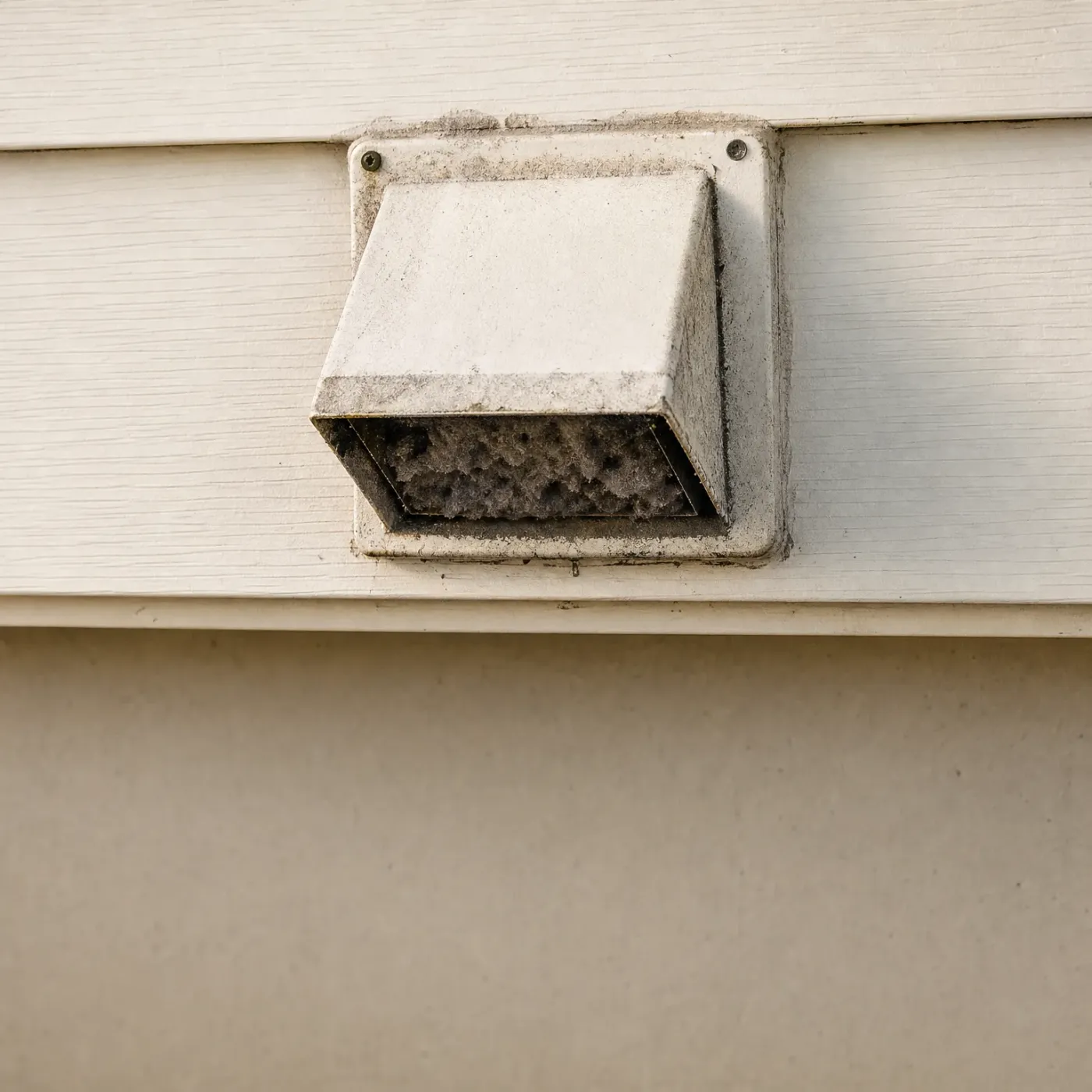
A white plastic hood-style dryer vent mounted on beige horizontal siding, with its opening clogged by thick gray lint.
Before you get your dryer vent cleaning
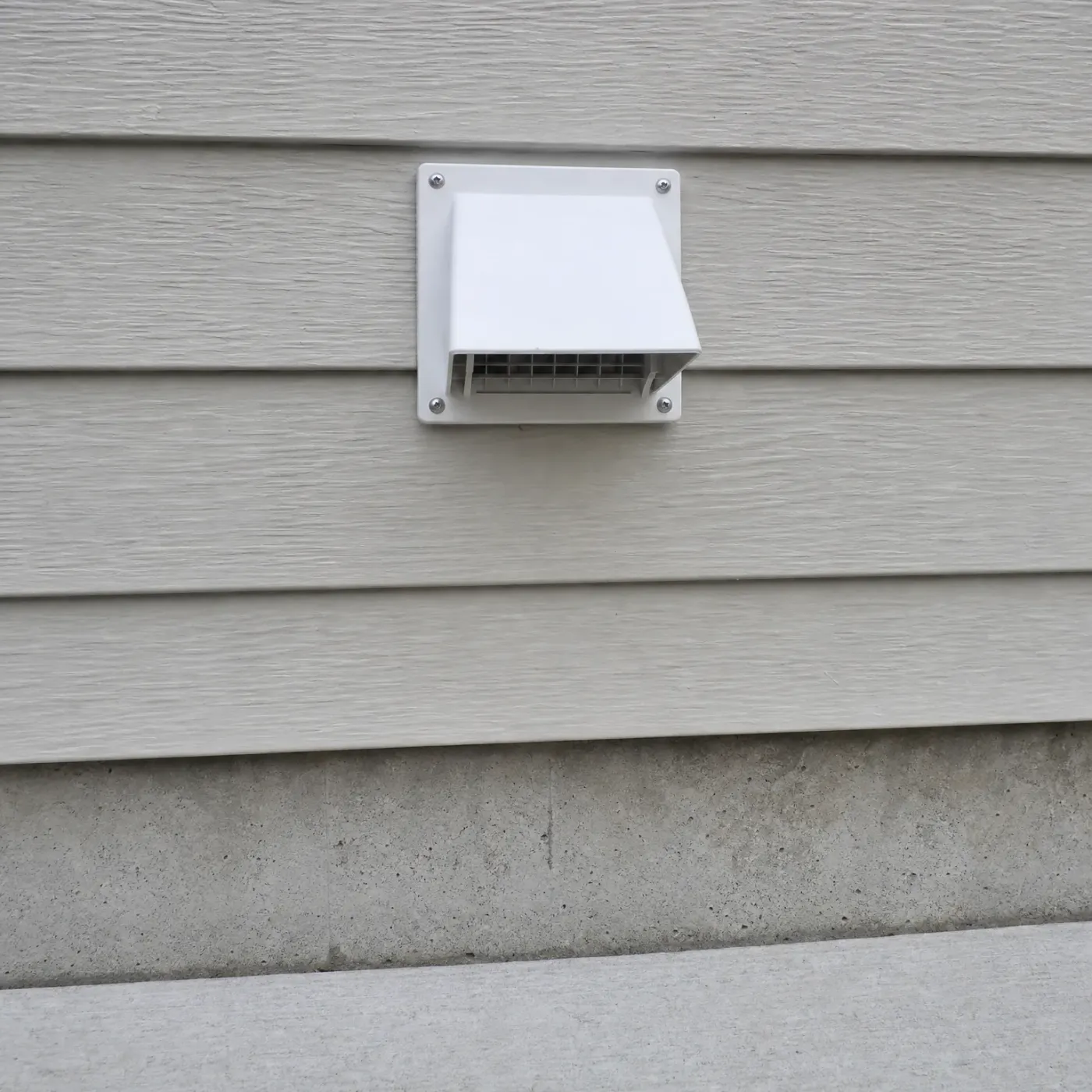
A white hooded dryer vent with a louvered opening mounted on light gray horizontal lap siding above a concrete foundation.
After you get your dryer vent cleaning

Over 90 minutes a load

A dryer that used to finish in 40 minutes now runs for an hour and a half or more. That's hot air with nowhere to go, pushing your gas and electric use up right along with it.

Get one local pro

A dryer fire

Lint built up in a blocked vent is fuel sitting next to a heat source. Johnson County fire crews see dryer fires start this way, in homes where the vent hadn't been cleaned in years.

Get one local pro

Clean the vent or leave it clogged

Clean the vent

  • A straight, clear vent lets a load finish in under an hour, so the dryer cycles less and uses less gas and electricity.
  • Air moving freely through the duct carries moisture out of the house instead of leaving it in the drum.
  • The motor and heating element work less hard when exhaust isn't backing up against them.
  • A cleared vent means the flapper hood outside opens and closes the way it's supposed to, keeping pests and weather out between loads.
  • Lint that would otherwise sit in the duct for months gets removed before it has a chance to catch a spark.

Leave it clogged

  • Loads that used to take 40 minutes stretch to 90 or longer, and some never fully dry.
  • Lint keeps collecting in the same blocked spots, usually the elbows and bends, until almost no air gets through.
  • The dryer runs hotter than it should, which wears down the heating element and the motor faster.
  • Moist air stays trapped in the vent and the room around it instead of venting outside.
  • Lint packed against a heat source is what starts most dryer fires, and a fully blocked vent is how it gets there.
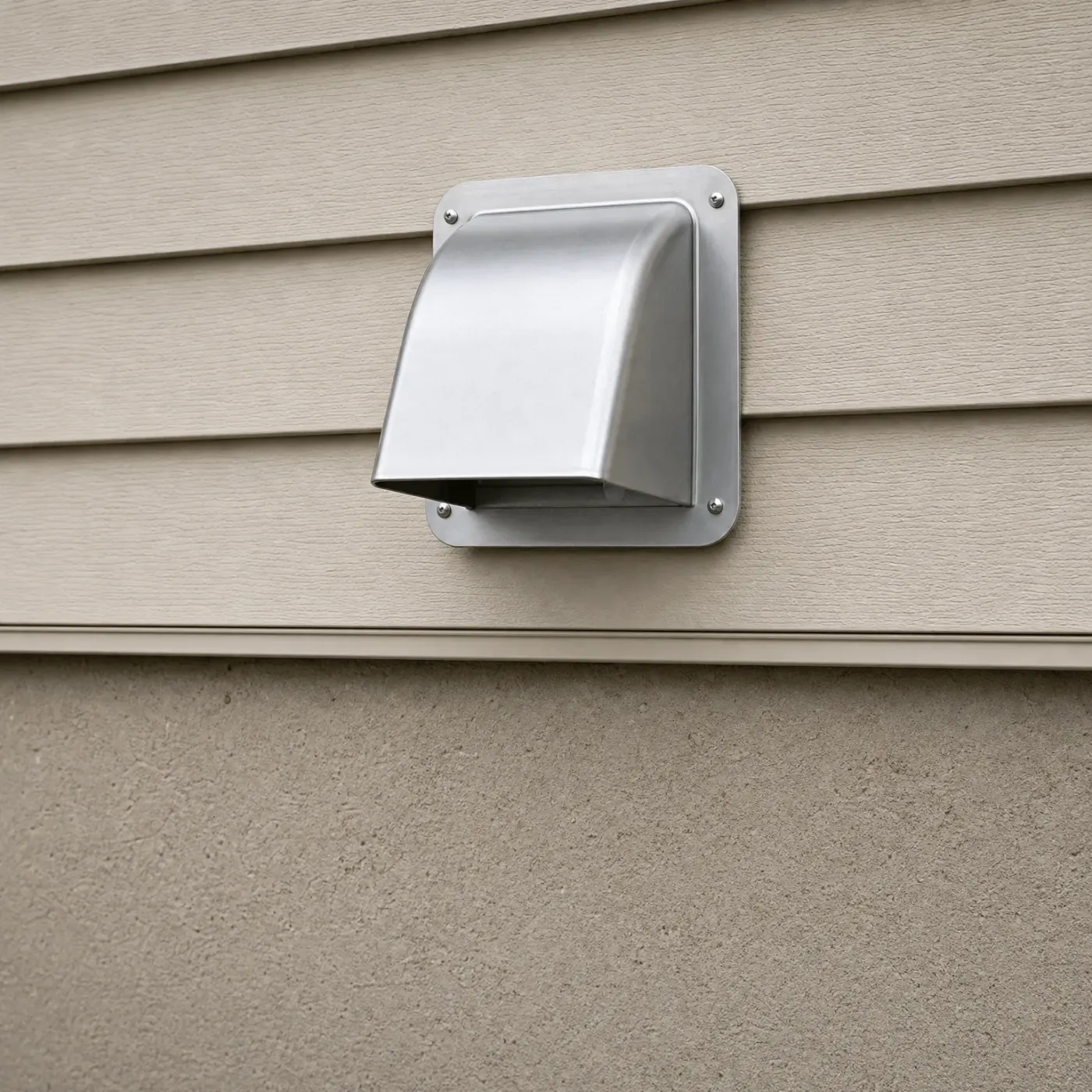
A metal hooded dryer vent cover mounted on beige horizontal lap siding above a textured concrete foundation wall.

A clear vent cap

Air moves freely through the hood and out past the flapper with every load. The cap stays free of buildup around the opening, and from outside you'd have no way to know the dryer was even running.

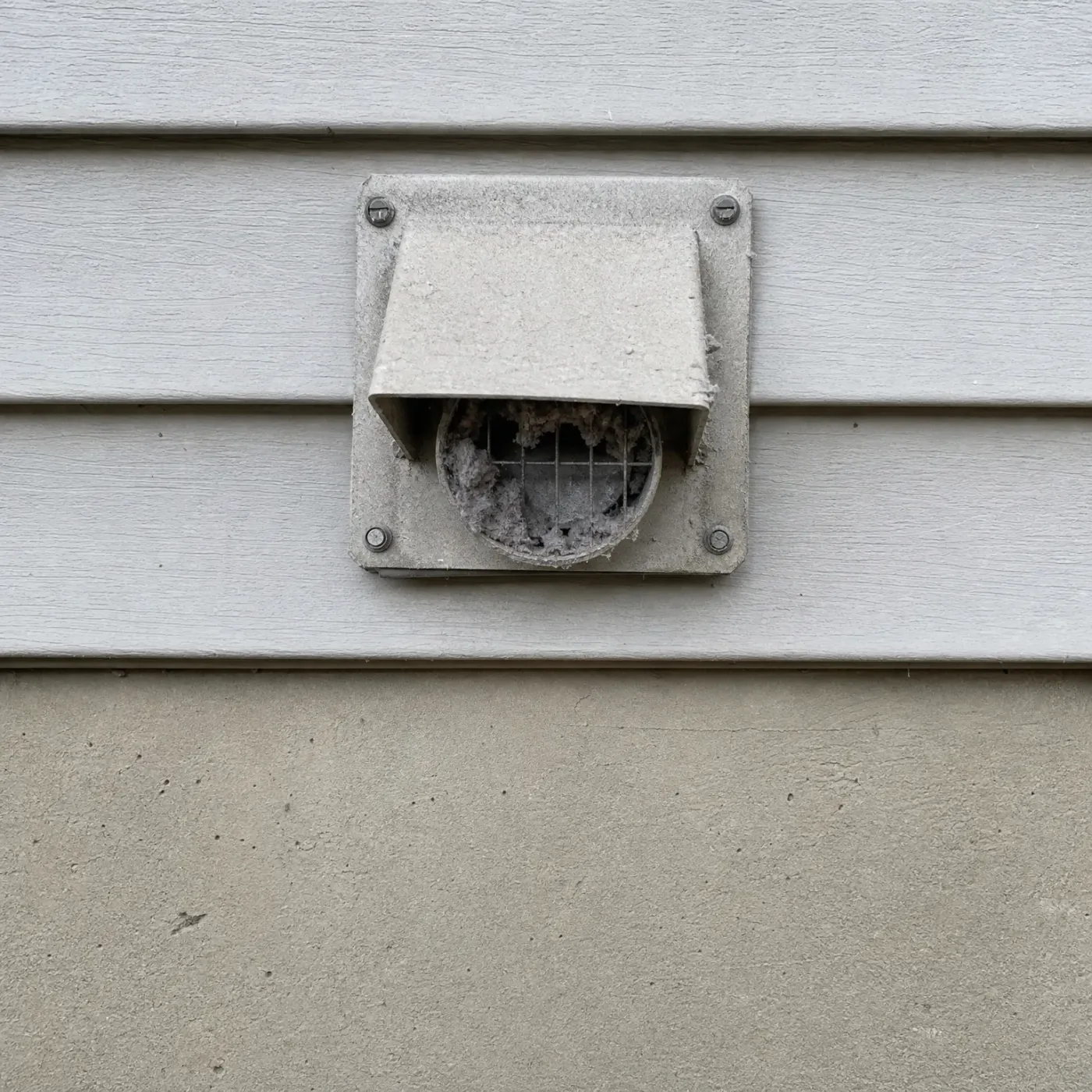
A metal dryer vent hood screwed to light gray lap siding, with lint clogging the round opening and a lower concrete wall below.

A vent choked with lint

The screen over this opening is packed solid with lint, leaving almost no path for air to escape. A cap like this is already blocking most of the airflow, and it only gets worse from here.

2.46 people per household on average

With close to three people in most Johnson County households, you're likely running a load every day or close to it. That's a lot of loads pushing lint through the same vent, and a clog shows up sooner than it would in a house that runs the dryer once or twice a week.

ACS 2020-2024

A dryer that runs hot, takes too long, or smells like it's burning is telling you the vent is blocked, not that the machine is wearing out. That's the whole answer. Clearing the line is a job for someone who runs a vacuum and rod down a duct every week and knows where lint actually collects, at the elbows, behind the wall cap, wherever the run was pieced together when the house was built. Send in your request and you're matched with one licensed contractor local to the Overland Park area, not a handful of companies competing for your callback. Someone who works on vents all over Johnson County has seen your exact setup before and knows what usually clogs first in homes like yours. Once you send the request, finding that person is off your plate. You'll know your vent is clear, your dryer is running the way it should, and you didn't have to sort through who to call to get there.

A dark-clad house with large windows beside a gravel driveway lined with in-ground path lights, ornamental grasses and hydrangeas, with distant hills and an orange sunset sky.

Dryer Vent Cleaning

Send one request and you're done looking

Duct and vent cleaningJohnson County, KS
Step 1 of 3

What kind of equipment?

  • A ceramic table lamp with a tapered beige shade sits on a wooden side table with a drawer, beside a shallow wooden bowl holding a stone sphere and a potted green plant, next to an upholstered chair with a knit throw.
    • Get matched with a Johnson County pro who cleans dryer vents.
    • Get matched with a pro who works on dryer vents in Johnson County.
  • A potted green trailing plant in a textured ceramic pot with saucer sits on a wooden side table beside a small wooden bowl, with a ceramic table lamp, framed picture, and sunlit window nearby.
    • Send the form and finding a dryer vent cleaner is handled.
    • One request and the dryer vent cleaning stops waiting on you.
  • A beige upholstered armchair with a green cushion and knit throw sits beside a tall indoor plant and a wooden side table holding a potted plant near a bright window.
    • Skip searching for someone who cleans dryer vents in Johnson County.
    • Answer a few questions about the dryer vent cleaning and skip the search.
  • A beige upholstered armchair with a striped cushion and fringed throw sits beside a window with sheer curtains, next to a wooden side table holding a dark ceramic lamp, with a potted tree in a woven basket behind and a jute rug on the dark wood floor.
    • Your dryer vent cleaning request goes to one local pro.
    • Your request goes to one pro, not a list of companies.