


Before
The laundry room holds heat and damp air long after the dryer stops, the hood flap barely moves, and loads take more than one cycle to dry.
A local pro who cleans dryer vents gets in touch with you.
Find a dryer vent proYou run a load of laundry and the room turns into a sauna, even with the door open. It happens most in July and August when the air outside is already thick with moisture, but you've noticed it other times too. You keep the lint trap clean and the dryer seems to run fine, so it's not obvious why the heat has nowhere to go.
A dryer pushes hot, damp air through a vent hose to a hood outside the house. If that hose is crushed, clogged with lint, or too long for the air to make it all the way out, the heat and moisture back up into the laundry room instead. In Kansas summers, the air outside is already humid, so a vent that's working too hard to push air out gives you a room that stays hot and sticky long after the cycle ends. A vent that's partly blocked also makes the dryer run longer to dry the same load, which means more heat dumped into that small room each time you do laundry.

A gas dryer burns fuel to make heat, and that heat has to leave the drum somehow. The vent carries hot, damp air outside through a hose and a hood on the wall. When lint packs the hose or the hood flap stays stuck, that air has nowhere to go but back into the room. The dryer keeps burning gas to heat air that never leaves the house.

Outside air in July and August already carries a lot of moisture, so a vent that is clear still has to push the dryer's hot air against air that is thick to begin with. A vent that is partly blocked struggles even more, because the dryer has to work harder to force air out against that resistance, and more of the heat it makes stays behind in the laundry room instead of leaving through the hood.
Run a load and check the room an hour after the dryer shuts off. If it's still warm and a little damp-smelling, air isn't getting outside the way it should. You might notice the hood flap on the outside wall barely moves when the dryer runs, or the laundry room door has started staying shut on its own from the heat pushing against it. Clothes may come out hotter than they used to, or take a second cycle to finish drying. With Kansas summers already sticky, that extra heat and moisture sitting in a closed room gives mold somewhere to start, and a dryer working harder than it should to push air through a packed vent puts more wear on the parts inside it.




Your dryer vent cleaning request goes to one local pro.
Sending the form costs nothing.
When the vent is clear, hot air leaves the drum and goes straight outside through the hood. The dryer cycles normally, the room warms up a little while it runs, and it cools back down within a few minutes of the load finishing. You can hold your hand near the hood outside and feel steady, strong airflow while the dryer is on. That's the vent doing its job. The heat and moisture from your clothes end up outside, not in your laundry room, and the dryer doesn't have to work as hard to push air through.
When lint has packed the hose or the hood flap won't open all the way, the dryer is still making the same heat, but it has nowhere to go. Some of it backs up into the room around the machine instead of venting outside. The air at the hood outside feels weak or barely moving. Inside, the room stays hot and a little damp well after the cycle ends, and you might notice the dryer itself running hotter to the touch. A contractor who clears vents routinely in Kansas homes can tell you which one you're dealing with.


The laundry room holds heat and damp air long after the dryer stops, the hood flap barely moves, and loads take more than one cycle to dry.
Hot air clears out through the hood as the dryer runs, the room cools within minutes of the load ending, and clothes dry on the first cycle.



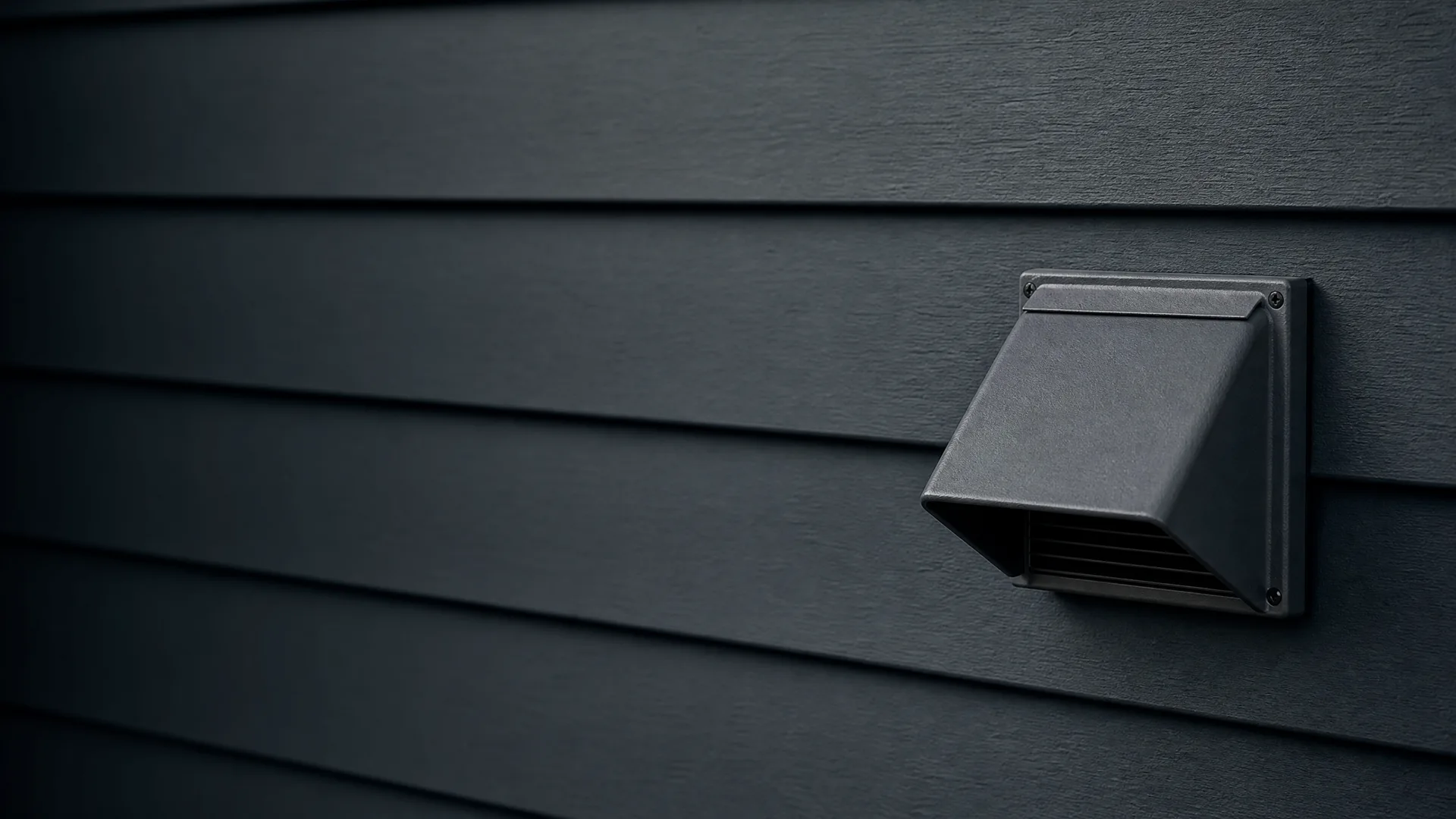
The hood flap hangs loose and swings open when the dryer runs. Hot air pushes out in a steady stream, and you can feel it from a few feet away. No lint around the screws, no staining on the siding below. This is what a vent looks like when it's doing its job.

The flap sits open because lint built up behind it and won't let it close. Gray residue streaks down the siding and onto the foundation below the hood. Air that should be going outside is backing up into the hose instead, and some of it is finding its way back into your laundry room.
Kansas power runs 14.44 cents per kilowatt-hour. A clogged vent makes the dryer run longer to finish each load, so you're paying that rate for extra cycles instead of one. Clearing it gets loads drying in a single run again.
EIA-861 2025 statewide residential average
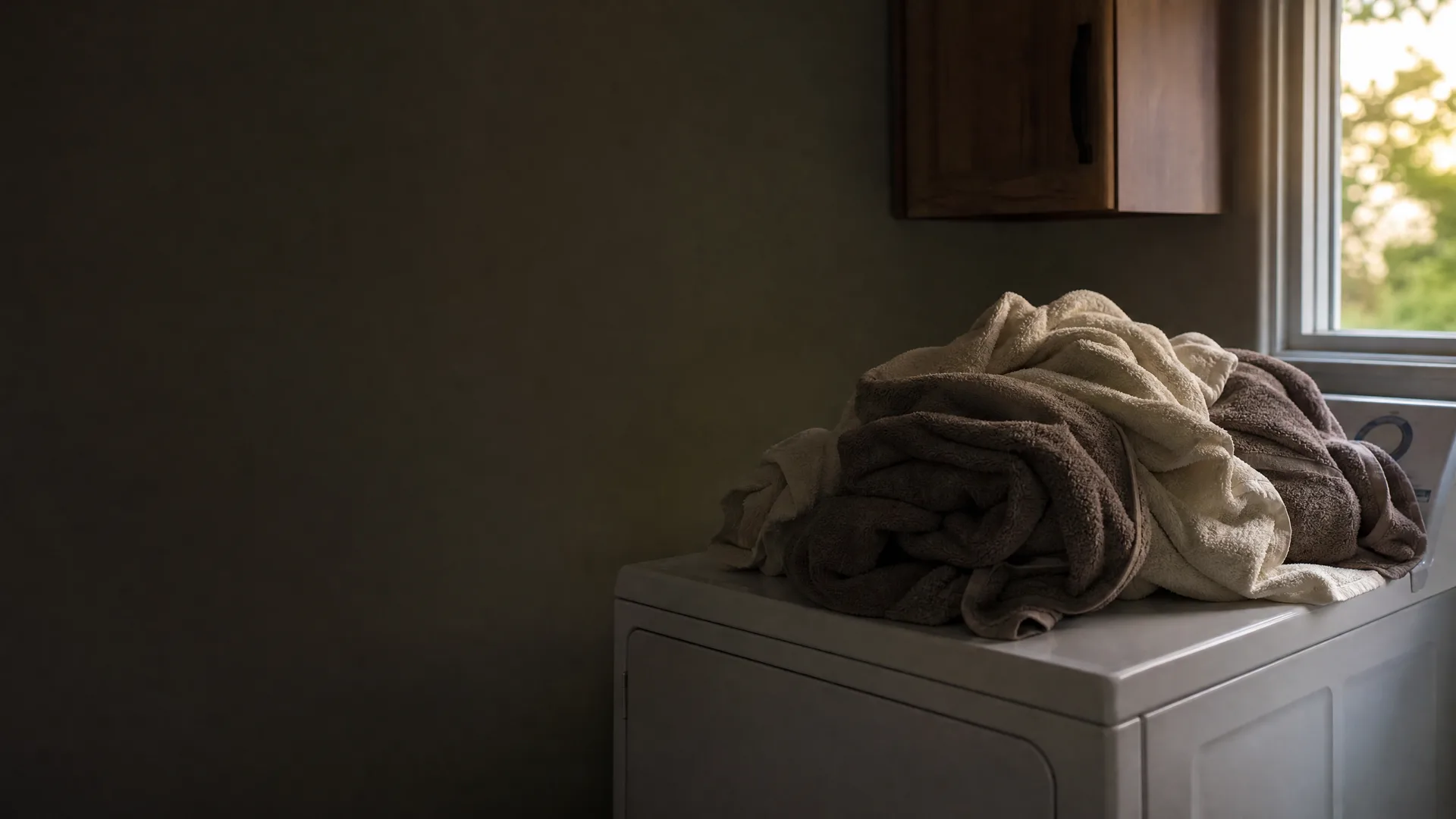
It's almost nine on a Tuesday and you just pulled the third load out, still damp at the cuffs. The dryer clicks off and the room stays thick, that wet-cotton smell hanging in air that feels warmer than the kitchen behind you. You've got a heap of towels piled on top of the machine, the ones that came out barely drier than they went in. Outside the sun's long gone but Kansas in August doesn't care, the air through the cracked door is almost as heavy as what's trapped in here. You push the door open wider, nudge the towels apart to let them breathe, and start the cycle again, figuring this is just what laundry takes now.
A hot laundry room in a Kansas summer almost always comes down to one thing: the vent isn't letting the heat out like it should. Clear that path and the room goes back to warming up while the dryer runs, then cooling down within minutes once it stops. That's the whole fix. A local contractor who cleans dryer vents all summer in this kind of heat knows where lint packs tightest and what a stuck hood flap looks like before it fails outright. When you request service through this page, you're matched with one licensed contractor local to your area, not a handful of companies competing for your callback. They'll reach out to you directly about your vent and your dryer. Nothing else in the house causes this particular problem, and nothing else fixes it.
The pro who reaches out is licensed in Kansas.