Clear and open
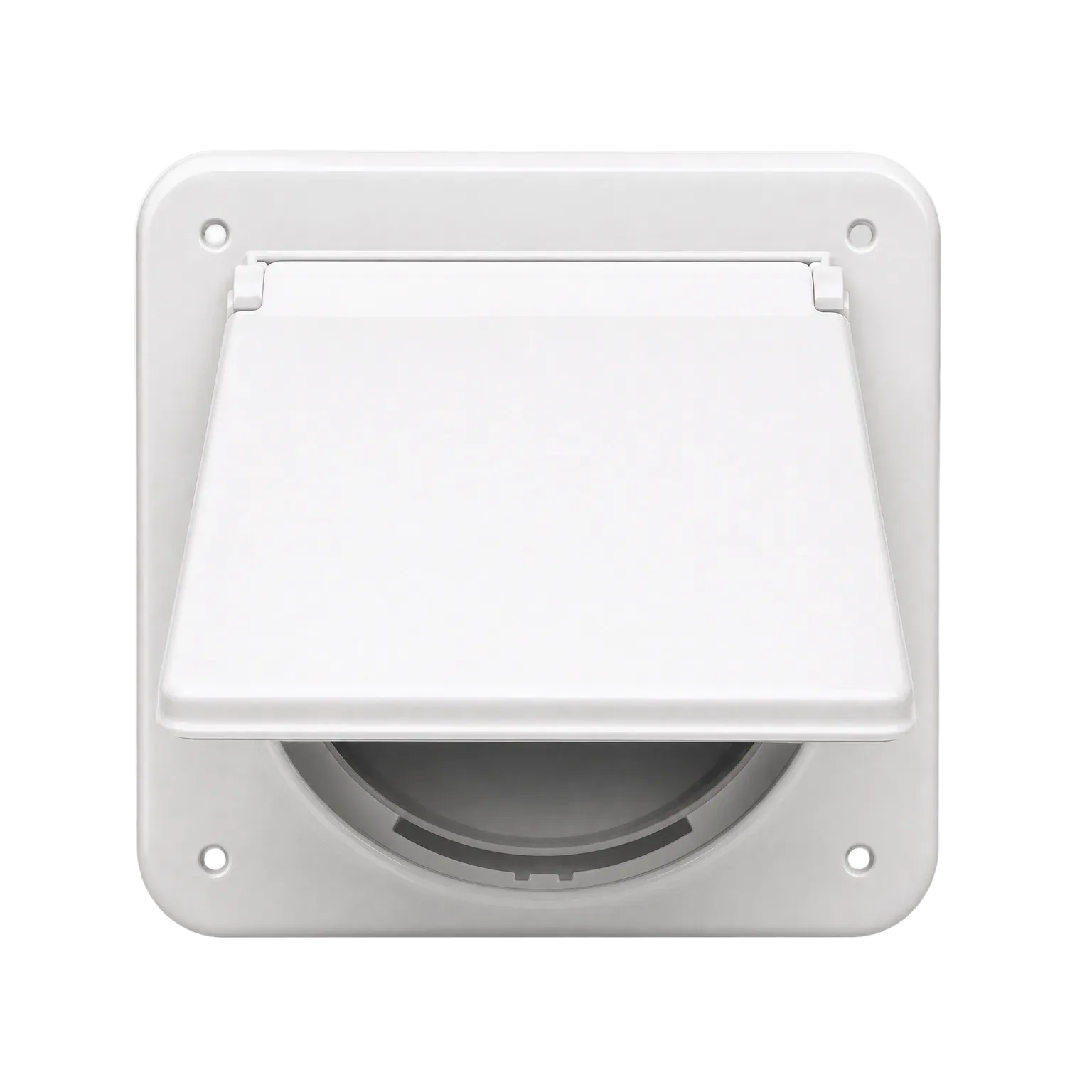
This is what the hood should look like. The flap hangs loose and the louvers stay open, so air pushes out every time the dryer runs. Nothing is piling up behind it.
A dryer that runs hot but leaves clothes damp almost always means the air isn't moving. Heat alone doesn't dry clothes, airflow carries the wet air out through the vent, and when that vent is clogged with lint, the hot air just sits in the drum instead of escaping. In Kansas, with summers running muggy, a partly blocked vent struggles even more, since the air it's trying to push out is already heavy. You might notice the outside vent flap barely moves when the dryer runs, or a cycle that used to take 40 minutes now takes twice that. Left alone, it's more than a slow dryer. A blocked vent traps heat in the unit, which strains the heating element and can become a fire risk. If a full cycle leaves clothes hot to the touch but not dry, the vent and duct are the place to look before anything else.


The vent behind your dryer runs from the drum to a hood on the outside wall, usually with at least one bend along the way. Lint doesn't spread out evenly through that line. It catches at the bends and builds up right at the hood flap, where the path narrows. The drum still heats the air to the same temperature either way, so the dryer feels just as hot whether the vent is clear or nearly closed off. What changes is whether that hot, wet air has anywhere to go. When the path is blocked, the dryer runs longer trying to push moisture out through a line that's mostly shut, and the clothes come out just as damp at the end of a long cycle as a short one. A good cleaning goes the full length of the vent, from the back of the machine to the hood outside, not just the lint trap or the first section of duct. If you've checked the hood outside and the flap barely moves when the dryer is running, that's usually lint packed somewhere behind it.




A clogged vent doesn't get better on its own. Every load after this one keeps pushing lint into a space that's already tight, and a dryer that runs long and hot to get clothes barely dry is also a dryer working harder than it should, every time you use it. Kansas summers already run sticky, and a dryer that can't push its hot, wet air outside adds to that load inside the house. In winter, with the furnace running on gas like most homes here, a dryer fighting a blocked vent is just more heat and moisture it has to deal with. You could spend an afternoon calling around, explaining the same problem to every contractor who picks up, and comparing what each one quotes you. Or you can skip that part. Answer a few questions here and a contractor who handles dryer vent cleaning in your area will reach out to you directly, so you can get back to a dryer that actually dries.
A dryer moving full airflow dries a load in one normal cycle, with the drum, the air, and your clothes all cooling down together by the end.
A dryer fighting a clogged vent keeps the drum hot while the clothes stay damp, because the heat has nowhere to carry that moisture to.


Lint builds up inside the vent, narrowing the path air can take.
The drum still heats up, but less air moves through it.
Moisture lifted off wet clothes has nowhere to go.
The dryer runs a full cycle, then another, trying to finish the load.
At 14.44 cents a kilowatt-hour, a dryer running two cycles to finish one load is burning power the whole extra time. A blocked vent doesn't just leave clothes damp, it keeps the heating element working on every run, and that shows up on your bill long before the vent gets looked at.
EIA-861 2025 statewide residential average

This is what the hood should look like. The flap hangs loose and the louvers stay open, so air pushes out every time the dryer runs. Nothing is piling up behind it.

Here the lint has built up until it's pushing out past the louvers. The flap can barely move, if it moves at all, and most of the air your dryer is pushing has nowhere to go but back.

The dryer getting hot isn't the problem. Getting that heat out of the house is. Once the vent is clear, a load should come out dry in one cycle and the drum should cool down with it, the same as it did when the dryer was new.
Finding someone to clear it out is its own chore, calling around, explaining the same thing twice, waiting to hear back. Answer a few questions about your dryer and your vent, and a contractor who handles this in your part of Kansas will reach out to you directly, so you can get back to running a normal load again.


Answer a few questions about the dryer vent cleaning and skip the search.