












Kansas HVAC Pros

Why your AC is blowing dust in Kansas

A local pro who services air conditioners gets in touch about the tune-up.

Get matched

Dust blowing out of your vents usually means your filter isn't catching what it should, or your ductwork has a leak pulling in dust from the attic or crawl space. A clogged or poorly fitted filter lets fine dust pass straight through and back into the air. Kansas summers run hot and sticky, and your AC moves a lot of air through those ducts day after day, so any gap or loose seam gets exploited fast. Dust can also mean the blower is stirring up buildup sitting inside the coil or the duct runs themselves, especially if the filter hasn't been changed in a while. It's worth checking the filter first since that's the easiest fix. If the filter is clean and dust keeps coming, the problem is further back in the system, in the ducts or at the coil, and that's not something you can see or fix by looking at a vent cover.

A gray-haired bearded man in a dark coat and scarf dusted with snow stands smiling in a dimly lit entryway with a white front door, a side table with a lit lamp, an oval mirror, and a patterned rug.
An older bearded man in a dark snow-dusted coat and gray scarf stands just inside a dimly lit home entry, with a framed picture, lit table lamp, and an adjoining room with a fireplace behind him, and snow visible through the open door.
A gray-haired, bearded man in a dark snow-dusted coat stands smiling in a dimly lit entry hall with a staircase, a lit table lamp, a framed picture, and a living room visible through a doorway.
An older man with gray hair and a beard, wearing a dark jacket dusted with snow, stands smiling in a dimly lit hallway with lamps and a living room visible behind him.
A woman in a cream sweater and jeans stands in the open doorway of a white stucco house, holding the dark door, while a man in a dark quilted jacket seen from behind walks toward the entry past potted plants.

What the dust in your house tells you

If you're wiping down the same shelf every few days, or the kids start sneezing more once the AC kicks on for good, that's the filter losing the fight. In Kansas, with the AC running hard through the sticky months, a filter that's behind on changes gets overwhelmed fast, and what it misses goes straight into the air you're breathing all summer. A leak in the ductwork does the same thing from a different direction, pulling dust in from the attic every time the system runs.

Either way, it's worth having someone look before it turns into a bigger repair. A local contractor who services AC systems all summer long knows which of these is more likely given your setup, and can check the filter fit and the duct connections in one visit. You'll be matched with one contractor near you, not a handful calling at once, so you can get a straight answer about what's actually in your air.

Interior corner with a beige sofa holding a dark green and a light cushion and a textured throw, a potted small-leaved tree beside a white-framed window, and a dark shallow bowl on a wooden coffee table in the foreground.
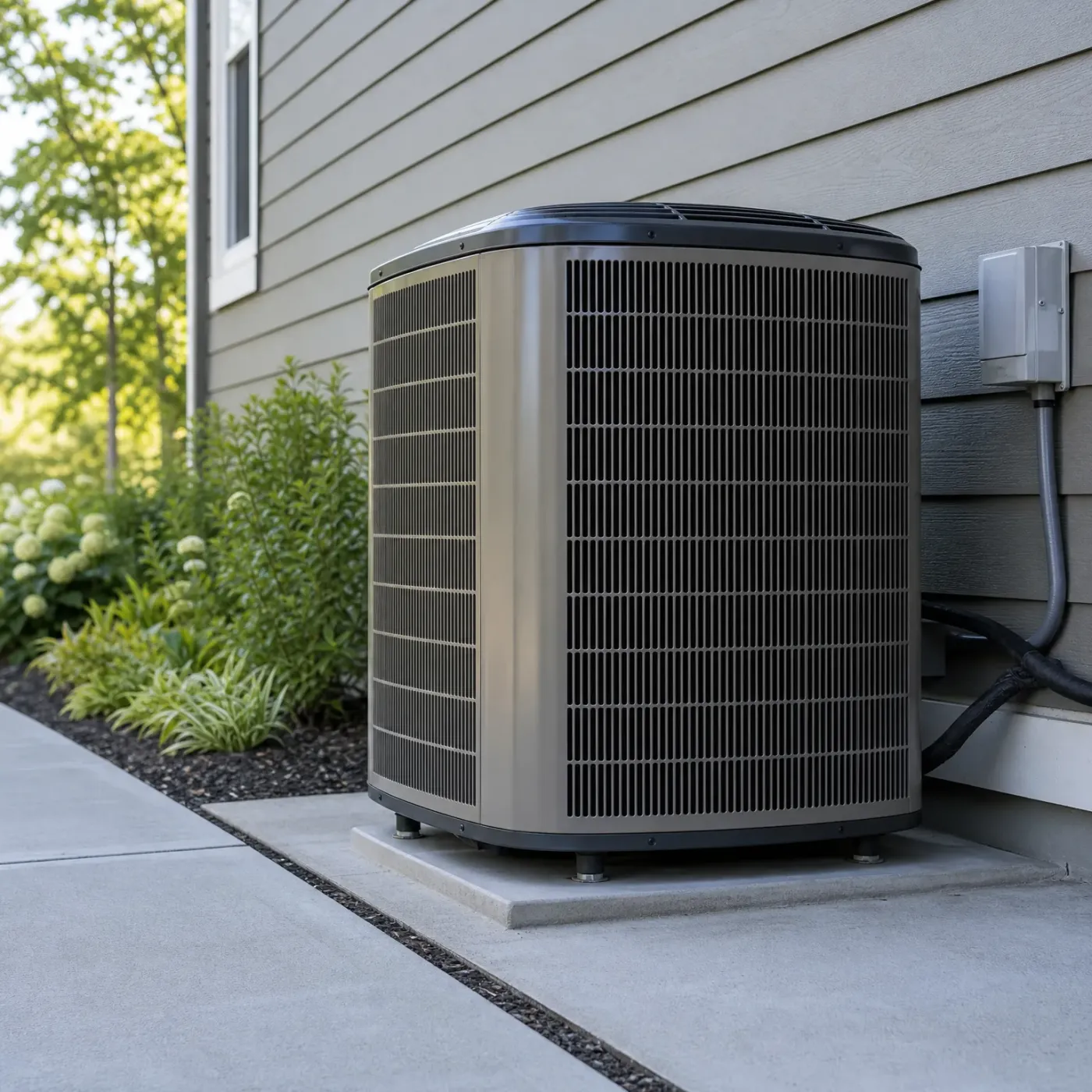
An outdoor air conditioner condenser unit on a concrete pad beside a house with light horizontal siding, with a small electrical disconnect box on the wall, mulch and shrubs at left, and a plain white wall and concrete slab at right.

Why the filter size matters

A filter that's the wrong size, or one that doesn't sit flush in its slot, leaves a gap along the edge. Air takes the path with the least resistance, so it pulls through that gap instead of through the filter media. Dust rides along with it. Check the corners and edges when you swap filters. If you can see daylight or feel air movement around the frame, that filter isn't doing its job no matter what rating is printed on the box.

A dark gray outdoor air conditioner condenser unit on a concrete pad beside a house with horizontal siding and a plain light wall, with mulch and grass in the foreground and a conduit and electrical box on the wall.

What a dirty coil adds to it

Dust that gets past the filter settles on the evaporator coil inside the air handler. A coil caked with dust doesn't transfer heat the way it should, and some of that buildup breaks loose and travels back into the ductwork over time. A contractor who services AC systems in Kansas every summer checks the coil along with the filter, since cleaning one without the other only solves half of what's landing on your furniture.

Why does my AC blow dust right when it first turns on?

You notice it most at startup. The house is quiet, the AC kicks on, and for a few seconds dust seems to puff out of the vents before the air runs clean again. It happens every cycle, not just once in a while, and you want to know if that's the blower, the ducts, or something building up inside the system.

That first puff is settled dust getting knocked loose by the blower

Between cycles, dust that passed through a loose filter or a duct seam settles inside the duct runs and around the vent itself. When the blower motor spins up, that first rush of air moves faster than the slow drift of air once the system is running steady, and it carries whatever has settled right out through the register. A few seconds later, once that pocket of air clears, the dust tapers off. If this happens every time the AC starts, especially through the sticky months when it's cycling on and off most of the day, it points to the same filter fit or duct leak problem, just showing up at the moment you're most likely to notice it.

A two-story gray horizontal-siding house with multiple gables, a covered front porch with white columns and railing, and a dark front door, fronted by a patchy green and brown lawn under a clear blue sky.

A summer dew point of 64°F, averaged across June, July and August for homes in Kansas, is what makes the air feel thick even on a day that isn't that hot. Source: NOAA climate normals. Air that heavy carries more moisture into your ductwork and across your filter, and a damp filter catches dust less cleanly than a dry one. That's part of why the dust shows up worse in July than it does in April. The AC is also cycling longer to wring that moisture out of the air, which means more hours pulling dusty air through whatever gaps or weak spots are already there in the filter or the ducts.

NASA POWER T2MDEW county cells weighted by homes

Filter Swap or Full Check

Change the filter yourself

  • You catch the obvious cause fast, since a dirty or wrong-size filter is often the whole problem.
  • It costs you only the filter, and you can do it the same afternoon you notice the dust.
  • It does nothing for a duct leak, a gap at the filter slot, or a coil already coated with dust.
  • You're guessing at the right filter thickness and fit, and the wrong one leaves the same gap as before.
  • Dust that keeps coming back after a fresh filter usually means the problem isn't the filter at all.

Have a contractor check the system

  • A local contractor who works on Kansas systems all summer knows what usually fails first in homes here.
  • They can check the ductwork itself for leaks or loose connections pulling in dust from the attic.
  • They can look at the filter slot and the coil, not just swap a part and hope it fixes things.
  • Matching you with one contractor means one call back, not a handful of companies competing for the job.
  • It takes more of your time upfront than grabbing a filter, but it answers why the dust keeps coming back.
An outdoor air conditioning condenser unit on a concrete pad beside a house with horizontal siding and a concrete foundation, with dry brown leaves on the ground to either side.
Before you get your air conditioner maintenance
A gray outdoor air conditioning condenser unit on a concrete pad beside a house with horizontal lap siding, with a wall-mounted disconnect box and conduit, and shrubs to the left.
After you get your air conditioner maintenance
An outdoor air conditioning condenser unit on a concrete pad beside a house with horizontal lap siding, with a gray electrical disconnect box and conduit on the wall and green shrubs and trees to the left.

Matched to your air conditioner job

A licensed local pro takes the request for your air conditioner tune-up.

A local pro who knows air conditioners gets your details and gets in touch.

Reach a local pro

You only hire the pro if you want to.

What's going on in your house right now

Look at the vent covers near the ceiling. If they've got a gray halo spreading out around them, that's dust the air is dragging across the cover edge every time the AC runs. Run a finger along the top of a picture frame or the TV screen a day after you dusted it. If it's already gritty, the AC is putting that there, not the open windows. You might also notice it in your nose before you see it, a dry, tickly feeling once the house has been shut up and cooling for a few hours. Left alone through a full Kansas summer, that dust keeps working into the blower wheel and the coil, and a coil caked with it won't pull heat out of the air the way it should.

An outdoor air conditioner condenser unit on a concrete pad beside a house with beige horizontal siding and a stone-veneer base, with refrigerant lines running to a gray wall-mounted electrical box, surrounded by dark mulch, a flowering shrub and an evergreen on the left.

Before you get your air conditioner maintenance

The condenser sits outside doing its job, but the dust problem is inside. A tech checks the coil, the blower, and the duct connections for the gap or leak that's been feeding dust into your vents all along.


An outdoor air conditioning condenser unit on a concrete pad beside a house with light vinyl siding, an electrical disconnect box and conduit on the wall, bare shrubs and mulch to the right, and a concrete walkway in the foreground.

After you get your air conditioner maintenance

Same unit, same pad, but the bare shrubs and the dust both get attention. A properly seated filter and sealed duct joints stop pulling attic dust into the airflow, so what comes out of your vents is just cooled air.

Power costs 14.44 cents per kilowatt-hour statewide

At 14.44 cents per kilowatt-hour, every extra hour your AC runs to push air through a clogged filter or a leaky duct shows up on your bill. A system working harder to move the same air isn't cooling better, it's just costing more to do it.

EIA-861 2025 statewide residential average

A filter you change on your own

You pull the old filter, hold it up to the light, and if you can't see through it, you swap it. That part takes five minutes and no tools. It fixes the dust problem when the filter was the whole problem. What it can't tell you is whether the coil behind it is already coated, or whether the blower is pushing some of your return air through a gap instead of through the media. You can keep buying filters every month and still see dust on the shelf, because the filter was never the only path air was taking into your house.

A system someone else checks

A tech pulls the panel, looks at the coil, and runs a hand along the duct boots where they meet the plenum. A loose connection there pulls attic dust straight into the supply air, and no filter catches that because the dust never passes through it. Someone who works on these systems all summer in Kansas has seen this exact pattern enough times to check the boots first, not last. They can also tell you if the filter slot itself is letting air slip past the edges, which is a fix a filter change alone won't touch.

A woman wrapped in a thick beige fleece blanket sits on a sofa with an open book on her lap, beside a lit table lamp, with a frost-covered window behind her.
A smiling older woman with gray hair in a cream knit sweater stands in a dimly lit kitchen beside a window showing snow outside, with a round loaf of bread on the counter in the foreground.

Where the dust is coming from

  • A dirty or wrong-size filter is the most common cause, and a leaky duct section is the next most common.
  • Gray halos around vent covers and dust settling faster than usual both point to air bypassing the filter somewhere.
  • A tech who works on Kansas systems every summer knows which duct joints and filter slots tend to fail first.
  • Matching you with one licensed local contractor means a single visit and a single point of contact, not a round of competing calls.
  • The dust stops only once the gap or leak feeding it gets found and closed, not just when the filter gets swapped.

The dust in your vents is coming from somewhere specific. Most of the time it's a filter that's dirty or doesn't fit its slot right, letting air slip past the edges instead of through the material. Sometimes it's a duct joint that's come loose or separated, pulling in dust from the attic every time the blower runs. Either way, the fix isn't a guess. It's finding the actual gap or leak and closing it.

That's the kind of thing you want someone who already knows this equipment to look at, not someone figuring it out as they go. A contractor who services AC systems in Kansas all summer has seen which filter slots tend to warp, which duct connections tend to pull apart, and where dust usually gets in on the kinds of systems common here. That's not something you pick up from one visit. It comes from doing this work season after season on homes like yours.

When you request a match, you get connected with one licensed, local contractor, not a handful of companies competing for the job. That means one visit, one person who can walk through your system, check the filter fit and the duct connections, and tell you straight what's pulling the dust in. You're not fielding five calls to sort out who actually knows your equipment. You're talking to the one who does.

The dust stops when the real cause gets found, not before.

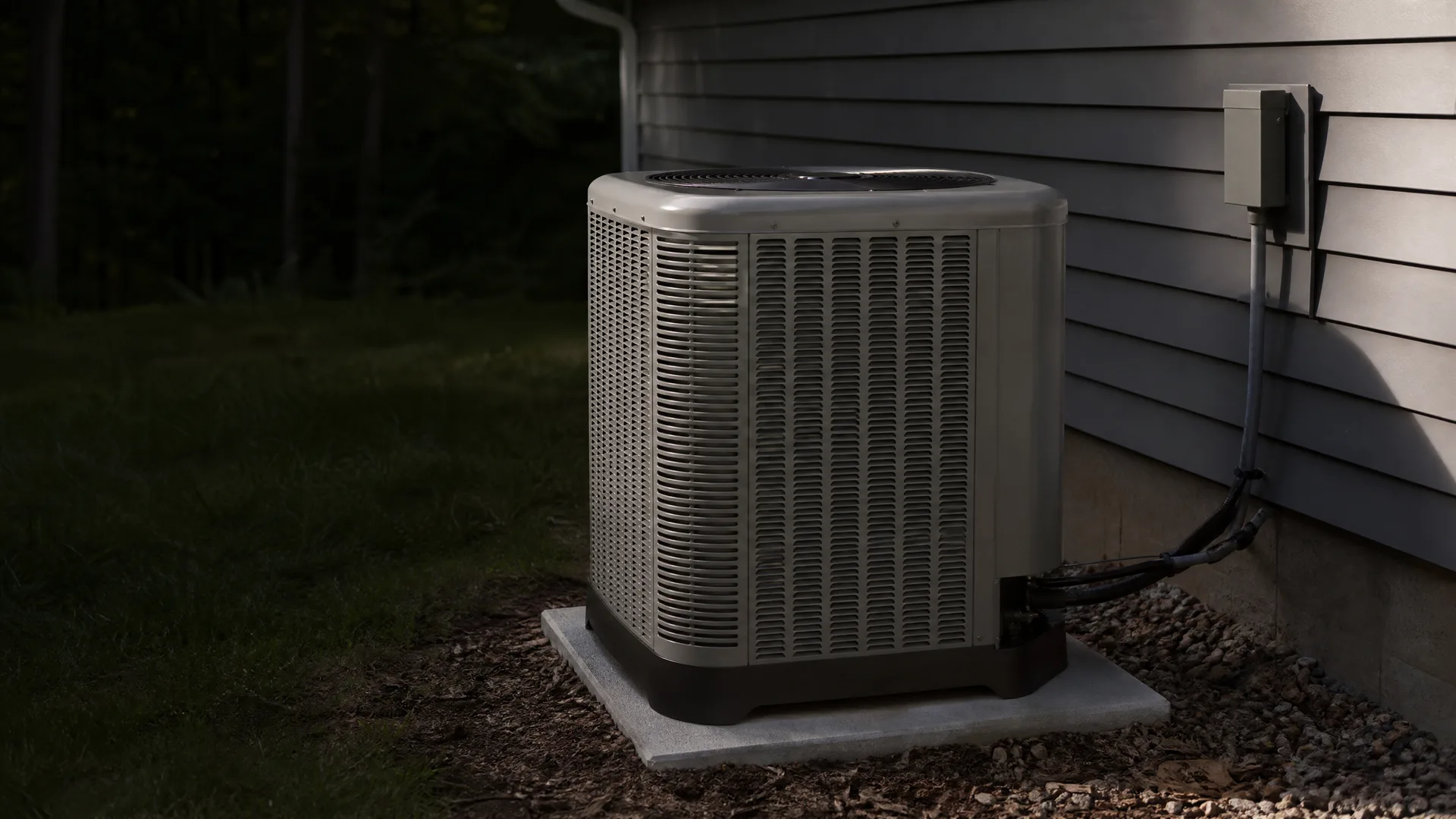
An outdoor air conditioning condenser unit sits on a concrete pad beside a house with horizontal lap siding, with a wall-mounted disconnect box and refrigerant lines entering the wall, gravel and grass around it and dark trees behind.

An air conditioner pro near you

Tune-up, service, or cleaningCentral ACKansas
Step 1 of 2

What ZIP code is the job in?