Signs of leaky ductwork in Overland Park, KS

Get matched with a pro who works on ducts in Johnson County.

Match me with a pro

Leaky ductwork usually shows up as rooms that never feel right. One bedroom stays warm in January while the rest of the house is comfortable, or a room upstairs won't cool down in July no matter what the thermostat says. You might notice your furnace or AC running longer than it used to, or a gas bill that climbs faster than the weather explains. Sometimes you can find it yourself: a hissing sound near a duct joint in the basement or attic, dust blowing out around a register boot, or a flex line that's come loose from a collar. Ducts leak at the seams and connections, not through the metal itself, and once a joint opens, conditioned air is going into your attic or crawlspace instead of your rooms. In a house with long, hard winters and muggy summers like this one, that lost air means your system works harder in both seasons to make up for what never reaches you.

Why does ductwork in Johnson County leak in the first place?

  • Half the homes here were built by 1989

    Half the homes in Johnson County were built in 1989 or earlier. Ductwork that old has had decades of joints and seams to work loose.

  • Heat runs October through April

    Furnaces here run about seven months a year, October through April. Air pushes through the ducts that whole stretch, and a leak wastes heat the entire time.

  • Cooling runs May through September

    Air conditioning runs about five months a year, May through September. Any gap in the ducts leaks cooled air right alongside the warm air it leaks in summer too.

ACS 2020-2024 · NOAA nClimDiv 1991-2020

How Duct Leaks Actually Happen

  • Leaky ducts are usually sealed at the joints, not wrapped end to end, since most leaks happen where sections connect.
  • A duct leak in the attic or crawlspace pulls in unconditioned air and feeds it right back into your supply air.
  • Flex duct that has come loose from a collar at the plenum can dump air into the attic before it ever reaches a vent.
  • A static pressure test tells a contractor how much air your system is losing before any duct is opened up.
  • Mastic sealant holds up over time where tape alone dries out and peels off within a few years.
  • Return leaks pull in attic or crawlspace air and send it straight to your furnace or AC, not just supply leaks.

Ductwork is built in sections, and every place two sections meet is a potential leak. Joints at elbows, takeoffs, and plenum connections are where the sheet metal or flex duct was fitted together by hand, and that's where it comes apart over time. Few ducts leak end to end. They leak at the seams.

In an attic or crawlspace, a leaking joint doesn't just lose air. It pulls in whatever air is sitting out there, dusty, hot in July, freezing in January, and pushes it into your supply line along with the conditioned air your furnace or AC just made. The system ends up heating or cooling air twice: once for the house, once for the attic.

Flex duct adds its own failure point. It connects to metal collars at the plenum with a clamp or strap, and if that connection loosens, the duct can slip partway off. Air meant for a bedroom vent ends up in the attic instead, and the room never gets its full share.

Return ducts leak too, and it matters just as much as a supply leak. A return leak in a crawlspace pulls that air straight into the furnace or AC before it's filtered or conditioned.

A contractor checking for this will often run a static pressure test first, measuring pressure at the furnace to see how much air isn't reaching the vents before cutting into any ductwork. For sealing, mastic is the material that holds up over years, where duct tape dries out and lets go.

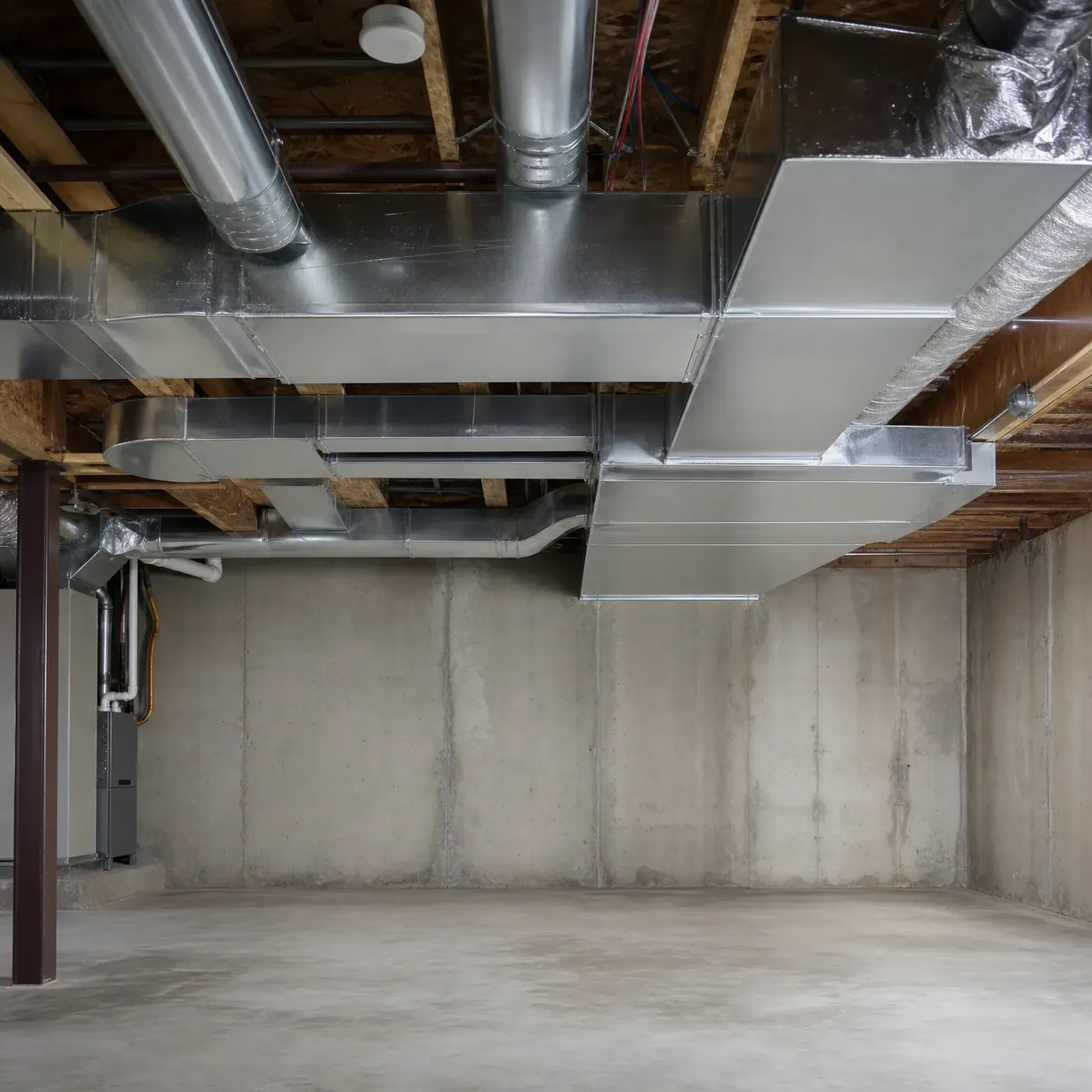
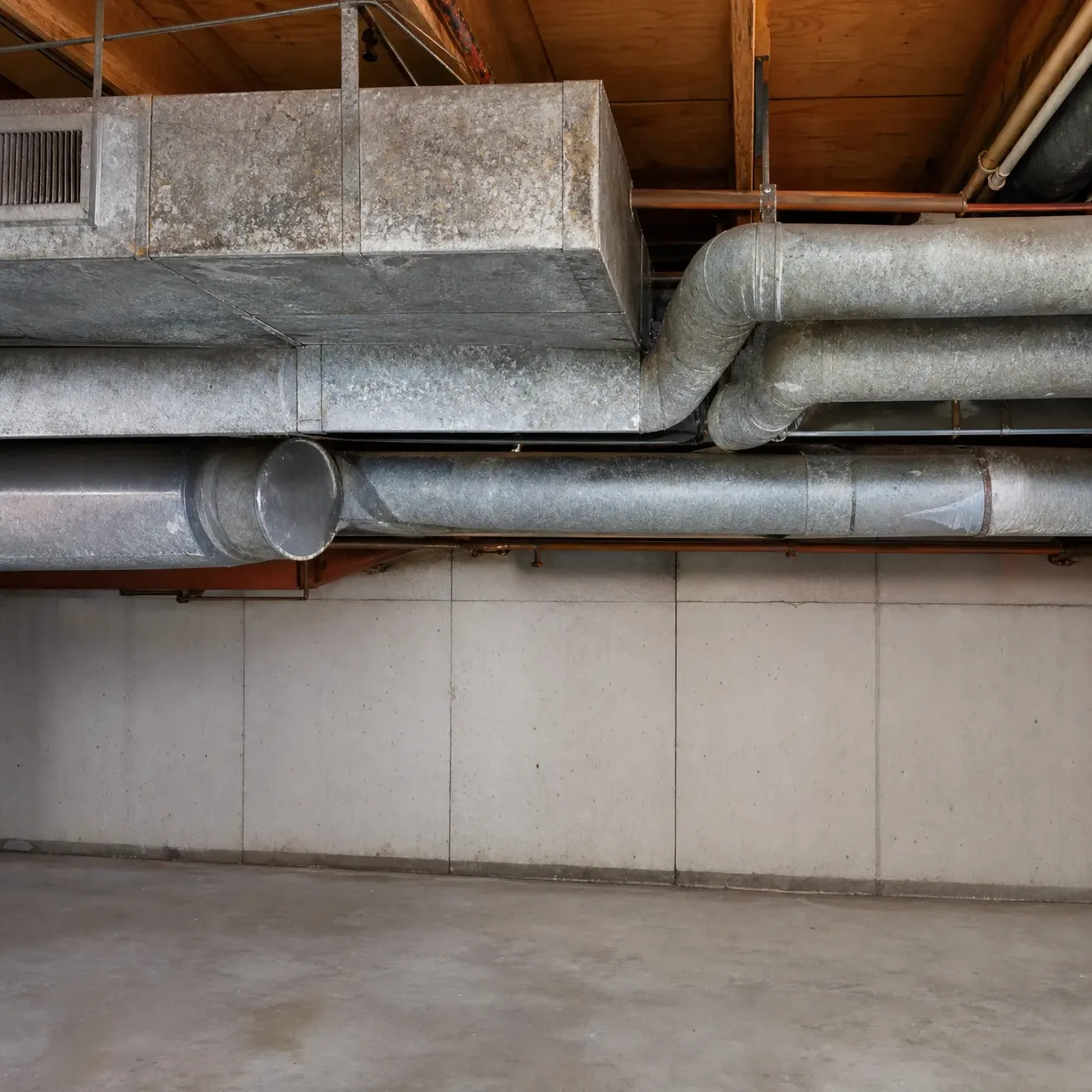
Unfinished basement with bare concrete walls and floor, exposed wood joists, and large sheet-metal HVAC ducts and pipes running along the ceiling.
Ducts like this hold their seal at every joint, so the air your furnace pushes out is the air that reaches the room.
Basement interior with galvanized rectangular and round sheet-metal ductwork and copper piping running below a wood-joist ceiling, above a concrete wall and bare concrete floor.
Once a seam like this opens up, conditioned air spills into the basement instead of your living room.
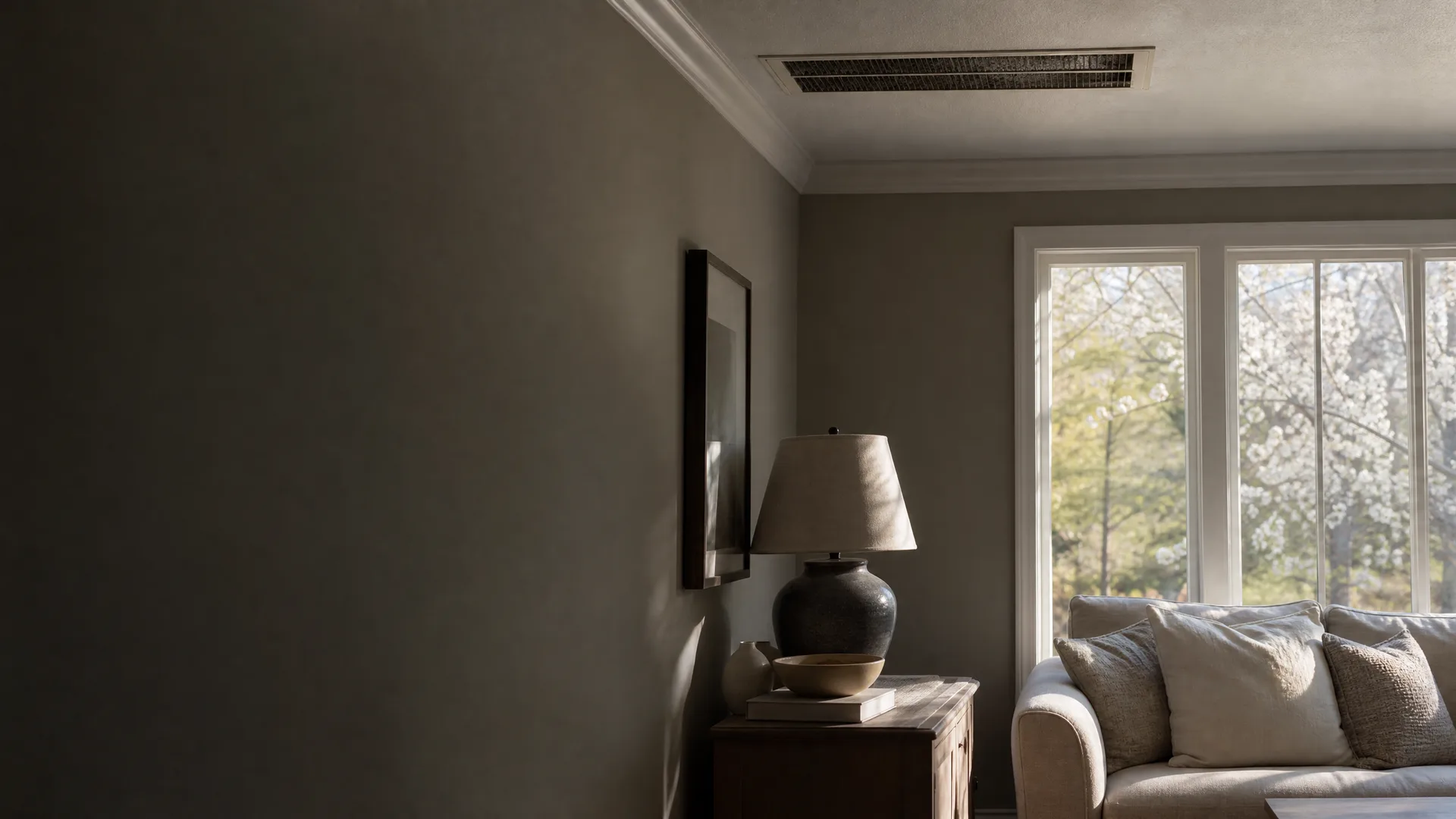
A dimly lit living room corner with a gray wall, framed picture, a table lamp on a wooden side table, a beige sofa with pillows, a ceiling vent, and windows showing flowering trees outside.

The sun's been up for a couple hours and it's coming in low across the living room. You're on the couch with coffee, and you look up at the ceiling vent out of habit more than anything. There's a gray ring of dust around the grille, thicker than you remembered, and when you look down the side table and the top of the picture frame near it have the same fine film on them. The furnace isn't even running right now, it's mild enough outside that it hasn't kicked on all morning. You wipe the table with your sleeve and it's dusty again by evening. A local contractor who checks ducts for a living could tell you in a few minutes whether that vent is pulling in more than air.

Get matched with a duct system pro in Johnson County

The pro who gets in touch is licensed in Kansas and works in Johnson County.

No charge to send it. You decide if you hire them.

A duct system with sealed joints loses little air between the furnace and the vent. Testing is the only way to know how much of yours is making it there.

Sealing the leaks you can reach, like the seams at the plenum and the joints in the basement or crawlspace, puts more of the air your furnace already heats where it's supposed to go.

An older man with gray hair and a beard stands in a dimly lit entryway wearing a dark hooded coat dusted with snow, with a lit table lamp, framed picture, and front door with glass panels behind him.
An older man with gray hair and a beard, wearing a dark snow-dusted jacket and scarf, stands smiling in a dimly lit entry hall with a lamp, wooden front door and staircase behind him.
A gray-haired bearded man in a dark coat with snow flecks on the shoulders stands just inside a dimly lit home entryway, with a lamp, framed pictures, sofa and candle-style lights in the background.
An older man with gray hair and a beard, wearing a dark coat and scarf dusted with snow, stands in a warmly lit home entryway with an arched doorway, lamps, and a living room visible behind him.

Ducts you can reach

In the basement, the crawlspace, or a utility closet, duct leaks are something a contractor can get to directly. The seams at the plenum, the joints where one section meets the next, the boot where a duct meets the floor register, all of that is open to a hand and a sealant. Sealing it is a matter of finding the gaps and closing them. Most of a duct system's leaks happen at these connection points, not along the straight runs, so a basement full of exposed ductwork is usually the easiest part of the system to fix once the leaks are found.

Ducts buried out of sight

Plenty of homes in Johnson County run supply ducts through the attic, or through a crawlspace that's hard to move around in. A leak up there still pulls in attic air, sometimes well over 100 degrees in July, and pushes it into your supply air before it ever reaches a room. Finding it means getting into tight, often hot or cold space and tracing duct runs that weren't built to be inspected later. It can be sealed once it's found. Getting to it, and confirming the seal held, takes more time and more care than a duct run sitting in plain sight in the basement.

A woman wrapped in a chunky knit blanket sits in an armchair with an open book on her lap, beside a lit table lamp and a window with frost and snow outside.
A smiling older woman with gray shoulder-length hair in a cream cable-knit turtleneck sweater stands behind a wooden board holding a round loaf of bread, in a warmly lit kitchen with a dark window and shelves behind her.

A duct system moves air in two directions. Supply ducts carry heated or cooled air out to each room. Return ducts pull air back to the furnace to be reheated or recooled. A leak on either side costs you differently. On the supply side, air that should land in your bedroom ends up in the attic or crawlspace instead, and that room runs short. On the return side, the furnace pulls in whatever air is nearby, dusty attic air in summer, cold crawlspace air in winter, and mixes it into what gets heated or cooled next. Neither leak changes the temperature the furnace is producing. The equipment is doing its job. The air just isn't getting where it's supposed to go, or it's picking up air it shouldn't. A leak close to the furnace, right at the plenum, pulls more air off the system than the same size gap out near a single register, since everything downstream of it runs short too.

Supply Leaks vs. Return Leaks

  • A duct leak doesn't change the air temperature coming out of the furnace, it just loses some of that air before it reaches the room.
  • Supply leaks push conditioned air into the attic, basement, or crawlspace instead of the vent it was meant for.
  • Return leaks pull in attic or crawlspace air and mix it into what your furnace heats or cools next.
  • A blower set to move a certain amount of air works harder when duct leaks let part of that air escape along the way.
  • Mastic and foil tape hold up at duct joints for years, but cloth-backed duct tape dries out and lets go within a few seasons.
  • A leak near the plenum, right at the furnace or air handler, loses more air than the same size leak out near a single vent.
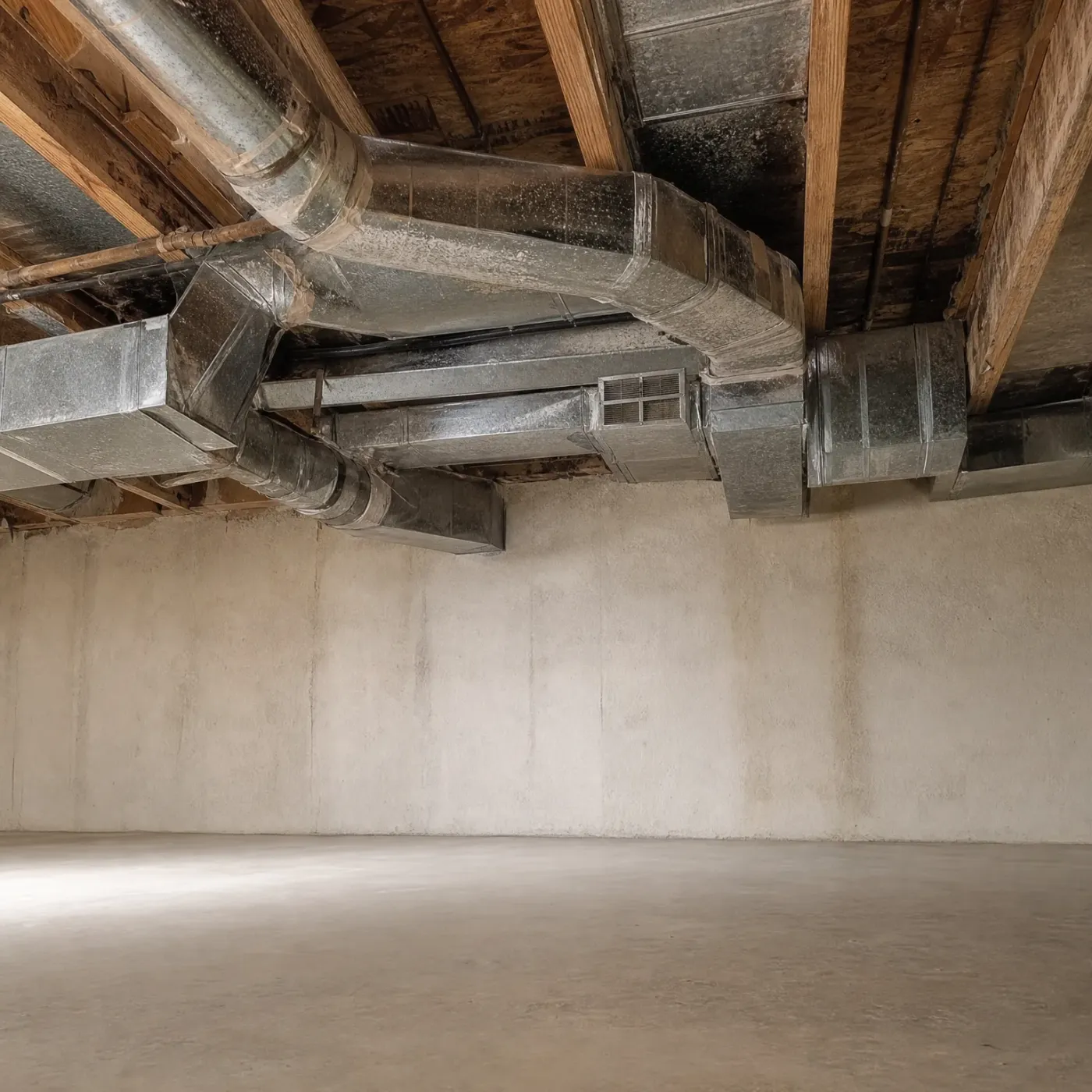
An empty basement room with bare concrete walls and floor, with galvanized sheet-metal HVAC ductwork and a vent grille running along the wooden joist ceiling.
Before you get your ductwork cleaning
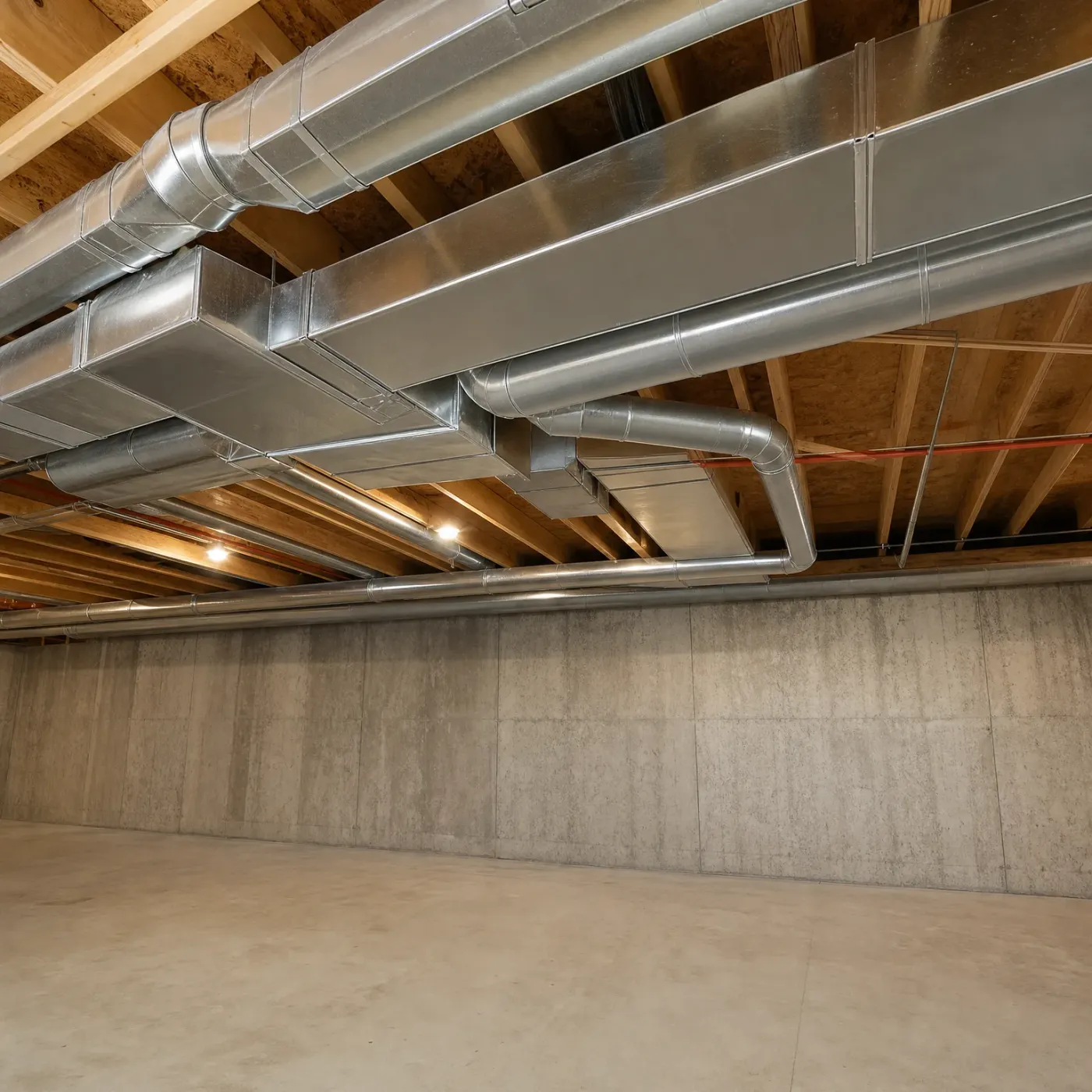
Unfinished basement with bare concrete floor and walls, showing galvanized sheet-metal HVAC ducts, pipes and recessed lights beneath a wood-joist ceiling.
After you get your ductwork cleaning

Ducts you can seal, and ducts you can't

Leaks you can reach

  • A contractor can seal the seams at the plenum, the joints in the basement, and the boots where ducts meet the floor registers.
  • Mastic sealant or metal tape applied directly to a seam holds up for years once it's on.
  • Crawlspace and basement ducts are exposed, so a contractor can see and test each joint before sealing it.
  • Sealing the leaks you can get to often brings more air to the rooms that have been running short.
  • This work doesn't touch the ducts buried in the slab or run through finished walls and ceilings.

Leaks you can't reach

  • Ductwork run through a slab, a finished ceiling, or behind drywall can't be opened up without tearing into the house.
  • A leak in these sections keeps losing air no matter how well the accessible joints get sealed.
  • Aeroseal and similar sealants can be pushed through the system from the inside to reach joints no one can get to by hand.
  • Finding a leak in a buried duct usually means a pressure test first, since there's no way to see the seam itself.
  • Homes with ductwork in the slab or ceiling tend to carry more unreachable leaks than homes with ducts run through a basement.
  1. Air leaves the furnace or AC through the main plenum.

  2. It travels the trunk line toward each branch duct.

  3. At a loose joint, some of that air escapes into the attic, basement, or crawlspace.

  4. What's left keeps moving through the branch to the room's vent.

Power here costs 13.46 cents per kilowatt-hour

At 13.46 cents per kilowatt-hour, power here is cheap, so a leaky duct doesn't hit you through the electric bill the way it does elsewhere. It shows up instead in gas use and in rooms that won't heat or cool right, since the air your furnace and AC paid to condition is the air leaking out before it reaches the vent.

EIA-861 2025

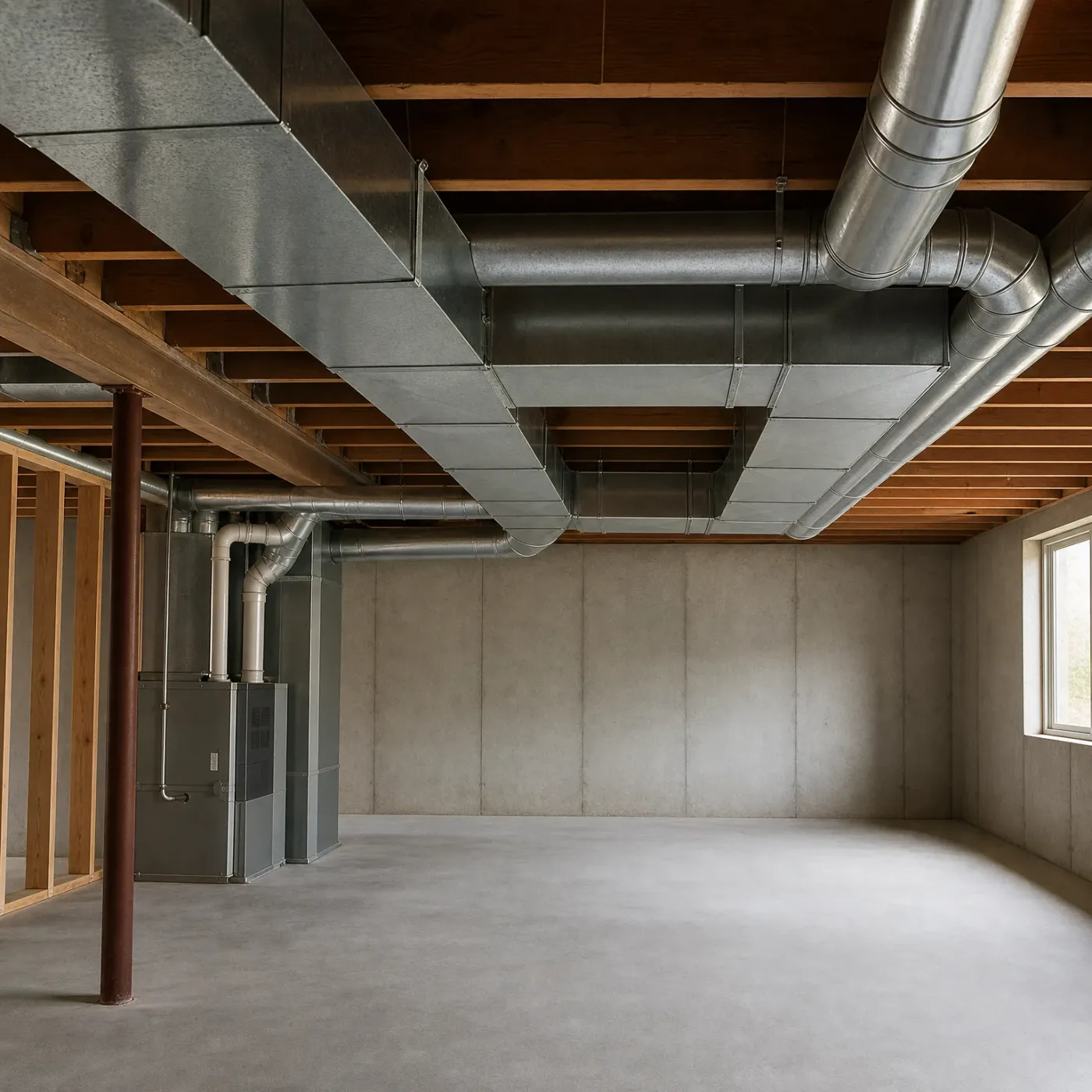
Unfinished basement with concrete floor and walls, exposed wood joists, galvanized sheet-metal ductwork, a furnace unit, a steel support column, and a small window.

Ductwork holding its seal

This is what a sealed system looks like. The metal trunk lines run tight along the joists, joints fitted close, with the furnace venting straight into the foundation wall. Air leaving this furnace reaches the vents instead of the basement.

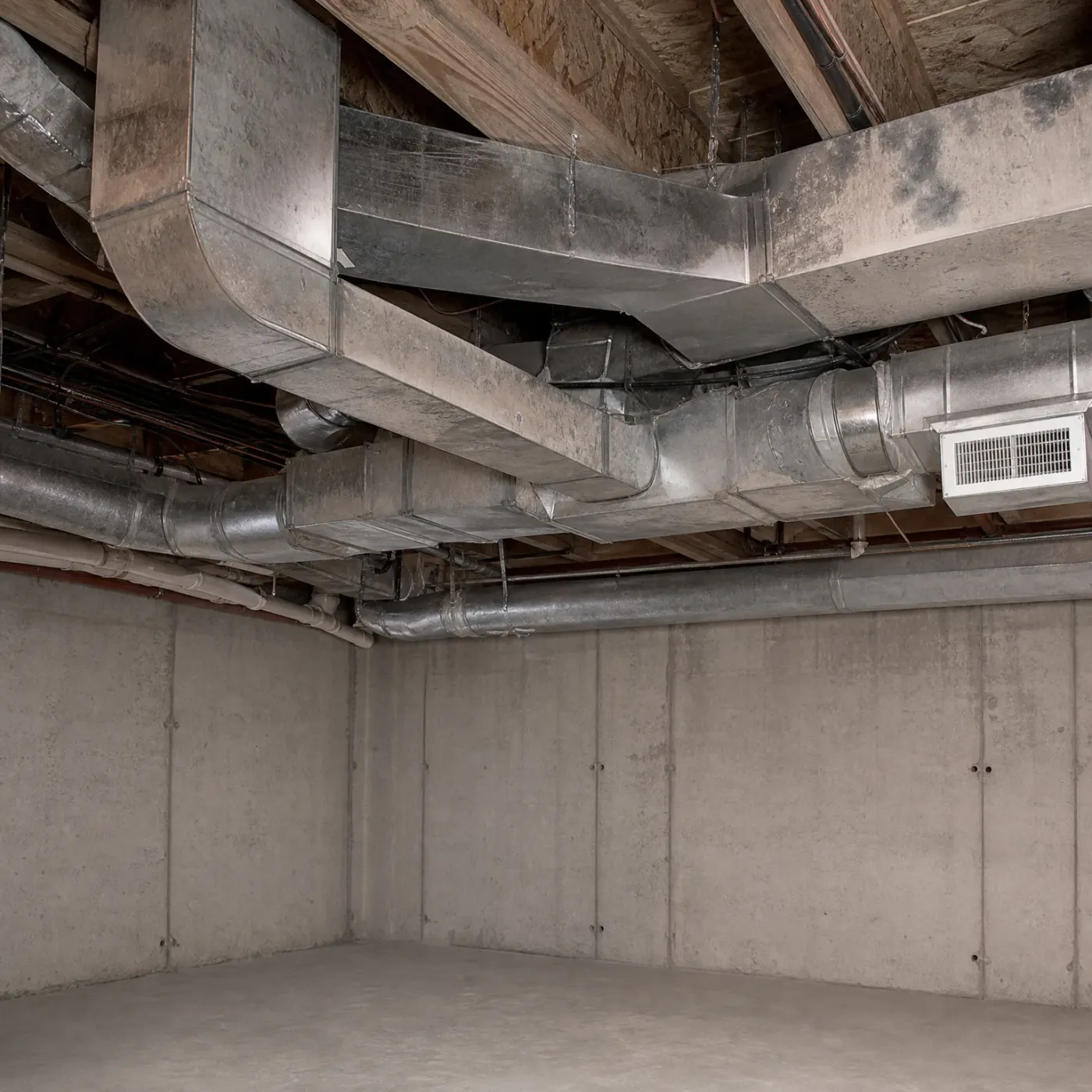
Empty unfinished basement with bare concrete walls and floor, showing exposed wooden joists, galvanized sheet-metal ductwork, pipes, and a white vent grille overhead.

Ductwork losing air

This basement shows the joints exposed to open space, with flex duct and small pipes running loose along the ceiling. A gap at any of those seams lets conditioned air spill out here instead of reaching the vent at the far wall.

A woman in a gray sweater and jeans stands in an open wood front door of a white stucco house while a man in a dark jacket walks toward her on the entry path.

What this comes down to

A room that won't hold temperature, a duct run furred with dust, gas bills that creep up without a reason: these point to the same thing. Air is leaving your ducts before it gets where it's supposed to go. The fix is sealing the joints and seams a contractor can reach and get to, not replacing the ductwork.

A local contractor who works on duct systems all year in Johnson County has seen where joints give out first, on homes like yours and homes built the same decades. Get matched with one licensed contractor near Overland Park, and that contractor will reach out to look at your ducts and tell you what's actually leaking.

A light-colored ceramic vase holding green leafy branches sits on a round wooden table, with a wooden-framed armchair draped in a cream throw, a tripod floor lamp, and sheer curtains blurred in the background.
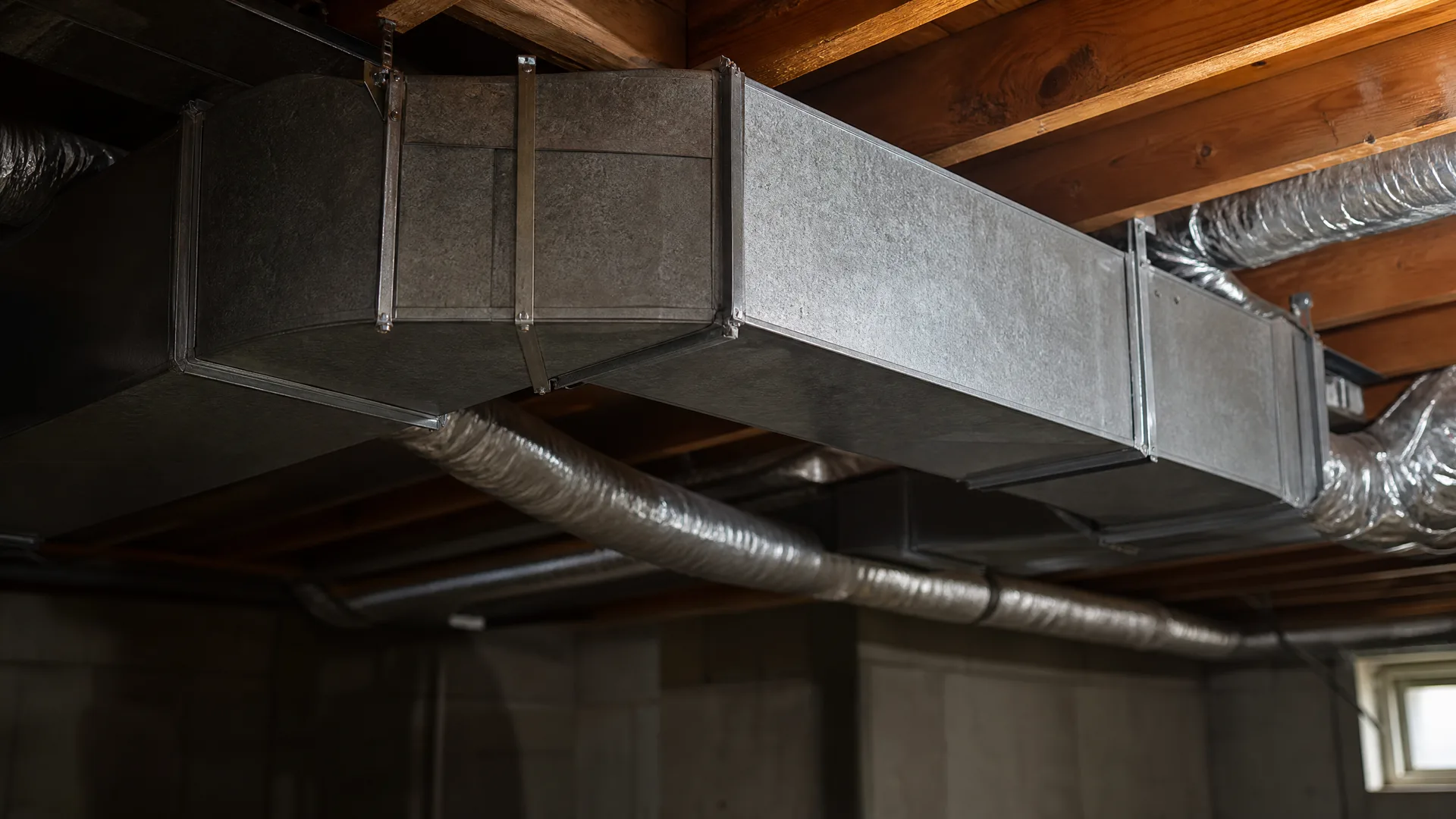
Rectangular sheet-metal HVAC trunk ducting and insulated flexible ducts running along wooden floor joists in an unfinished basement ceiling above concrete block walls.

Find a duct system cleaning pro in Johnson County

Duct and vent cleaningDucts or ventsJohnson County, KS
Step 1 of 2

What ZIP code is the job in?